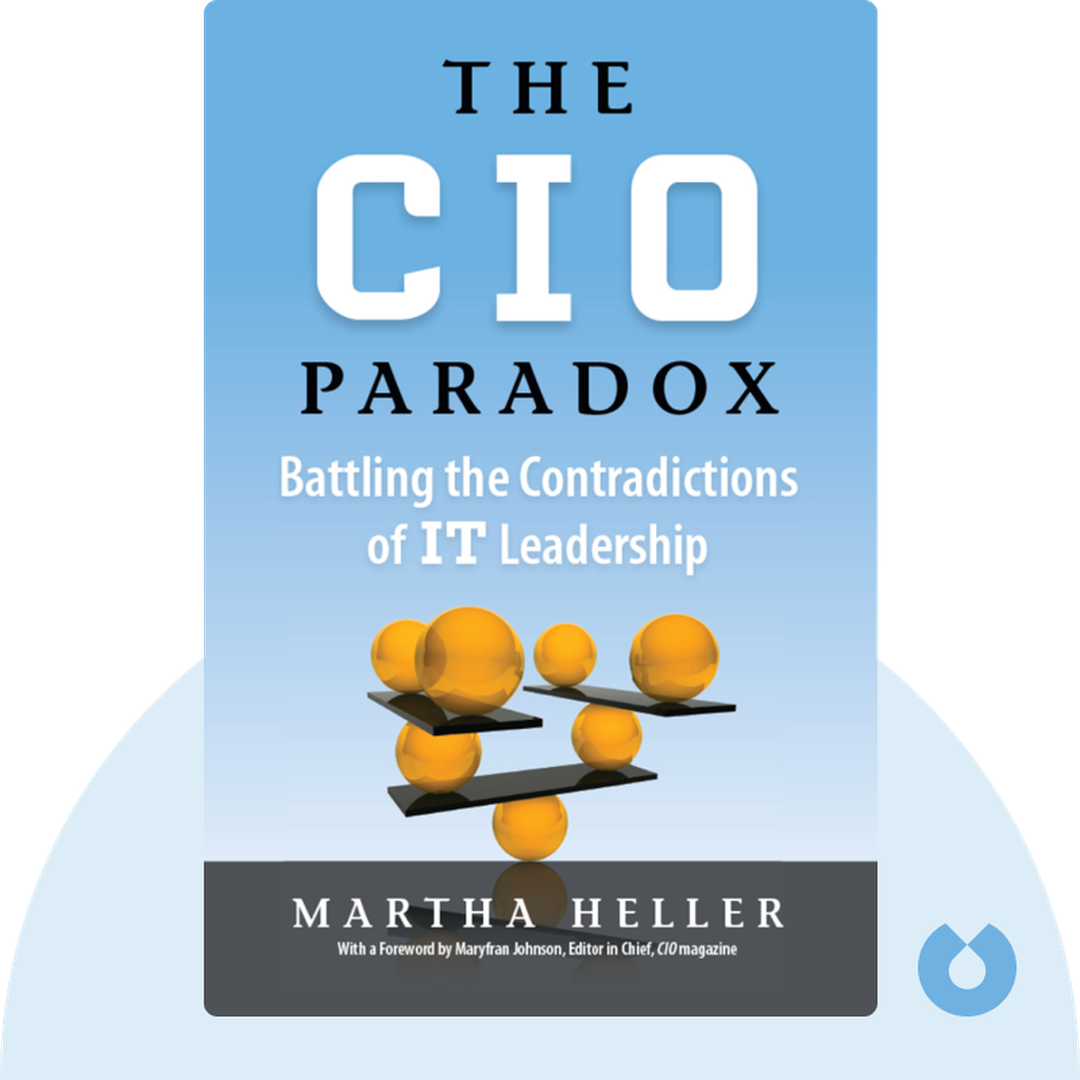
If You're Curious About These Questions...
You should listen to this audiobook
- Have you ever wondered why the CIO is often the most critical leader in a company, yet remains the most misunderstood figure in the boardroom?
- What if you could break the cycle of merely "keeping the lights on" and finally position IT as a primary driver of business strategy?
- Are you curious about the hidden paradoxes that prevent even the most talented IT leaders from being seen as true business partners?
Listen to The CIO Paradox — Free Audiobook
Loading player...
Key Takeaways from The CIO Paradox
- Learn how outsourcing routine IT operations can free up your internal team's time to focus on strategic innovation and business intelligence.
- Discover why simplifying and streamlining your IT infrastructure can simultaneously slash organizational costs and dramatically increase problem-resolution rates.
- Understand how to shift your IT department from a mere support function to a strategic, revenue-generating powerhouse by commercializing your internal tech solutions.
- Find out why successful CIOs propose their IT development strategy and demand executive clout right from the hiring interview to guarantee organizational autonomy.
- Master the challenges of a global IT organization by identifying which systems require local adaptation and using tools like video blogs to bridge communication gaps.
Learning Tools
Reinforce what you learned from The CIO Paradox
Mind Map
The CIO Paradox
Balancing Operations & Innovation+
Elevating IT to Strategic Leadership+
Managing Global IT Complexity+
Overcoming Legacy Technology+
Bridging the IT-Business Divide+
Succession Planning+
Creating an IT Identity+
Quiz — Test Your Understanding
Question 1 of 8
How can a CIO effectively balance the contradictory demands of maintaining cost-efficiency while also investing in innovation?
Question 2 of 8
Why did Tom Farrah, CIO of Dr Pepper Snapple Group, decide to outsource his IT department's routine, day-to-day operations?
Question 3 of 8
What strategy did Ron Kifer use to ensure he would have enough influence as the new CIO of Applied Materials?
Question 4 of 8
When managing a global IT organization, why is it often a mistake to force a single standardized system (like payroll) across all countries?
Question 5 of 8
How did Tom Murphy successfully convince his CEO to invest in upgrading a faulty, 30-year-old mainframe?
Question 6 of 8
How did Leslie Jones improve the relationship and communication between the IT department and the executive committee at Motorola Solutions?
Question 7 of 8
According to the text, why do CEOs frequently prefer to hire outside candidates for the CIO position when the current CIO leaves?
Question 8 of 8
What is the primary benefit of giving your IT organization a motto or mantra, as suggested in the book's actionable advice?
The CIO Paradox — Full Chapter Overview
- 1Recommendation
- 2Prioritize simplicity and foster an innovative mindset across your IT organization today.
- 3Don’t let operations problems block your strategic work.
- 4CIOs at global companies must understand local markets and the importance of communication well.
- 5CIOs must be able to work with and improve upon the technology provided to them.
- 6Clarify IT’s role by building relationships and simplifying communications everywhere today.
- 7CIOs must plan ahead and ensure a smooth transition for the next CIO.
The CIO Paradox Summary & Overview
In our current technological age, even low-tech businesses are more dependent on IT than most companies were 30 years ago. Yet this fact is still not reflected in how many organizations function or the relevance given to their Chief Information Officer, or CIO. The CIO Paradox tackles some of the complex situations that the modern head of IT will encounter.
Who Should Listen to The CIO Paradox?
- CIOs looking for inspiration on how to improve their work
- Aspiring CIOs or business leaders
- Anyone curious about the many functions of the IT department
Books Similar to The CIO Paradox
Readers who enjoyed this also liked these titles.