If You're Curious About These Questions...
You should listen to this audiobook
- Did you know that a leader’s personal mindfulness practice could be the surprising secret to improving your company’s customer satisfaction?
- What if you could transform your workplace by understanding the hidden threads that connect corporate politics, social dynamics, and creative breakthroughs?
- Have you ever wondered why some organizations thrive in a rapidly changing world while others struggle to foster even a single new idea?
Listen to Everything Connects — Free Audiobook
Loading player...
Key Takeaways from Everything Connects
- Understand why companies like Nokia and Borders failed, and learn how to survive the 'creative destruction' of the modern innovation economy by constantly adapting.
- Master the art of navigating an intricately connected business world by strengthening the critical links between your employees, suppliers, and customers.
- Discover how your organizational structure directly dictates your product design, and why poor employee communication inevitably leads to flawed systems.
- Learn how practicing mindfulness can make you a better leader by boosting your working memory, fostering unbiased creativity, and preventing impulsive decision-making.
- Find out why a stressful office environment triggers your employees' survival-focused 'lizard brains,' and how creating a safe space is essential for collaborative innovation.
Learning Tools
Reinforce what you learned from Everything Connects
Mind Map
Everything Connects
The Innovation Economy+
Complex Interconnectedness+
Mindfulness & Leadership+
Psychological Safety+
Nurturing Creativity+
Agile Structures+
Diversity as Catalyst+
Hiring Strategy+
Quiz — Test Your Understanding
Question 1 of 8
According to economist Joseph Schumpeter, what is the primary driver of the market in an 'innovation economy'?
Question 2 of 8
How does programmer Mel Conway's rule apply to product design and organizational structure?
Question 3 of 8
How does practicing mindfulness specifically help leaders make better business decisions?
Question 4 of 8
Why is it detrimental for a company's working environment to trigger an employee's 'lizard brain'?
Question 5 of 8
Which of the following best describes the role of a manager in fostering employee creativity, according to the text?
Question 6 of 8
What is the primary advantage of using 'talent clusters' instead of traditional departmental teams?
Question 7 of 8
How does team diversity directly benefit the product development process?
Question 8 of 8
Based on the Stanford study mentioned in the book's actionable advice, what hiring strategy should a start-up adopt to increase its chances of success?
Everything Connects — Full Chapter Overview
- 1Recommendation
- 2In today’s economy, innovate and adapt now—or risk extinction.
- 3Complex, far-reaching connections now define the modern business world.
- 4Mindfulness unlocks innovation and helps focus your actions for the better.
- 5Employees need safety and security to create and innovate—don’t trigger their “lizard brains.”
- 6Creativity can be nurtured, not forced. Treat employees as people, not just resources.
- 7Tear down departmental walls. Use talent clusters to encourage creativity and collaboration.
- 8Different is better! Diversity shakes things up and creates opportunities for innovation.
- 9Final summary
Everything Connects Summary & Overview
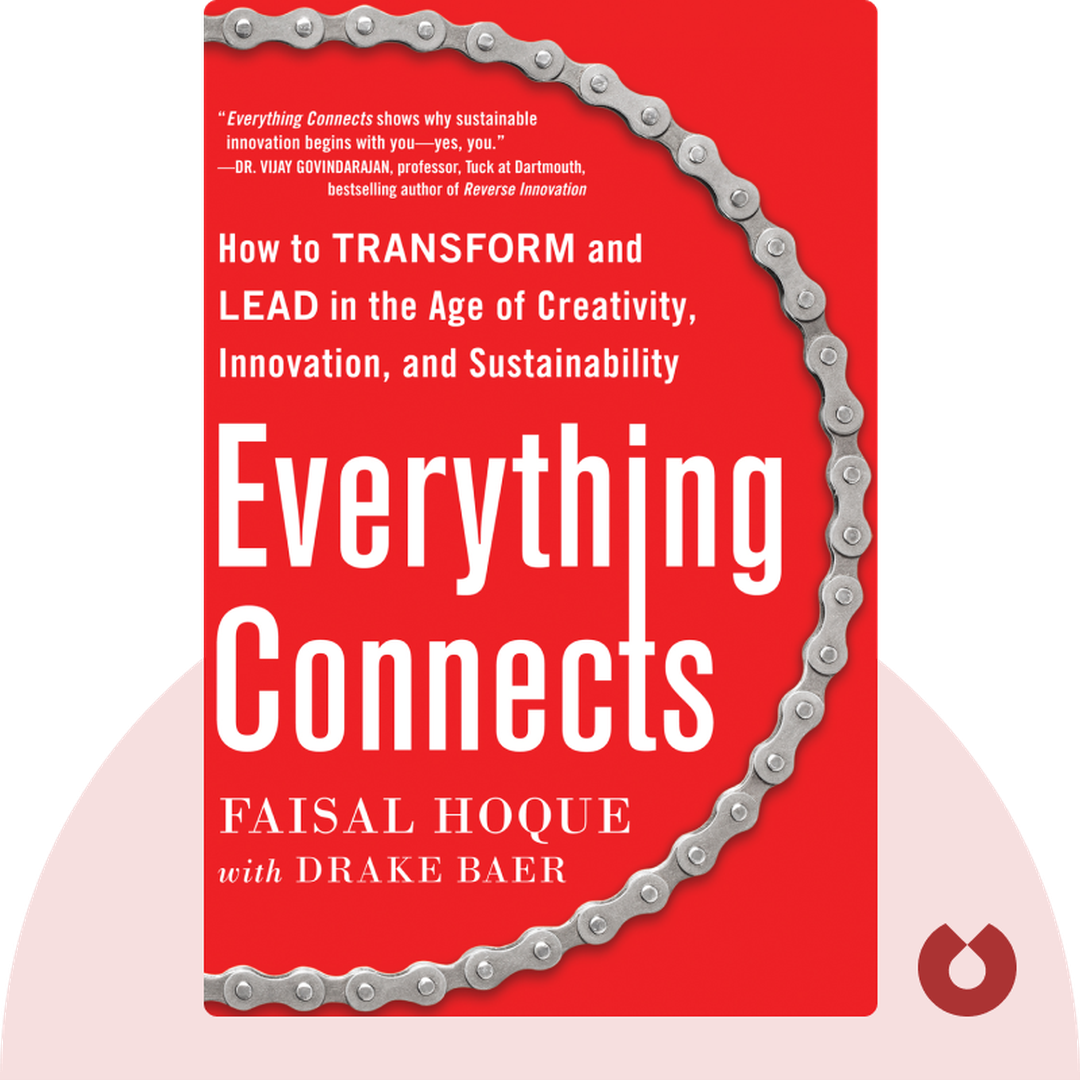
CEOs practicing meditation, the challenges of corporate politics, social differences between team members and customer satisfaction: it’s all connected. Using a holistic approach, Everything Connects (2014) will help you transform your working environment into one that understands such connections and supports as well as increases creativity and innovation.
Who Should Listen to Everything Connects?
- Anyone struggling to foster creativity in their company
- Anyone wanting to know how a leader’s mindfulness is connected to customer satisfaction
- Anyone wanting to strengthen their company in today’s rapidly changing business world
Books Similar to Everything Connects
Readers who enjoyed this also liked these titles.