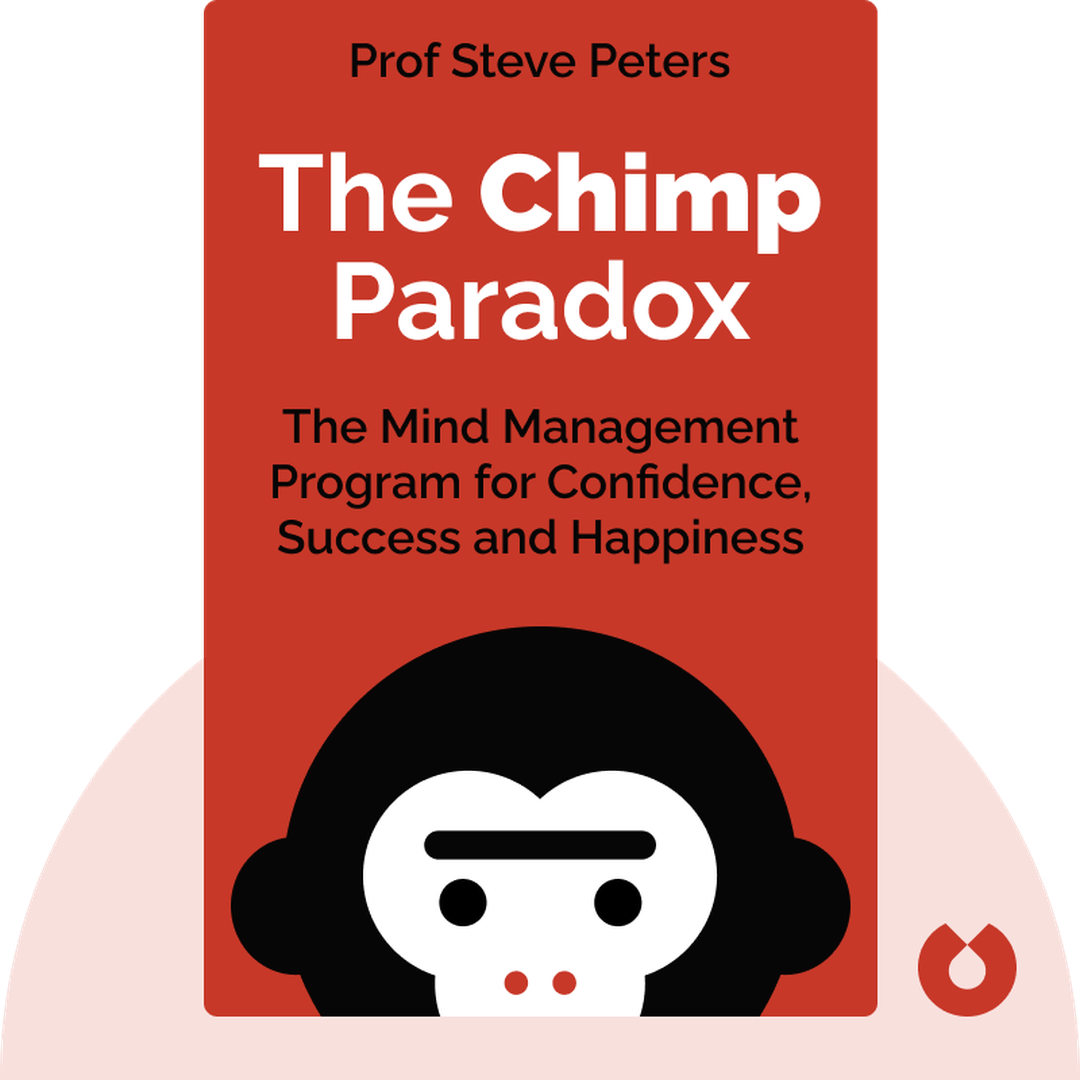
If You're Curious About These Questions...
You should listen to this audiobook
- Have you ever wondered why you can be perfectly calm and rational one minute, only to become completely irrational and irate the next?
- Did you know that your brain is home to an impulsive 'inner chimp' that often hijacks your logic and dictates your reactions?
- What if you could master a simple mental model to neutralize your emotional triggers and maintain total composure in high-pressure situations?
Listen to The Chimp Paradox — Cinematic Audio Edition
Loading player...
Key Takeaways from The Chimp Paradox
- Understand the inner clash between your rational 'Human' brain and your emotional 'Chimp' brain, and discover why your emotions can easily overpower your logic.
- Learn how to optimize your mental 'Computer'—the powerful mediator that operates twenty times faster than your conscious mind—to automate positive behaviors.
- Discover how to identify and eradicate negative mental 'Gremlins' that act as psychological malware, replacing them with reasonable, productive expectations.
- Uncover the power of your 'Stone of Life' by defining your core truths, helping you stabilize both your logical and emotional selves during moments of turmoil.
- Master the Chimp Management Model to eradicate nervousness, boost your confidence, and align the different facets of your psychological universe for ultimate self-actualization.
Learning Tools
Reinforce what you learned from The Chimp Paradox
Mind Map
The Chimp Paradox
Brain Structure+
Managing the Chimp+
Managing the Computer+
Understanding Others+
Communication+
Health and Fitness+
Happiness and Success+
Relationships+
Quiz — Test Your Understanding
Question 1 of 9
What are the two primary parts of the brain that often come into conflict, according to the text?
Question 2 of 9
How can you determine if your 'inner chimp' is currently dictating your behavior?
Question 3 of 9
What is the recommended method for 'exercising' or managing an angry inner chimp?
Question 4 of 9
In the context of the brain's 'computer', what are 'goblins'?
Question 5 of 9
How does the book suggest you get rid of an existing 'goblin'?
Question 6 of 9
According to the book, what is a primary cause of misunderstandings between people?
Question 7 of 9
What is the key difference between aggressive and assertive communication?
Question 8 of 9
Why is it detrimental to focus heavily on problems, such as being overweight, when trying to get healthy?
Question 9 of 9
Why is it important to celebrate your victories along the way to a larger goal?
The Chimp Paradox — Full Chapter Overview
- 1Recommendation
- 2The human brain thinks in two main ways that often clash with each other.
- 3Control your inner chimp by letting it blow off steam.
- 4Automatic brain functions are vital for life, but they can also be harmful.
- 5Eliminate your goblins by spotting them and swapping them for positive patterns.
- 6The chimp often ignores that every person’s brain works differently.
- 7There are four main communication styles, and sharing your message calmly is crucial.
- 8Improving your health becomes simple when you prioritize solutions over problems.
- 9Pursue happiness and honor your successes.
The Chimp Paradox Summary & Overview
The Chimp Paradox (2012) is about the complicated and crazy mess that is the human brain. These blinks explain why people can be calm, rational and composed one minute and irrational and irate the next. Learn how you can keep your cool when faced with triggering situations.
Who Should Listen to The Chimp Paradox?
- High performers everywhere
- Anyone who’s ever wished for more control over their temper
- Psychiatrists and communication specialists
Books Similar to The Chimp Paradox
Readers who enjoyed this also liked these titles.