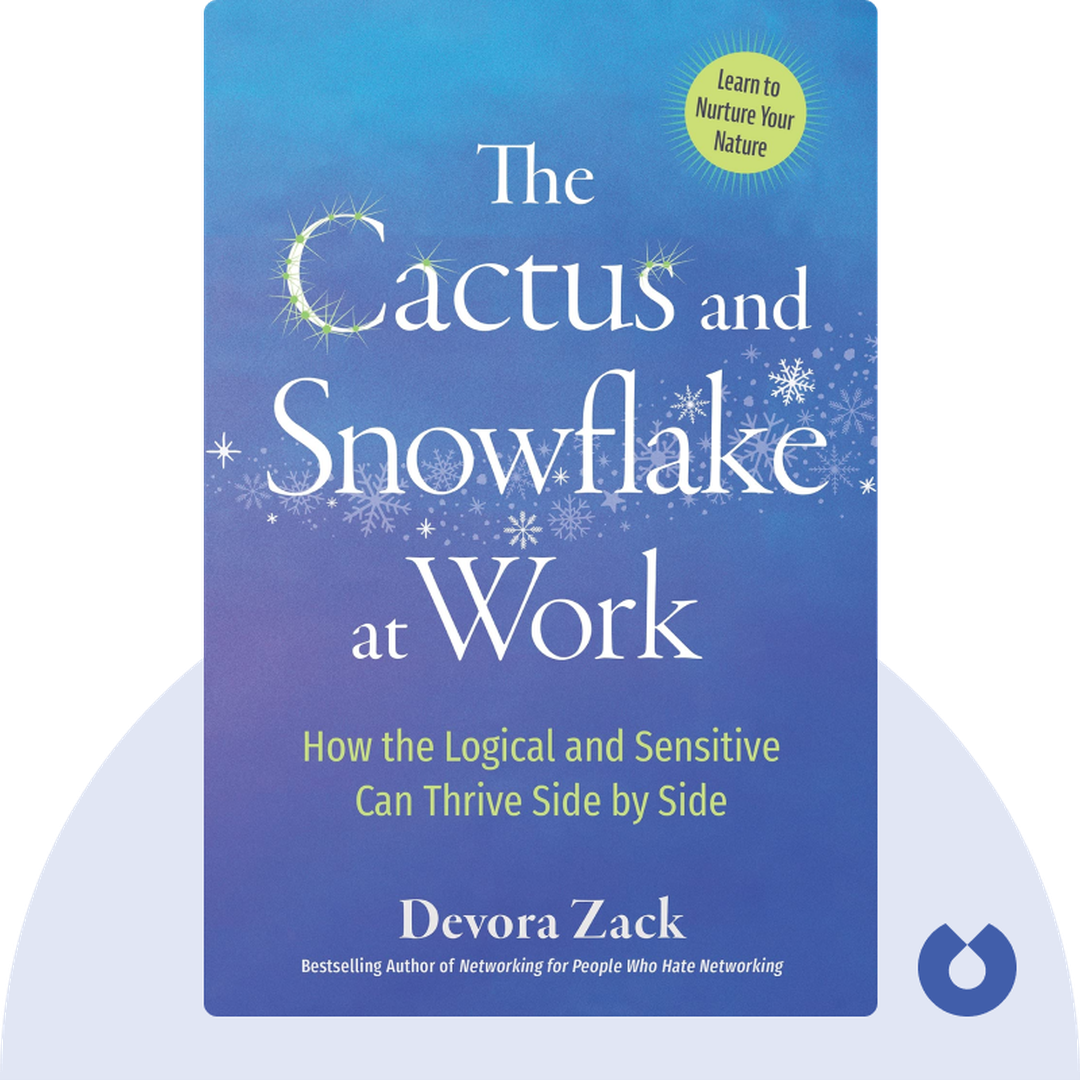
The Cactus and Snowflake at Work
Start ListeningDownload Try free on iPhoneScan to start in 5 seconds
Categories:
If You're Curious About These Questions...
You should listen to this audiobook
- Have you ever wondered why some coworkers seem cold and prickly while others are deeply sensitive—and how that one distinction could be the key to your career success?
- Did you know that your workplace personality likely falls into one of two surprising categories that dictate exactly how you handle stress, feedback, and collaboration?
- What if you could master a simple psychological framework to bridge the gap between logical and emotional teammates to create a more harmonious work environment?
Listen to The Cactus and Snowflake at Work — Free Audiobook
Loading player...
Key Takeaways from The Cactus and Snowflake at Work
- Discover the two distinct workplace personality types—the logical Cactus and the emotional Snowflake—to better understand your colleagues and prevent common office miscommunications.
- Understand why 'Cactus' personalities rely on facts, logic, and direct communication, and how to realize their brief, practical responses are about efficiency rather than rudeness.
- Learn how 'Snowflake' personalities process work through an emotional lens, using empathy and diplomacy to guide their decisions and build strong professional connections.
- Identify where you fall on the Cactus-Snowflake spectrum to harness your unique communication style as a positive workplace superpower, regardless of your role.
- Master the art of bridging the gap between 'thinkers' and 'feelers' by tailoring your messages, saving yourself from unnecessary stress and weekend worry over simple emails.
Learning Tools
Reinforce what you learned from The Cactus and Snowflake at Work
Mind Map
The Cactus and Snowflake at Work
Core Personality Types+
Interpersonal Strategies+
The Shadow State (Under Stress)+
Leadership & Management+
Practical Identification+
Quiz — Test Your Understanding
Question 1 of 8
According to the book, what is the primary difference between a 'Cactus' and a 'Snowflake' personality type?
Question 2 of 8
Why does the author recommend abandoning the 'Golden Rule' (treating others how you want to be treated) in the workplace?
Question 3 of 8
What lesson does the author draw from the rock band Van Halen's infamous demand to remove all brown M&M's from their backstage area?
Question 4 of 8
In the context of the book, what defines a 'Non-Event'?
Question 5 of 8
According to Carl Jung's theories adapted in the book, what happens when a person enters a 'Shadow State'?
Question 6 of 8
What is the author's advice for avoiding a 'Shadow State'?
Question 7 of 8
How does a typical 'Cactus' leader differ from a 'Snowflake' leader?
Question 8 of 8
What is a quick linguistic clue the author provides to help identify whether a colleague is a Cactus or a Snowflake?
The Cactus and Snowflake at Work — Full Chapter Overview
- 1Recommendation
- 2Two types of personalities exist: the Cactus and the Snowflake.
- 3Cactus or Snowflake: Which are you, exactly?
- 4Get to know your colleagues, Cacti and Snowflakes.
- 5Learn to handle those so-called Non-Events.
- 6Learn to handle your Shadow.
- 7Leading a team of Cacti and Snowflakes demands skill and strategy.
The Cactus and Snowflake at Work Summary & Overview
The Cactus and Snowflake at Work (2021) offers a brand-new take on workplace relationships. It suggests that everyone falls into one of two personality types, the Cactus or the Snowflake, and that our types drive the way we think, feel, act, and collaborate. Learning your type – and how to deal with other types – can set you up for professional success.
Who Should Listen to The Cactus and Snowflake at Work?
- Anyone who’s curious to learn if they’re a Cactus or a Snowflake
- Workers who want to gel better with their teammates
- Managers struggling to inspire their teams
Books Similar to The Cactus and Snowflake at Work
Readers who enjoyed this also liked these titles.