If You're Curious About These Questions...
You should listen to this audiobook
- Did you know that a simple, standardized metal box did more to drive global trade than all the free-trade agreements of the last 50 years combined?
- Have you ever wondered why the world’s most powerful port cities suddenly collapsed while once-obscure harbors became the new centers of global commerce?
- What’s the secret to how shipping costs became so negligible that it’s often cheaper to manufacture goods on the other side of the planet than in your own hometown?
Listen to The Box — Free Audiobook
Loading player...
Key Takeaways from The Box
- Discover why the shipping container’s true power lies not in the box itself, but in the highly automated, integrated system it created to slash global transport costs.
- Understand how the dramatic reduction of ocean freight costs enabled small local manufacturers to scale into massive global enterprises and drastically lower consumer prices.
- Learn how trucking mogul Malcolm McLean revolutionized the maritime industry by approaching shipping as an outsider focused on moving goods efficiently rather than just sailing ships.
- Explore how containerization transformed labor-intensive, dangerous docks into highly mechanized hubs, shifting economic power from traditional ports like New York to spacious areas like Newark.
- Find out how the early container industry overcame fierce resistance from fearful labor unions, strict government regulations, and initial design flaws to become the backbone of modern trade.
Learning Tools
Reinforce what you learned from The Box
Mind Map
The Box
Core Concept+
Origins & Innovator+
Transforming Ports & Labor+
Standardization+
Catalysts for Growth+
Economics of Scale+
Global Impact+
Quiz — Test Your Understanding
Question 1 of 10
According to the text, what was the primary impact of the shipping container on international trade?
Question 2 of 10
What characterized the maritime shipping industry and ports before the widespread use of containers?
Question 3 of 10
Who is credited with bringing the revolutionary idea of container shipping to the maritime industry?
Question 4 of 10
Why did the hub for container shipping in the New York area shift from New York City to Newark, New Jersey?
Question 5 of 10
How were the standard 20- and 40-foot container sizes ultimately established?
Question 6 of 10
What was a major early roadblock to the spread of containerized transport regarding shipping prices?
Question 7 of 10
How did the Vietnam War serve as a breakthrough for the container shipping industry?
Question 8 of 10
In the container shipping industry, what was the primary advantage of building increasingly larger ships?
Question 9 of 10
How did the drop in transportation costs due to containerization affect global manufacturing?
Question 10 of 10
According to the book's final advice, why is transportation infrastructure still a crucial consideration for businesses today?
The Box — Full Chapter Overview
- 1Recommendation
- 2The key isn’t the containers themselves, but how we use them today.
- 3Container shipping profoundly changed the world’s ports.
- 4Container shipping started with one visionary from the trucking industry.
- 5The spread of container shipping across the United States rapidly changed ports and jobs.
- 6Container standardization was an early priority, but hard to fully achieve globally.
- 7Container shipping endured an uphill struggle and took years to gain traction worldwide.
- 8Container shipping’s big breakthrough came during the Vietnam War.
- 9Large upfront investments made container shipping a risky venture.
- 10Within container shipping, scale became the name of the game.
- 11The global economy transformed as container shipping became both cheap and interconnected worldwide.
The Box Summary & Overview
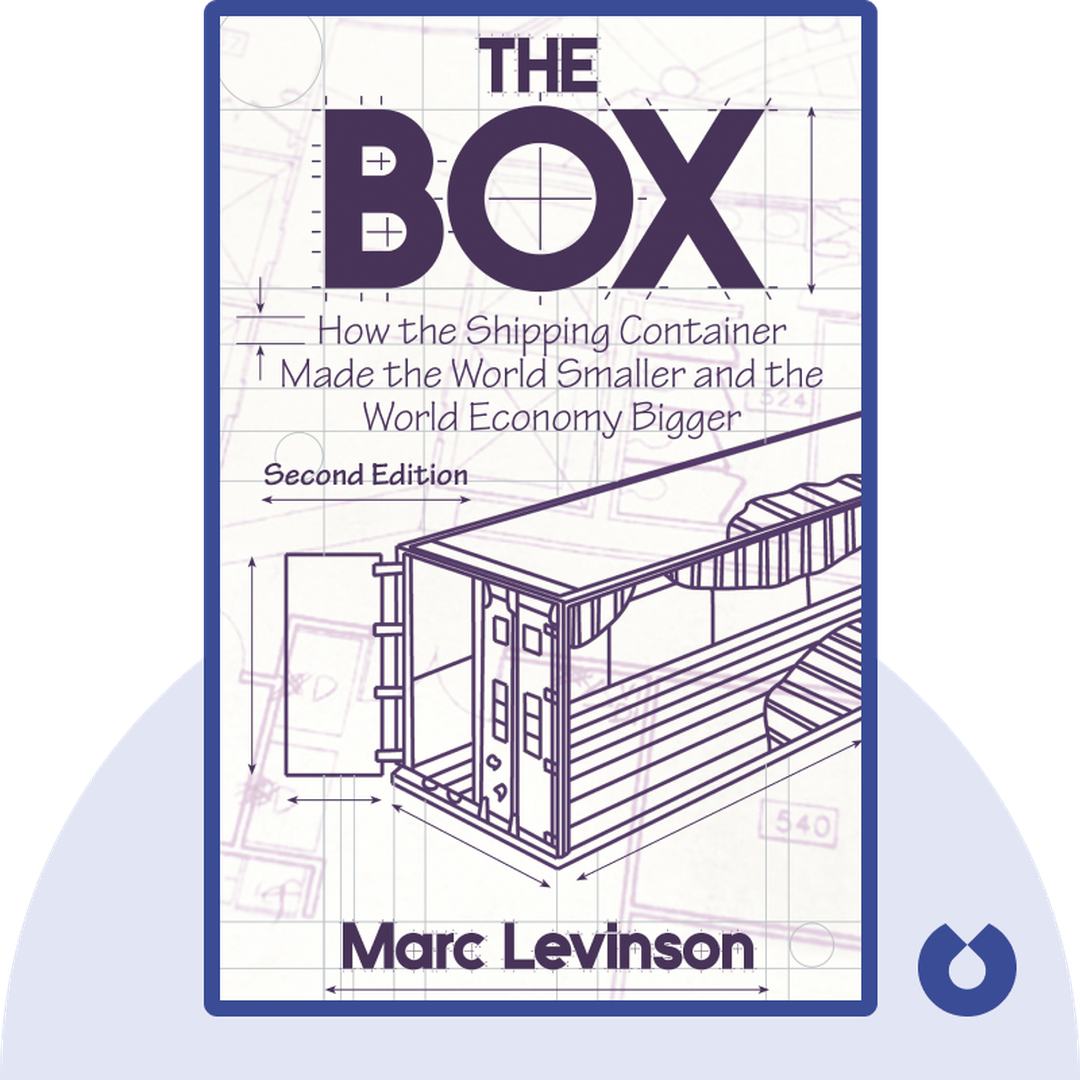
The Box (2006) tells the tale of modern transportation’s poster child, the container, and how it revolutionized the shipping industry and enabled globalization. These blinks will take you on a detailed journey through this seemingly simple but revolutionary change in global systems of trade.
Who Should Listen to The Box?
- Professionals in logistics, transportation or trading
- People interested in globalization
- Every economics and business student
Books Similar to The Box
Readers who enjoyed this also liked these titles.