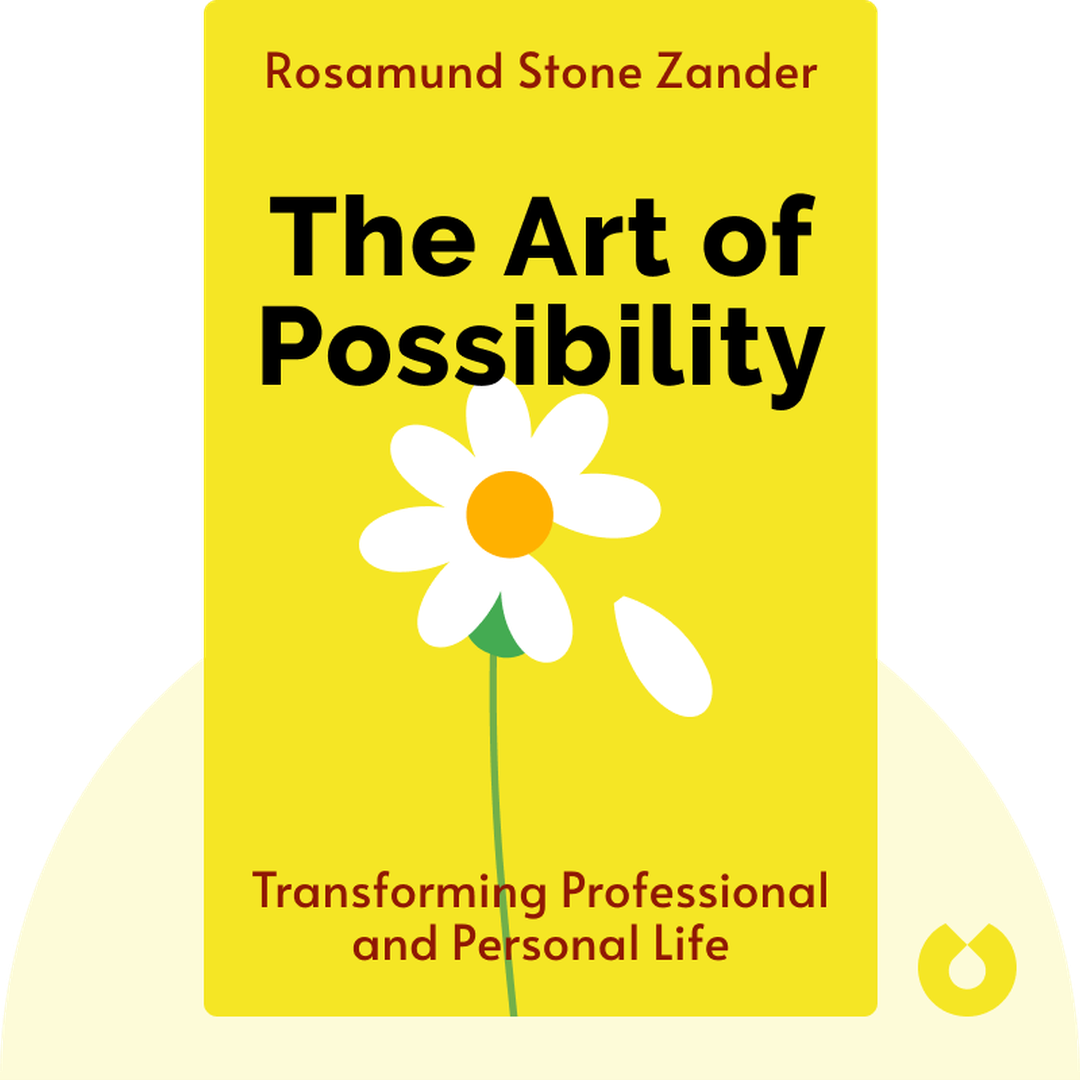
The Art of Possibility
Start ListeningDownload Try free on iPhoneScan to start in 5 seconds
Categories:
If You're Curious About These Questions...
You should listen to this audiobook
- What if you could transform your relationships and unlock hidden potential in others by simply giving them an 'A' before they even begin?
- Did you know that most of the limitations you face are actually 'invented' stories, and are you curious about how to rewrite them to create new opportunities?
- What’s the secret to finding a world of abundance and 'leading from any chair,' regardless of your official title or status?
Listen to The Art of Possibility — Cinematic Audio Edition
Loading player...
Key Takeaways from The Art of Possibility
- Discover how shifting your mindset from a culture of scarcity to an attitude of abundance can transform your life and open up new possibilities.
- Learn how to identify and question the subconscious assumptions limiting your perception so you can unearth radically new solutions to everyday challenges.
- Understand why you are constantly motivated by the fear of survival, and how recognizing this helps you escape the competitive World of Measurement.
- Master the art of contribution by focusing on what you can give rather than what you can gain, freeing yourself from the constant fear of failure.
- Find out how to access the Universe of Possibility at any time by monitoring your thoughts, becoming fully present, and leaving your fears behind.
Learning Tools
Reinforce what you learned from The Art of Possibility
Mind Map
The Art of Possibility
Two Paradigms+
Perception & Assumptions+
Contribution over Competition+
Empowering Leadership+
Embracing the Present+
Unleashing Passion+
Sparking Others+
The Power of We+
Actionable Practice+
Quiz — Test Your Understanding
Question 1 of 9
How does the book suggest we can unearth new possibilities in our lives, using the story of Pablo Picasso as an example?
Question 2 of 9
According to the authors, what fundamentally drives our motivation when we are living in the 'World of Measurement'?
Question 3 of 9
What is the core lesson derived from the story of the woman throwing stranded starfish back into the ocean?
Question 4 of 9
How did conductor Benjamin Zander successfully transform his orchestra's performance and morale?
Question 5 of 9
How did Benjamin Zander view the two botched notes played by a horn player during an otherwise brilliant performance?
Question 6 of 9
How do the authors challenge the common perception of personal energy?
Question 7 of 9
What does the 'smoldering cinder' carried by people in the Middle Ages represent in the context of the book?
Question 8 of 9
To resolve conflicts and find mutually beneficial solutions, what shift in identity do the authors recommend?
Question 9 of 9
What actionable advice is suggested in the final summary to transform relationships and help people realize their potential?
The Art of Possibility — Full Chapter Overview
- 1Recommendation
- 2Your life is shaped by assumptions.
- 3Fear is constantly driving you.
- 4Transformation comes from making a difference, not from being successful.
- 5When every voice is valued, people shine.
- 6Open the door to possibility by accepting what’s present.
- 7Use passion to connect with the universe’s abundant energy.
- 8Use your potential to awaken possibility in others.
- 9Find mutually beneficial solutions by letting go of individuality.
- 10Final summary
The Art of Possibility Summary & Overview
The Art of Possibility (2000) provides a series of strategies that will invite possibility into every aspect of your life. By putting these strategies into practice, you can fuel your creativity, enhance your problem-solving skills, and deepen your relationships with others.
Who Should Listen to The Art of Possibility?
- Modern thinkers looking for new solutions to old problems
- Seekers hoping for more abundance in their lives
- Anyone interested in learning how to transcend their limitations
Books Similar to The Art of Possibility
Readers who enjoyed this also liked these titles.