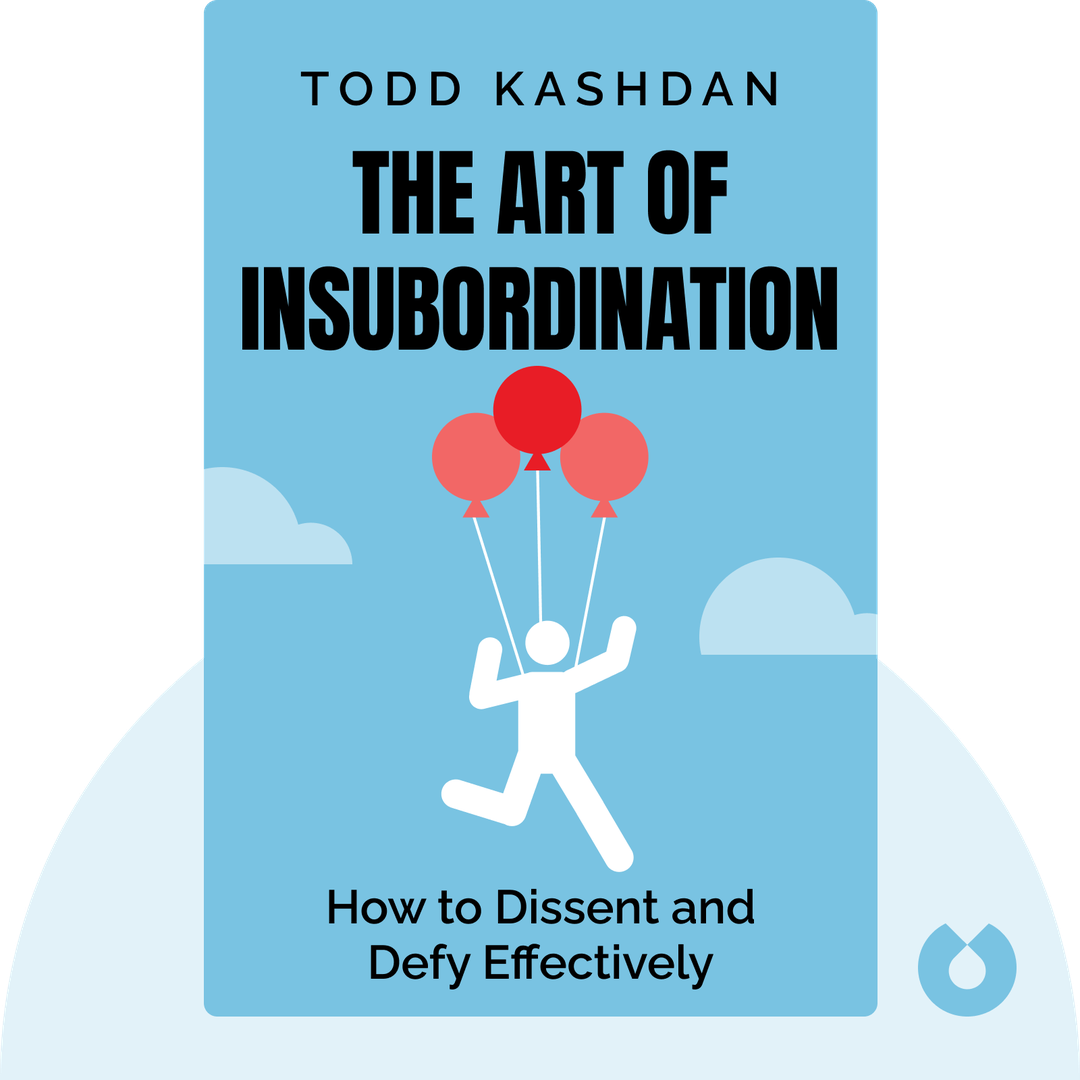
The Art of Insubordination
Start ListeningDownload Try free on iPhoneScan to start in 5 seconds
Categories:
If You're Curious About These Questions...
You should listen to this audiobook
- What’s the secret to voicing a controversial opinion in a way that actually persuades the majority instead of alienating them?
- Did you know that the most effective rebels use specific psychological tactics to stay calm and confident while challenging the status quo?
- Have you ever wondered why some dissenters change the world while others are ignored, and how you can ensure your ideas gain traction?
Listen to The Art of Insubordination — Free Audiobook
Loading player...
Key Takeaways from The Art of Insubordination
- Master the concept of principled insubordination, a purposeful type of rebellion designed to champion worthy ideas and improve society while causing minimal harm.
- Discover why human beings consistently choose social conformity over proven effectiveness—like elite athletes avoiding the highly accurate underhand free throw—and learn to break the mold.
- Understand the powerful psychological biases that make us defend the status quo, causing us to accept flawed systems simply because revolution feels too uncertain.
- Uncover how a single courageous act of nonconformity can spark lasting societal progress, as demonstrated by Elizabeth Jennings's historic fight against a racist transit policy in 1854.
- Learn how introducing just one trained nonconformist into a work team can dramatically increase the generation of original, creative, and highly effective ideas.
Learning Tools
Reinforce what you learned from The Art of Insubordination
Mind Map
The Art of Insubordination
Principled Insubordination+
The Trap of Conformity+
The Power of Dissent+
Persuasion & Communication+
Managing Discomfort+
Winning Responsibly+
Quiz — Test Your Understanding
Question 1 of 7
What is 'principled insubordination' as defined in the book?
Question 2 of 7
Why do most professional basketball players avoid the highly accurate 'underhand' method of shooting free throws?
Question 3 of 7
What did the acupuncture study conducted by Eidelman and Crandall reveal about human psychology?
Question 4 of 7
According to research on group dynamics, what happens when a work team includes a trained 'principled insubordinate'?
Question 5 of 7
Based on the example of the band Fugazi, what is one of the best communication tactics a minority dissenter can use to influence the majority?
Question 6 of 7
What is 'cognitive defusion' in the context of managing the distress of rebellion?
Question 7 of 7
What psychological trap often catches successful insubordinates once they gain power, as illustrated by the story of Evo Morales?
The Art of Insubordination — Full Chapter Overview
- 1Recommendation
- 2Two Ways to Take a Free Throw
- 3Moving Beyond Bias
- 4Talking the Talk
- 5Handling Discomfort
- 6Winning with Responsibility
- 7Final summary
The Art of Insubordination Summary & Overview
The Art of Insubordination (2022) is a research-based, science-backed, anecdote-packed ode to all the rebels and revolutionaries out there. It highlights the importance of dissent in society and teaches aspiring nonconformists the skills they need to confidently challenge majority viewpoints, manage discomfort when rebelling, and avoid losing hold of their most cherished values in the process.
Who Should Listen to The Art of Insubordination?
- Rebels, resistors, radicals, and revolutionaries
- People with minority viewpoints nervous about speaking up against the majority
- People with majority viewpoints who want to unlock the power of dissent and debate
Books Similar to The Art of Insubordination
Readers who enjoyed this also liked these titles.