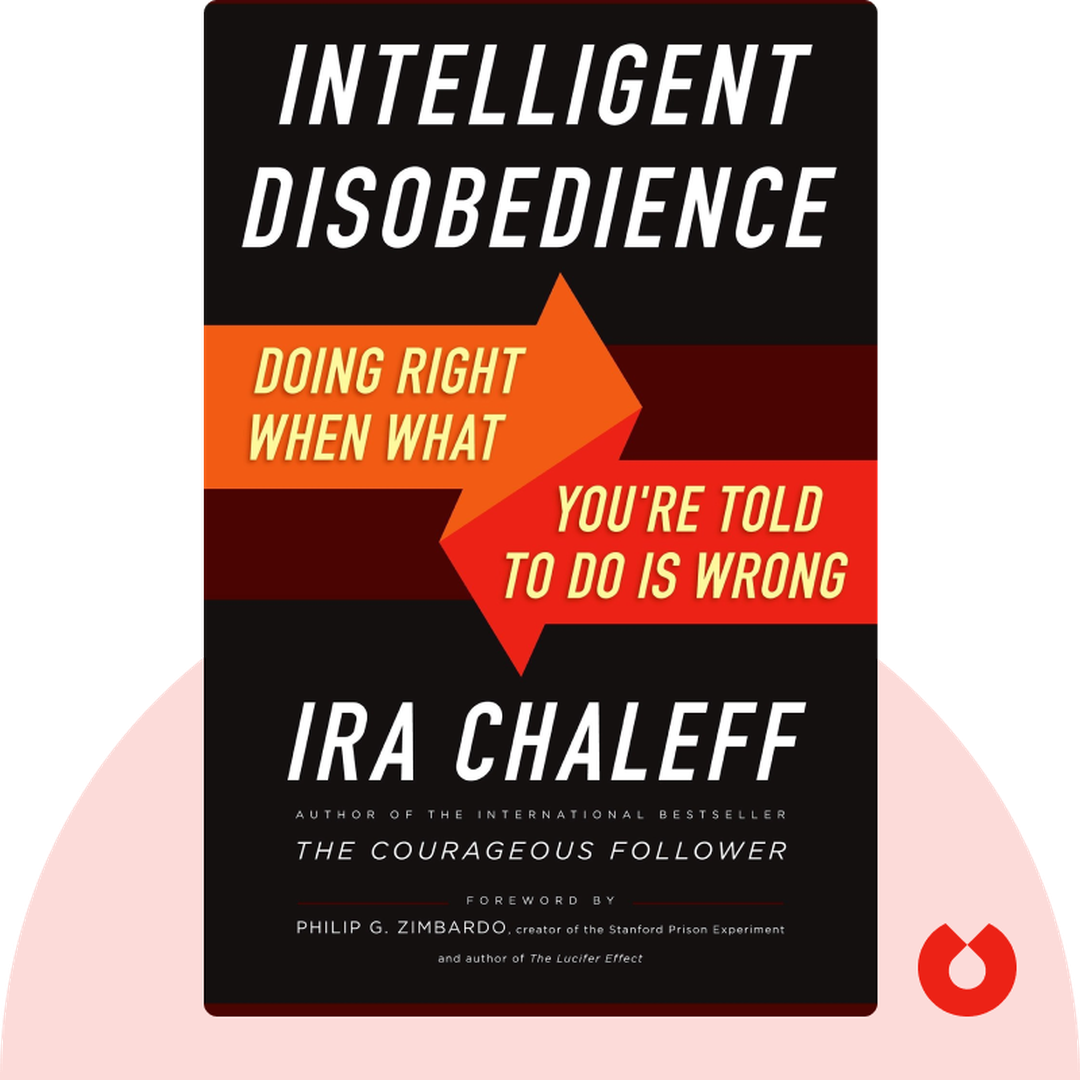
Intelligent Disobedience
Start ListeningDownload Try free on iPhoneScan to start in 5 seconds
Categories:
If You're Curious About These Questions...
You should listen to this audiobook
- Have you ever wondered why we’re so quick to follow orders even when we know they’re wrong—and how you can learn to resist without putting yourself at risk?
- What's the secret to 'intelligent disobedience' that allows top leaders and entrepreneurs to thrive by breaking the right rules?
- What if you could empower your children or your team to think for themselves and stand up for what's right, without creating chaos?
Listen to Intelligent Disobedience — Free Audiobook
Loading player...
Key Takeaways from Intelligent Disobedience
- Learn the three essential conditions for obedience: a rule must be fair, come from a competent and legitimate authority, and produce constructive outcomes.
- Discover why you have both the right and the obligation to refuse orders—even from your boss—if complying would result in disastrous or immoral consequences.
- Master the ability to evaluate any command by critically assessing its source, its intended aim, and its potential for causing serious moral harm.
- Understand how Intelligent Disobedience differs from civil disobedience by focusing on challenging a specific harmful directive rather than disrupting an entire system.
- Find out how to communicate your dissent constructively so leaders recognize that your refusal to obey ultimately protects the entire team from failure.
Learning Tools
Reinforce what you learned from Intelligent Disobedience
Mind Map
Intelligent Disobedience
The Flaw of Blind Obedience+
Conditions for Justified Obedience+
Evaluating Orders for Disobedience+
How to Disobey Effectively+
Role of Leadership+
Teaching Disobedience Early+
Quiz — Test Your Understanding
Question 1 of 6
According to the text, what conditions must be met for a system or authority figure to legitimately demand your obedience?
Question 2 of 6
Why do most people often comply with bad or harmful orders instead of practicing Intelligent Disobedience?
Question 3 of 6
What is the primary difference between Intelligent Disobedience and civil disobedience?
Question 4 of 6
If you decide to apply Intelligent Disobedience, what is a crucial step to ensure the team benefits and your relationship with your leader remains healthy?
Question 5 of 6
When expressing concerns about a bad order, in what situation should you use 'mitigating' (soft or mild) language?
Question 6 of 6
What analogy does the book use to illustrate how children should be taught to balance obedience with the ability to push back against dangerous orders?
Intelligent Disobedience — Full Chapter Overview
- 1Recommendation
- 2We should obey orders only when they are reasonable, constructive, and come from legitimate authority.
- 3You have the right to refuse orders that could lead to disaster.
- 4Intelligent Disobedience means assessing an order’s source, purpose, and consequences before obeying.
- 5Leaders should value Intelligent Disobedience and encourage people to speak up.
- 6Stay aware of your situation so you can better judge how to voice your concerns.
- 7We should be taught Intelligent Disobedience from an early age.
- 8Final summary
Intelligent Disobedience Summary & Overview
Intelligent Disobedience (2015) offers insight into why we’re so quick to follow orders – even when we know we shouldn’t. It gives you all the tools you need to effectively resist the rules, regulations and orders that you know are wrong or harmful – without putting yourself at risk.
Who Should Listen to Intelligent Disobedience?
- Anyone in a leadership position
- Parents who want their children to think for themselves
- Entrepreneurs who want to encourage their creativity
Books Similar to Intelligent Disobedience
Readers who enjoyed this also liked these titles.