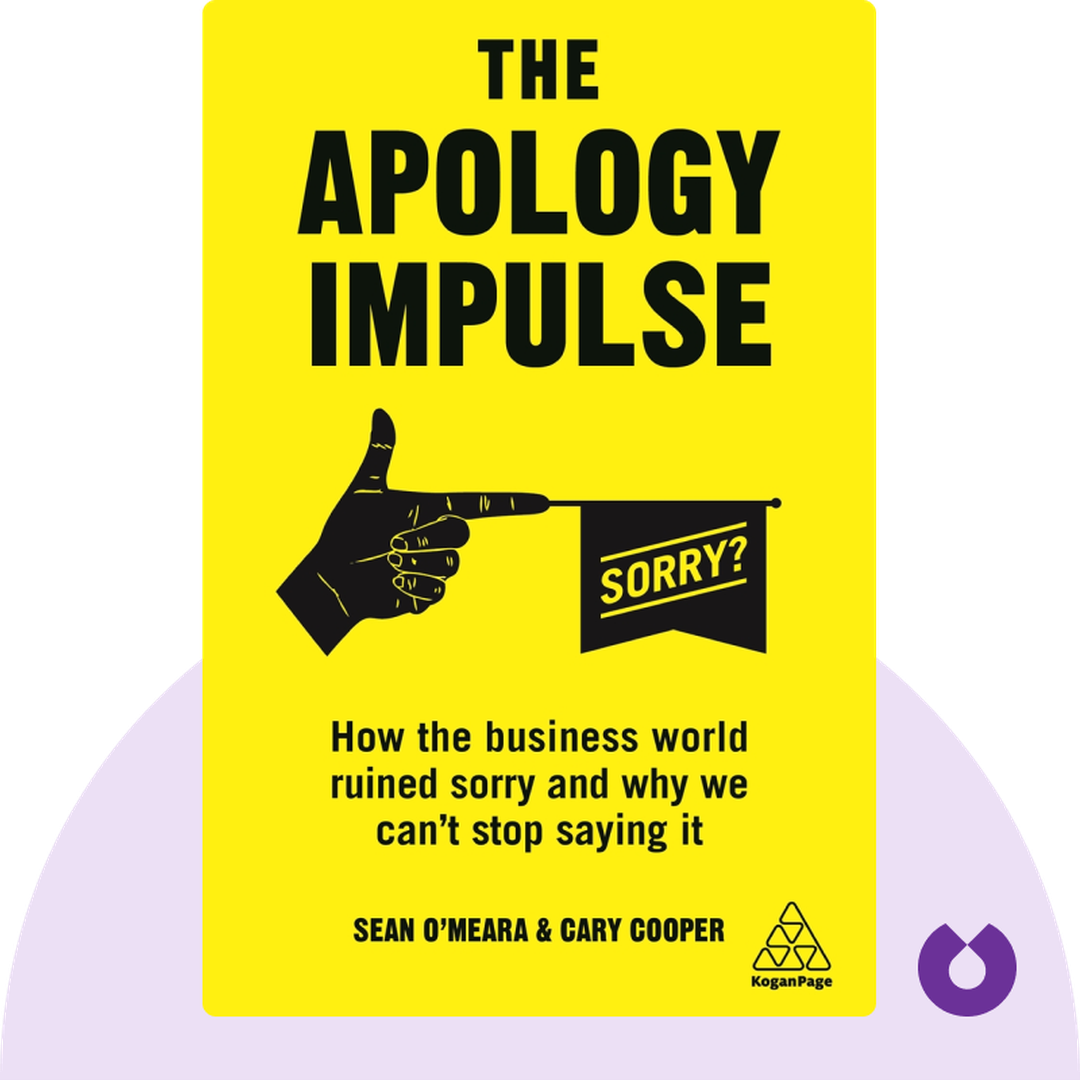
If You're Curious About These Questions...
You should listen to this audiobook
- Did you know that by apologizing for every minor inconvenience, corporations are actually stripping the word 'sorry' of its power and making it meaningless?
- Have you ever wondered why most high-stakes corporate apologies feel so insincere, and what the 'secret ingredients' are for a truly authentic act of contrition?
- What if the key to saving your reputation isn't apologizing more often, but knowing exactly when—and how—to say nothing at all?
Listen to The Apology Impulse — Free Audiobook
Loading player...
Key Takeaways from The Apology Impulse
- Understand why corporate over-apologizing has stripped the act of saying sorry of its meaning, and how apologizing selectively actually increases an organization's credibility.
- Discover why customer-retention pressures cause low-friction industries like airlines to apologize constantly, while high-friction sectors like banks rarely do.
- Learn how outrage capitalism and viral media manufacture corporate crises, pressuring brands to issue transactional apologies for trivial or fabricated grievances.
- Find out why companies must stop panicking over social media backlash and realize that sometimes the best course of action is not to apologize at all.
- Master the distinction between easily forgiven operational mistakes, like KFC running out of chicken, and damaging cultural failures tied to superficial marketing promises.
Learning Tools
Reinforce what you learned from The Apology Impulse
Mind Map
The Apology Impulse
The Devaluation of Apologies+
Outrage Capitalism+
Types of Brand Failures+
Evasive PR Tactics+
Centering the Victim+
Walking the Talk+
When Not to Apologize+
Actionable Advice+
Quiz — Test Your Understanding
Question 1 of 8
According to the text, why do 'low friction' industries like airlines apologize much more frequently than 'high friction' industries like banks?
Question 2 of 8
What is the primary danger of a company employing a strategy of 'tactical appeasement' by apologizing for every minor complaint?
Question 3 of 8
What role do viral news sites play in the cycle of 'outrage capitalism'?
Question 4 of 8
Why was KFC's crisis of running out of chicken easier to recover from compared to the backlash faced by brands like Dove or Pepsi?
Question 5 of 8
How did Arkema Inc. use 'linguistic gymnastics' to evade responsibility during a crisis at one of its factories?
Question 6 of 8
What common mistake did corporations like BP, Samsung, and Equifax make in their public apologies?
Question 7 of 8
What action made JetBlue CEO David Neeleman’s 2007 apology for flight disruptions exemplary?
Question 8 of 8
What lesson can be learned from the fitness supplement brand Protein World's response to the viral backlash over their billboard campaign?
The Apology Impulse — Full Chapter Overview
- 1Recommendation
- 2Corporations apologize so frequently that saying sorry has truly lost its meaning.
- 3Outrage capitalism has driven transactional apologies.
- 4Companies are making promises they ultimately cannot live up to.
- 5Corporations have perfected the art of saying sorry, not sorry.
- 6Companies are forgetting that apologies must always be centered on the harmed parties.
- 7Saying sorry isn’t enough; companies must truly walk their talk.
- 8Sometimes it’s best not to apologize at all.
The Apology Impulse Summary & Overview
The Apology Impulse (2019) reveals how corporations have cheapened the act of saying sorry. These days, apologies are issued to customers for any perceived slight, with the sheer quantity making them meaningless. At the same time, corporations offer weak, jargon-filled fauxpologies in situations where real apologies are required. To save the apology, corporations need to learn how to say sorry wholeheartedly but only when strictly necessary.
Who Should Listen to The Apology Impulse?
- PR experts who want to learn how to connect with the public authentically
- Guilty parties who want to make amends, but don’t know how
- Sociology buffs who are fascinated by social rituals and human behavior
Books Similar to The Apology Impulse
Readers who enjoyed this also liked these titles.