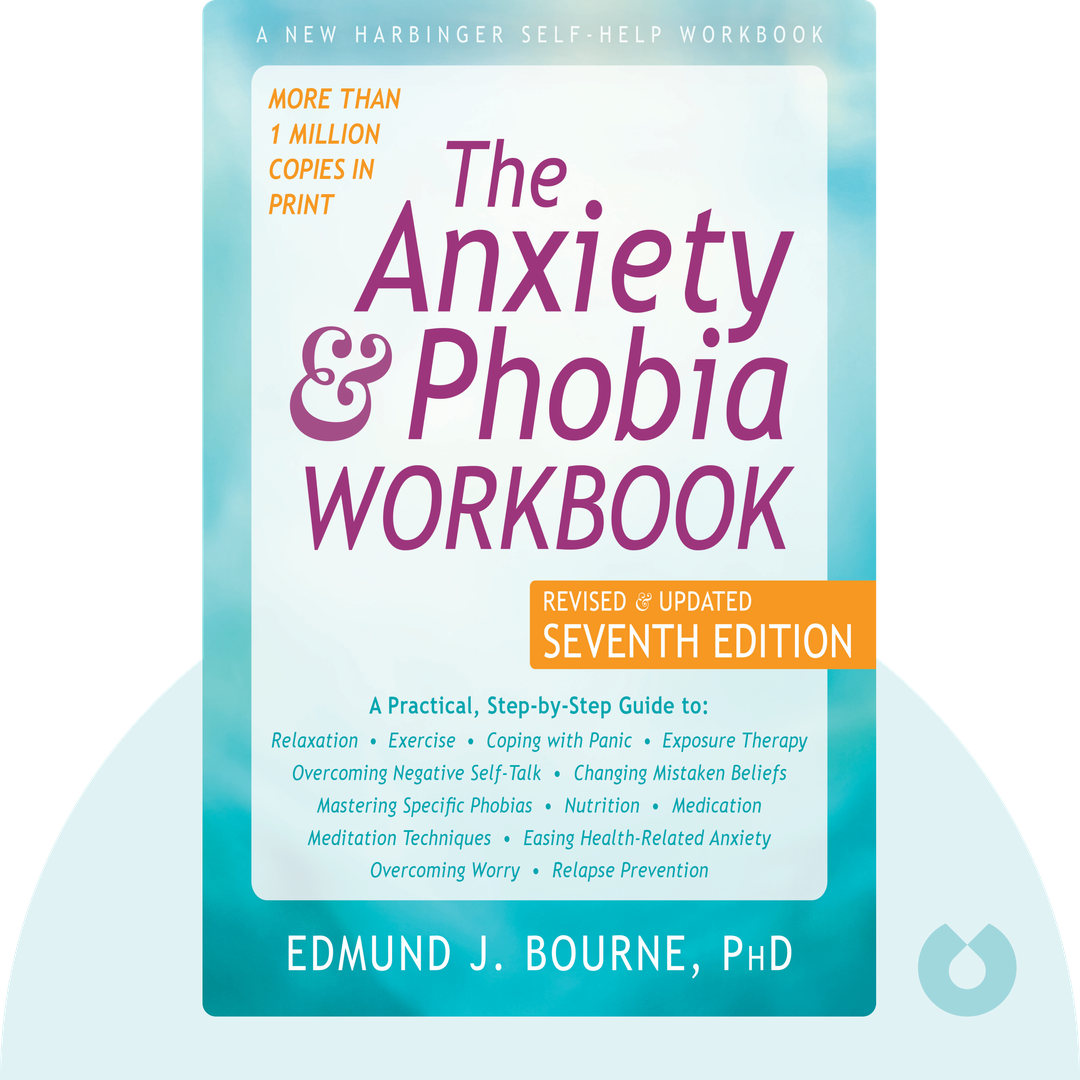
The Anxiety & Phobia Workbook
Start ListeningDownload Try free on iPhoneScan to start in 5 seconds
Categories:
If You're Curious About These Questions...
You should listen to this audiobook
- Did you know that certain everyday foods could be fueling your anxiety more than you realize?
- What if you could master a set of practical tools that stop a panic attack from escalating in just a few minutes?
- Are you curious about how a simple shift in your self-esteem and daily habits can fundamentally rewire your response to stress?
Listen to The Anxiety & Phobia Workbook — Cinematic Audio Edition
Loading player...
Key Takeaways from The Anxiety & Phobia Workbook
- Understand why anxiety is reaching epidemic levels and discover how a holistic approach encompassing diet, exercise, and spirituality provides a lasting solution.
- Identify the four distinct levels of anxiety causes, ranging from long-term biological factors to short-term maintaining behaviors like avoidance and procrastination.
- Learn the five essential ingredients required for lasting recovery, including taking responsibility, maintaining commitment, and embracing the willingness to take risks.
- Discover how dedicating just 30 minutes a day to deep relaxation and incorporating regular aerobic exercise can significantly reduce severe panic attacks and diffuse cumulative stress.
- Master the practice of incremental exposure therapy to safely confront the unknown, build confidence, and gradually overcome debilitating phobias.
Learning Tools
Reinforce what you learned from The Anxiety & Phobia Workbook
Mind Map
The Anxiety & Phobia Workbook
Scope & Nature of Anxiety+
Four Levels of Causes+
Holistic Lifestyle Interventions+
Cognitive & Behavioral Tools+
Personality & Emotional Health+
The Big Picture & Recovery+
Quiz — Test Your Understanding
Question 1 of 7
What is the common thread that ties various anxiety disorders, such as panic disorder and agoraphobia, together?
Question 2 of 7
According to the text, which of the following is considered a 'maintaining' cause of anxiety?
Question 3 of 7
What are the four recommended steps to take when negative self-talk arises?
Question 4 of 7
Which of the following is identified as one of the four unhelpful personality traits commonly found in anxiety-prone individuals?
Question 5 of 7
How does the author recommend managing hypoglycemia to help reduce anxiety and panic vulnerability?
Question 6 of 7
What is Edmund J. Bourne's general stance on the use of prescription medication for treating anxiety?
Question 7 of 7
Which strategy is described as one of the most powerful and proven tools for overcoming phobias?
The Anxiety & Phobia Workbook — Full Chapter Overview
- 1Recommendation
- 2Grasping the scope of anxiety
- 3Pinpointing causes and moving forward
- 4Relaxation, exercise, and improved self-talk
- 5Personality traits and tangled emotions
- 6Diet, medication, and the bigger picture
The Anxiety & Phobia Workbook Summary & Overview
The Anxiety & Phobia Workbook (1990) is a comprehensive guide that offers practical strategies to manage and overcome anxiety. Covering a range of topics, from self-esteem and nutrition to meditation and other coping strategies, it provides a holistic approach to mental well-being, offering many actionable steps for a more fulfilling life.
Who Should Listen to The Anxiety & Phobia Workbook?
- Fans of self-help tips
- Anyone who experiences anxiety or panic attacks
- Stress-free life seekers
Books Similar to The Anxiety & Phobia Workbook
Readers who enjoyed this also liked these titles.