If You're Curious About These Questions...
You should listen to this audiobook
- Have you ever wondered why your brain sometimes reacts to a minor stressor as if it’s a life-or-death situation?
- What if you could learn a simple, no-nonsense technique to shut down a panic attack the moment you feel it starting?
- Are you curious about the 'hardcore' mindset shift that helps you stop fighting your anxiety and start living your life again?
Listen to Hardcore Self Help — Free Audiobook
Loading player...
Key Takeaways from Hardcore Self Help
- Understand how anxiety evolved as an essential survival tool for our ancestors, and discover why this same natural response misfires when faced with modern stressors like deadlines and exams.
- Recognize that the intense physical symptoms of a panic attack are merely your body's natural fear response, and gain the reassurance that these terrifying sensations are not actually physically harming you.
- Master deep breathing as an actionable skill by practicing during moments of mild stress, which gives your mind a neutral target to focus on when severe anxiety strikes.
- Uncover the subtle but destructive impact of negative self-talk, and learn how bringing awareness to your inner voice can stop it from quietly eroding your confidence and feeding your anxiety.
- Realize that anxiety is a common human experience rather than a character flaw, and see why seeking professional therapy is a more effective choice than trying to push through the struggle alone.
Learning Tools
Reinforce what you learned from Hardcore Self Help
Mind Map
Hardcore Self Help
Types of Anxiety+
Sources of Anxiety+
Coping Strategies+
Communicating with Loved Ones+
Professional Help & Mindset+
Quiz — Test Your Understanding
Question 1 of 7
According to the text, what is 'catastrophizing' in the context of mental anxiety?
Question 2 of 7
Why is conscious breathing an effective method for counteracting a panic attack?
Question 3 of 7
What strategy does the author suggest for helping loved ones understand your anxiety?
Question 4 of 7
What is the book's stance on using medication to treat anxiety?
Question 5 of 7
Why does the author recommend giving your anxiety a name, such as 'Fred'?
Question 6 of 7
How does Obsessive-Compulsive Disorder (OCD) typically manifest according to the text?
Question 7 of 7
To prevent the buildup of anxiety and the risk of panic attacks, what lifestyle change does the text strongly recommend?
Hardcore Self Help — Full Chapter Overview
- 1Recommendation
- 2Anxiety takes different forms, and some can be incredibly hard to live with.
- 3Anxiety is created by both your body and your mind.
- 4Breathing techniques can give you relief from anxiety.
- 5Others may struggle to understand your anxiety, but you can help them.
- 6Fight anxiety with professional support and remind yourself how far you’ve come.
- 7Final summary
Hardcore Self Help Summary & Overview
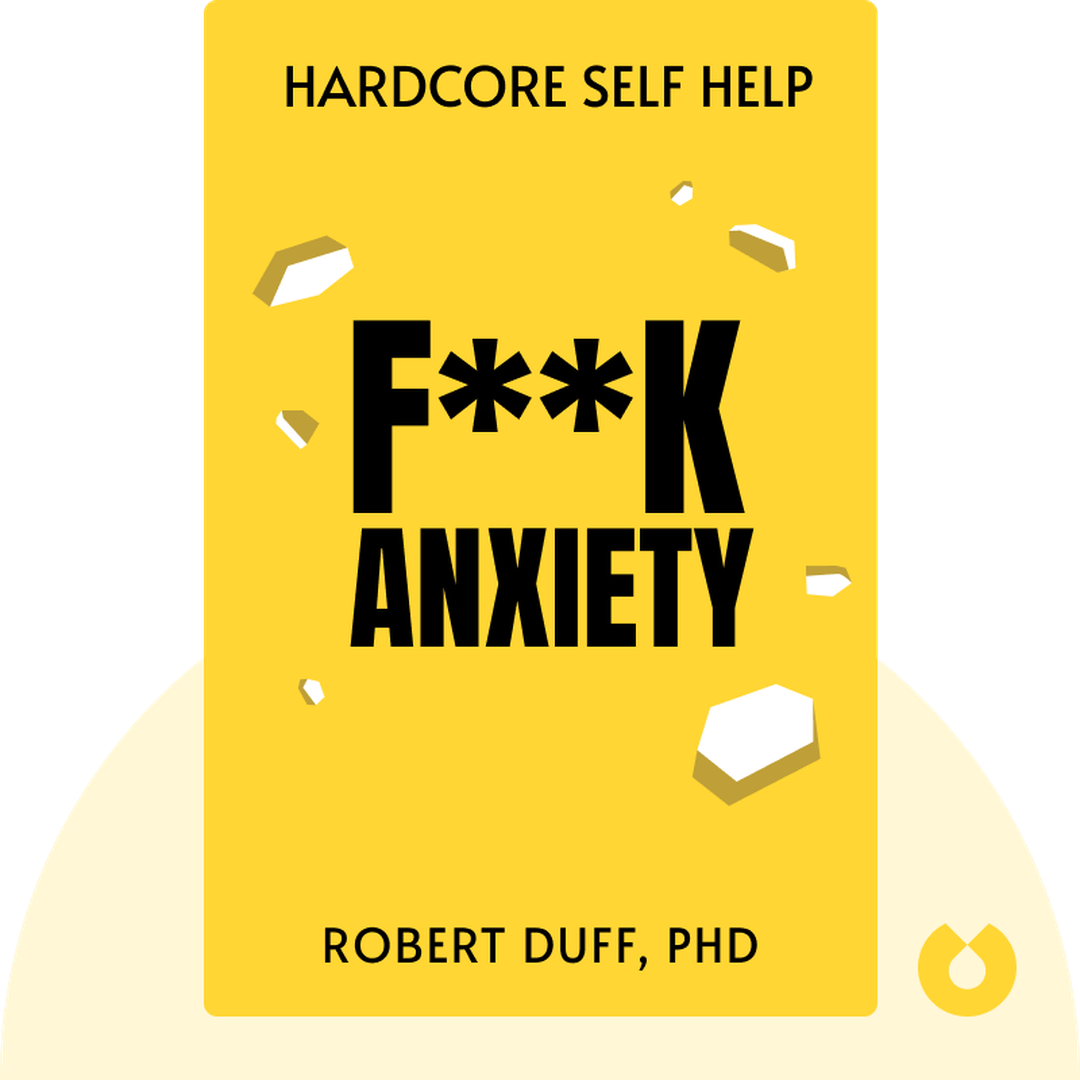
Hardcore Self Help (2014) is your guide to overcoming anxiety and living a peaceful life. These blinks examine some of the different forms that anxiety disorders take and offer some techniques to help ease anxiety.
Who Should Listen to Hardcore Self Help?
- Patients struggling with anxiety disorders
- Anyone with a friend or loved one who suffers from anxiety
- Stressed-out executives and entrepreneurs
Books Similar to Hardcore Self Help
Readers who enjoyed this also liked these titles.