If You're Curious About These Questions...
You should listen to this audiobook
- Did you know that your brain’s performance is dictated less by your genes and far more by the specific nutrients currently sitting in your pantry?
- Have you ever wondered why your mind feels foggy despite your best efforts, and what if you could unlock peak cognitive power just by changing what you drink?
- What’s the secret to the powerful brain-gut connection that can shield you from dementia and keep your memory sharp for a lifetime?
Listen to Brain Food — Free Audiobook
Loading player...
Key Takeaways from Brain Food
- Discover why your DNA is not your destiny, as fewer than 1 percent of Alzheimer's cases are purely genetic, making daily dietary choices your most powerful tool for cognitive health.
- Learn how drinking eight to ten cups of water a day can boost your brain's performance by almost 30 percent and quickly reverse the effects of dehydration-induced brain shrinkage.
- Understand the critical difference between drinking mineral-rich hard water and nutritionally void purified water, and why you should also absorb hydration through water-dense produce like cucumbers and watermelon.
- Find out why your brain craves monounsaturated fats from foods like avocados and olive oil, but suffers inflammation and oxygen loss when exposed to saturated and trans fats.
- Master the principles of neuro-nutrition to consciously supply your brain with the more than 45 essential nutrients it needs to function optimally, beat depression, and ward off dementia.
Learning Tools
Reinforce what you learned from Brain Food
Mind Map
Brain Food
The Brain-Diet Connection+
Hydration+
Fats+
Amino Acids & Proteins+
Glucose & Carbohydrates+
Vitamins & Minerals+
The Gut-Brain Axis+
Holistic Brain Lifestyle+
Quiz — Test Your Understanding
Question 1 of 10
What percentage of Alzheimer's cases are estimated to develop purely on genetic grounds?
Question 2 of 10
Why does the author recommend drinking 'hard water' (like tap or bottled spring water) over purified water?
Question 3 of 10
According to the book, what is the brain's relationship with saturated fats?
Question 4 of 10
What food does the author refer to as 'the ultimate brain food' due to its high omega-3 content and memory-boosting properties?
Question 5 of 10
How does eating carbohydrates alongside tryptophan-rich foods benefit the brain?
Question 6 of 10
Which of the following is true about the brain's energy consumption?
Question 7 of 10
What concept explains why deriving vitamins from whole foods is more effective than taking manufactured supplements?
Question 8 of 10
How do the fatty acids produced by the gut microbiome directly impact brain health?
Question 9 of 10
Which dietary habit is naturally incorporated into the lifestyles of centenarians living in the 'blue zones'?
Question 10 of 10
Which type of cookware does the author recommend avoiding to protect brain health?
Brain Food — Full Chapter Overview
- 1Recommendation
- 2Food can act as medicine—or as poison.
- 3Staying hydrated can make you smarter.
- 4Your brain needs fats—but not all fats are equal.
- 5Amino acids influence how you think, feel, and sleep.
- 6Glucose keeps your brain running.
- 7Vitamins shield your brain and boost cognitive performance.
- 8A healthy gut supports a happy brain.
- 9Your brain needs healthy food, daily exercise, and good company to thrive.
- 10Final summary
Brain Food Summary & Overview
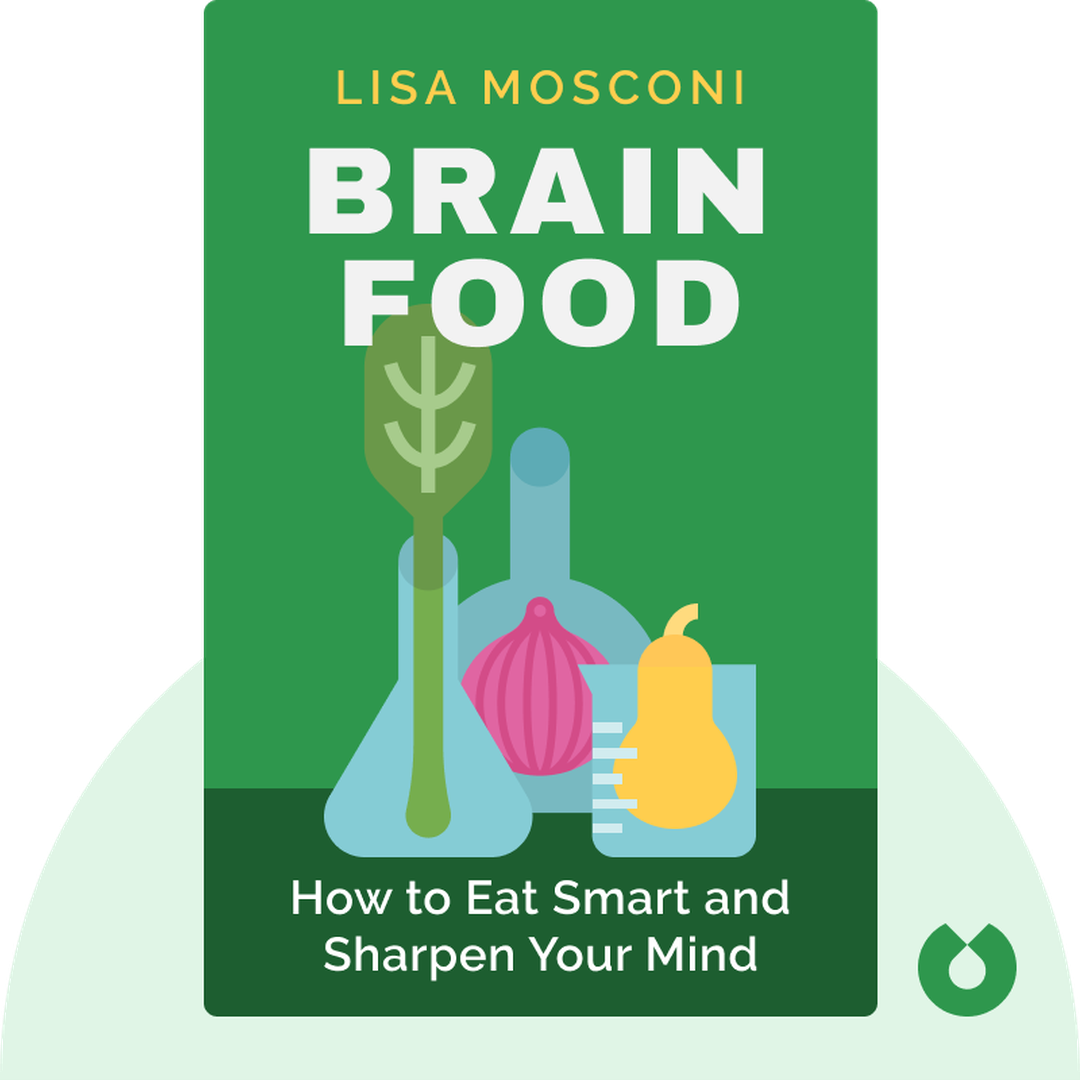
Brain Food (2018) highlights the role nutrition plays in your brain’s health. It explores the incredible brain-gut connection and reveals exactly what to eat and drink to maximize your cognitive power and prevent stress, dementia, and memory loss.
Who Should Listen to Brain Food?
- People who want to transform sluggish minds into sharpshooters
- Health nuts seeking simple hacks to achieve long-term well-being
- Those who feel their brains could use a little TLC
Books Similar to Brain Food
Readers who enjoyed this also liked these titles.