If You're Curious About These Questions...
You should listen to this audiobook
- Have you ever wondered why your brain is biologically programmed to prefer certain faces and landscapes over others?
- Did you know that the same neural pathways responsible for basic survival are the ones that allow you to experience the profound beauty of art?
- What’s the secret evolutionary reason behind why humans started creating art in the first place, and how does it continue to shape our psychology today?
Listen to The Aesthetic Brain — Free Audiobook
Loading player...
Key Takeaways from The Aesthetic Brain
- Discover the three fundamental parameters—averageness, symmetry, and sexual dimorphism—that automatically wire our brains to find certain faces beautiful.
- Understand why our pursuit of beauty is rooted in evolutionary survival, where symmetrical features instinctively signal a robust, parasite-free immune system to potential mates.
- Learn why humans are universally hardwired to love the African savanna, as its wide-open landscapes provided distinct survival and predatory advantages for our ancestors.
- Explore how external circumstances, such as regional food scarcity or abundance, subconsciously shape our cultural beauty standards and alter our preferences for different body types.
- Find out how human culture artificially exaggerates the physical traits we naturally find attractive, from the hypermasculine features of comic book heroes to the extreme youthfulness of supermodels.
Learning Tools
Reinforce what you learned from The Aesthetic Brain
Mind Map
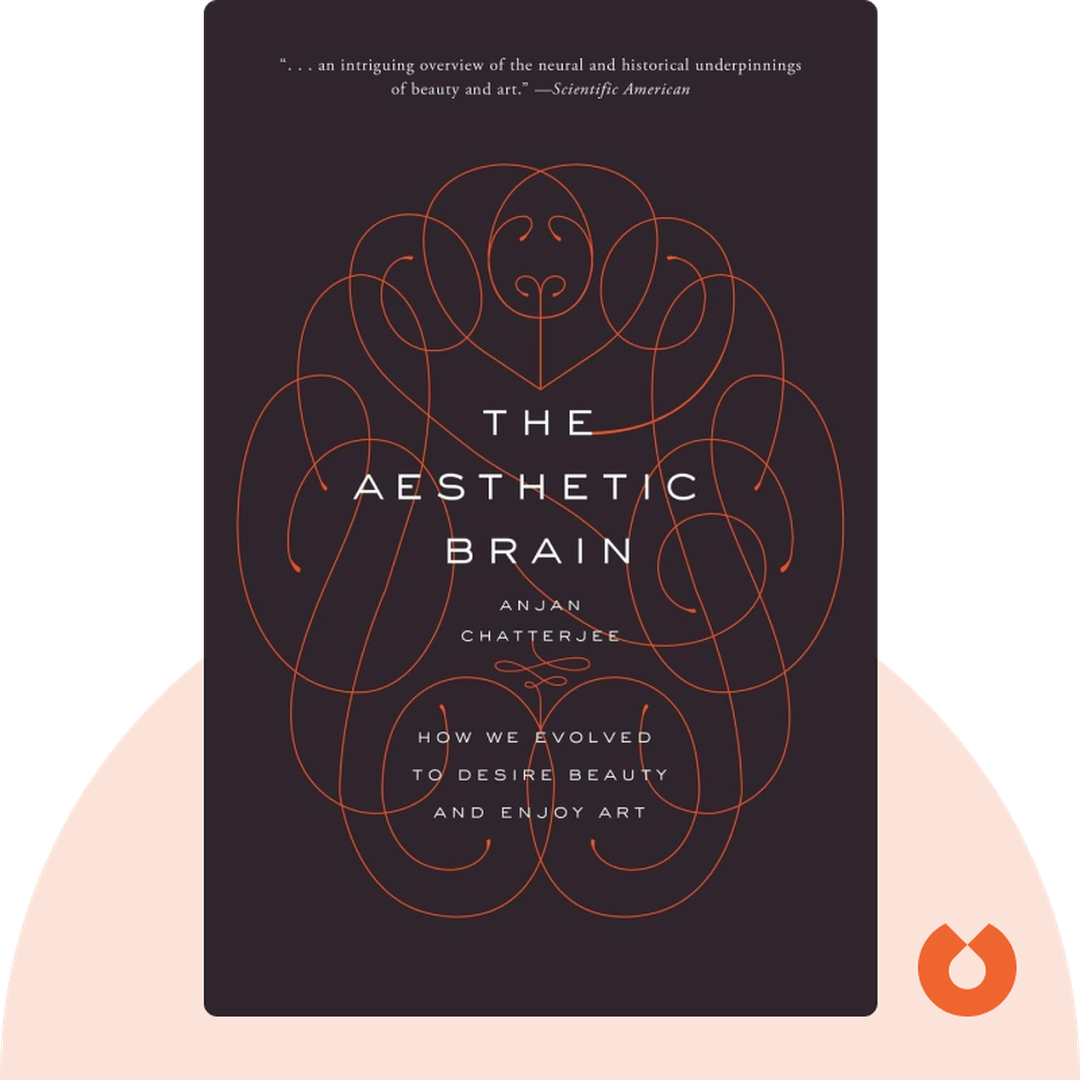
The Aesthetic Brain
The Biology of Beauty+
The Nature of Art+
The Brain on Art+
The Evolution of Art+
Quiz — Test Your Understanding
Question 1 of 8
What are the three basic parameters scientists use to define an attractive human face?
Question 2 of 8
Why do humans possess a universal fondness for wide, open landscapes like the African savanna?
Question 3 of 8
How does a community's food supply typically influence the body styles that men find attractive?
Question 4 of 8
Why are comic book superheroes often drawn with hypermasculine features and manga characters with unusually large eyes?
Question 5 of 8
Philosopher Edmund Burke pointed out that art isn't just beautiful; it can also be 'sublime.' What does this mean in the context of the book?
Question 6 of 8
How does the human brain process art compared to abilities like logical thinking or language acquisition?
Question 7 of 8
According to the book, what distinguishes the aesthetic experience of enjoying art from seeing an appealing advertisement?
Question 8 of 8
What does the example of the domesticated Bengalese finch demonstrate about the origins of human art?
The Aesthetic Brain — Full Chapter Overview
- 1Recommendation
- 2Universal principles determine what makes a human face look beautiful.
- 3Seeking beauty in faces and landscapes helped our ancestors survive.
- 4External conditions shape our sense of beauty, while culture amplifies traits we naturally favor most.
- 5Creating art is a universal human behavior, yet art itself resists clear definition entirely.
- 6Art engages the sensory, emotional, and cognitive networks within the brain.
- 7Aesthetic experience means liking something without simultaneously wanting.
- 8Art is widely viewed as either a natural instinct or a by-product of evolution in humans.
- 9The less we needed to fight for survival, the more freedom we had for art creation.
The Aesthetic Brain Summary & Overview
The Aesthetic Brain (2014) explains how and why the human brain responds to beauty and art. These blinks break down the reasons why we instinctively prefer some faces to others, what art does to our brains and how we started making art in the first place.
Who Should Listen to The Aesthetic Brain?
- Artists and art lovers
- Students of psychology and anthropology
- Curious readers interested in how beauty takes shape in the eye of the beholder
Books Similar to The Aesthetic Brain
Readers who enjoyed this also liked these titles.