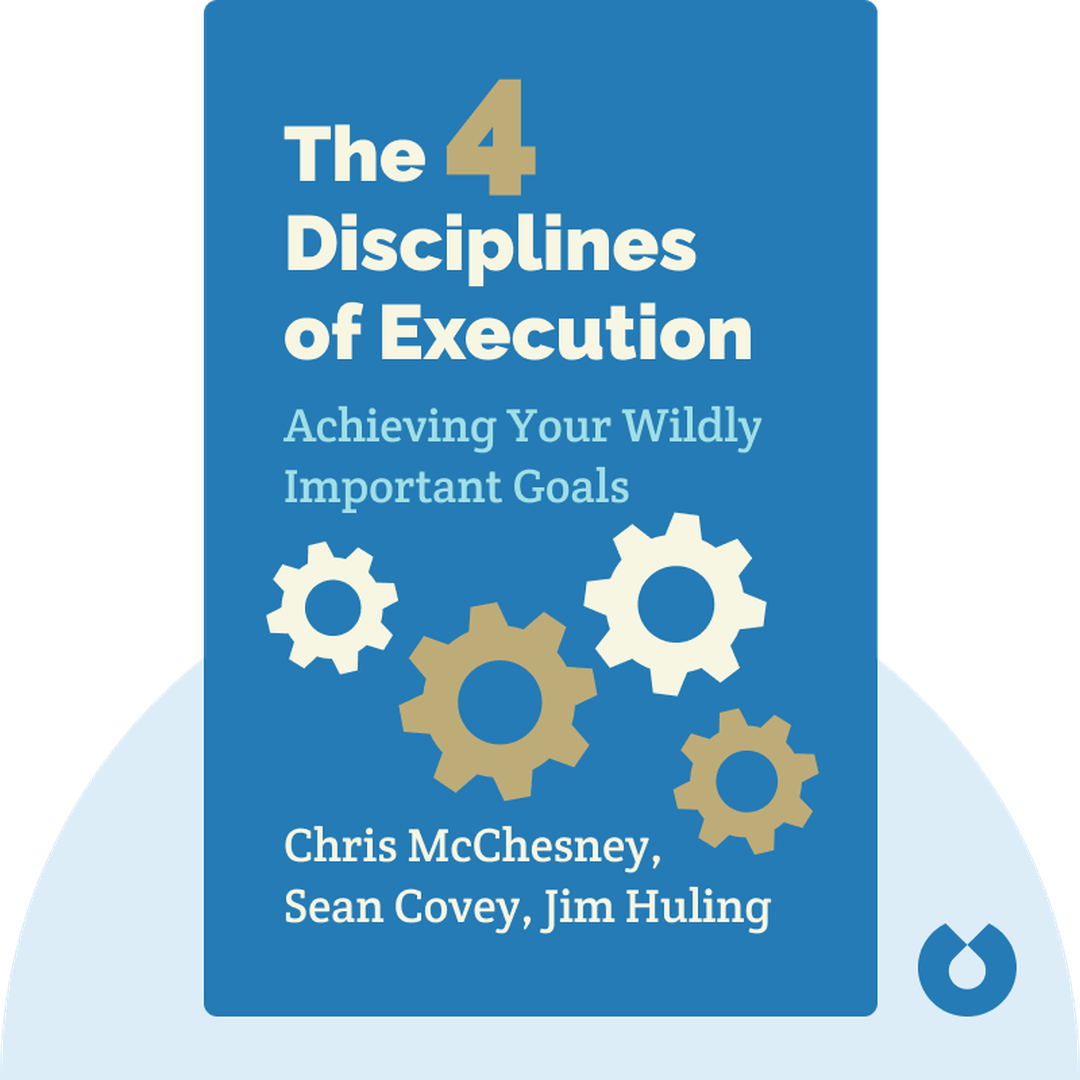
The 4 Disciplines of Execution
Start ListeningDownload Try free on iPhoneScan to start in 5 seconds
Categories:
If You're Curious About These Questions...
You should listen to this audiobook
- Have you ever wondered why even the most brilliant strategic plans often get swallowed whole by the "whirlwind" of your team's daily operations?
- What if you could identify the specific, high-leverage actions that practically guarantee your most ambitious goals will be met, instead of just waiting for results?
- Are you curious about the secret to creating a "compelling scoreboard" that motivates your employees to win as much as a high-stakes athlete?
Listen to The 4 Disciplines of Execution — Free Audiobook
Loading player...
Key Takeaways from The 4 Disciplines of Execution
- Learn how to maximize your team's impact by shutting out everyday distractions and focusing on a maximum of two time-bound, Wildly Important Goals (WIGs) at once.
- Understand the critical difference between lag and lead measures, and discover why focusing on predictive, influenceable daily actions prevents unexpected failures.
- Discover why maintaining a simple, highly visible scoreboard motivates your team to win and prevents essential tasks from getting lost in the day-to-day whirlwind.
- Master the art of accountability by implementing weekly 20-to-30-minute WIG sessions where team members report on tasks, review the scoreboard, and make new commitments.
- Find out how to successfully navigate behavioral change in your organization by identifying and managing the three distinct types of employees: resisters, potentials, and models.
Learning Tools
Reinforce what you learned from The 4 Disciplines of Execution
Mind Map
The 4 Disciplines of Execution
The Core Challenge+
Discipline 1: Focus on Wildly Important Goals (WIGs)+
Discipline 2: Act on Lead Measures+
Discipline 3: Keep a Compelling Scoreboard+
Discipline 4: Create a Cadence of Accountability+
Implementation & Scaling+
Quiz — Test Your Understanding
Question 1 of 10
According to the text, what is the 'whirlwind'?
Question 2 of 10
The book states there are only two ways to execute strategies. What are they?
Question 3 of 10
What is a key characteristic of a Wildly Important Goal (WIG) according to the first discipline?
Question 4 of 10
What is the primary difference between lead measures and lag measures?
Question 5 of 10
How should a team's scoreboard be designed and managed according to the third discipline?
Question 6 of 10
What is the recommended approach for establishing a culture of accountability (the fourth discipline)?
Question 7 of 10
According to the text, what is the ideal formula for clearly defining a goal?
Question 8 of 10
When introducing the scoreboard to the team, what role should the team leader play?
Question 9 of 10
How should the 'whirlwind' be handled during regular WIG meetings?
Question 10 of 10
When implementing the Four Disciplines across a large organization, how should individual department WIGs be chosen?
The 4 Disciplines of Execution — Full Chapter Overview
- 1Recommendation
- 2The true challenge in executing strategy is getting people to truly change.
- 3The first execution discipline is focusing only on specific, wildly important goals.
- 4The second execution discipline: achieve your goals by selecting measures mirroring current behavior accurately today.
- 5The third execution discipline: motivate your team by consistently tracking performance scores publicly together.
- 6The fourth execution discipline is building a culture grounded in accountability.
- 7Use a step-by-step process to implement wildly important goals and identify useful predictors accurately.
- 8Follow through by introducing a scoreboard and creating an accountability cycle robustly.
- 9Use a six-step process to involve every department in the Four Disciplines model.
The 4 Disciplines of Execution Summary & Overview
The 4 Disciplines of Execution (2012) is a manual for CEOs and managers, showing leaders how to execute their strategic goals by getting their staff to behave differently. By introducing the four disciplines of execution, you’ll help motivate your team to achieve broader company goals.
Who Should Listen to The 4 Disciplines of Execution?
- CEOs, managers and company leaders who want to execute their strategic goals
- Students of economics and management
- Anyone who wants to see their organization achieve its goals
Books Similar to The 4 Disciplines of Execution
Readers who enjoyed this also liked these titles.