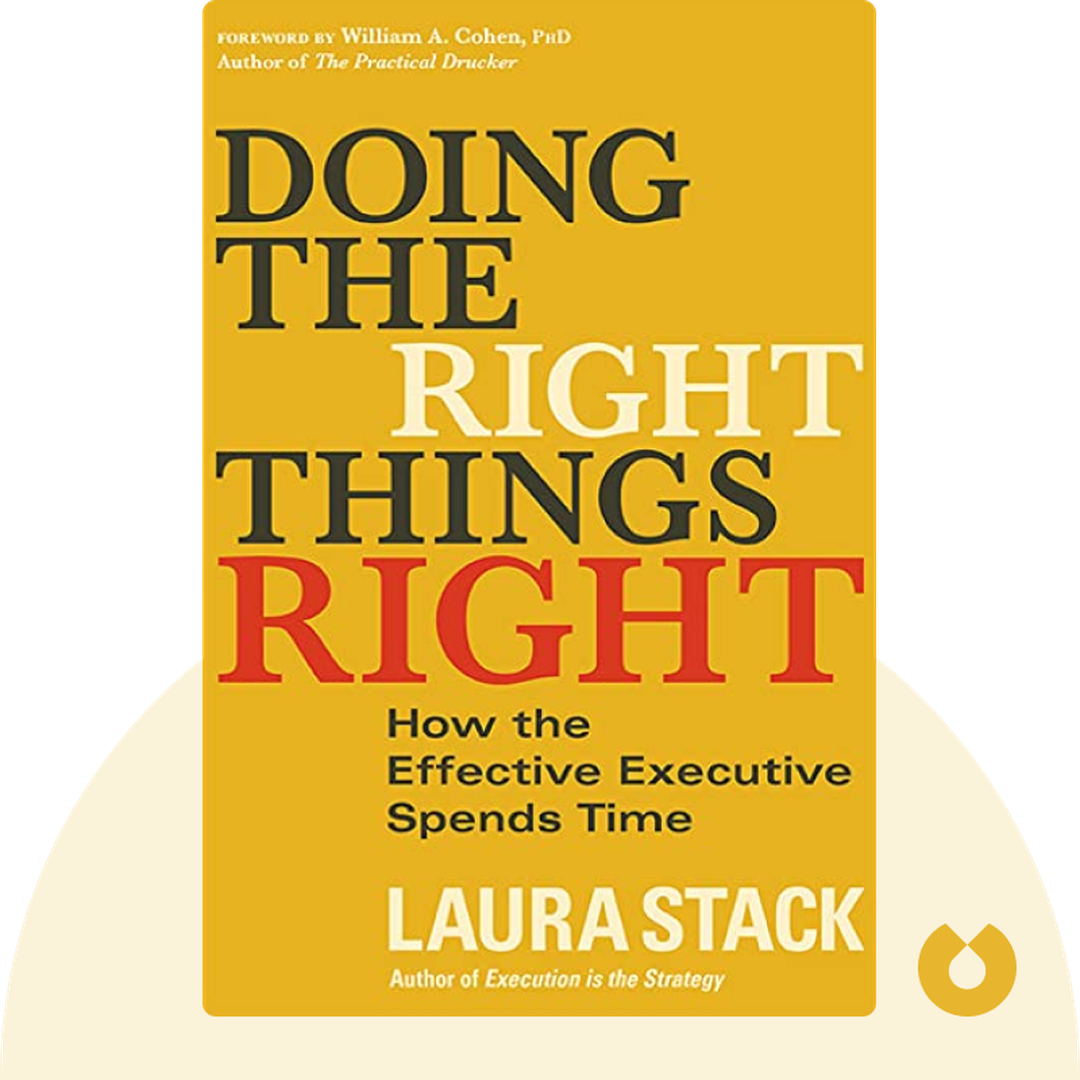
Doing the Right Things Right
Start ListeningDownload Try free on iPhoneScan to start in 5 seconds
Categories:
If You're Curious About These Questions...
You should listen to this audiobook
- Have you ever wondered why some leaders work tirelessly yet fail to see results, while others achieve massive success with seemingly less effort?
- What if you could unlock a proven framework to boost your team's profitability while simultaneously reclaiming hours of your own time every single week?
- What’s the secret to mastering the delicate balance between being efficient and being effective in a high-pressure leadership role?
Listen to Doing the Right Things Right — Free Audiobook
Loading player...
Key Takeaways from Doing the Right Things Right
- Learn how to set clear, tangible goals aligned with your company's strategy and communicate them effectively to give your team a strong sense of purpose.
- Discover why leaders must embrace technological changes and act confidently on new ideas to avoid missing massive opportunities, just as Yahoo did by rejecting Google.
- Understand the critical importance of optimizing your work culture by providing the right tools and eliminating obstacles like outdated software and redundant paperwork.
- Master the art of employee motivation by actively challenging your team, which prevents the contagious spread of boredom that can destroy workplace morale.
- Find out how to inspire your team to work for more than just a paycheck by clearly explaining the impact of their tasks and avoiding the trap of micromanagement.
Learning Tools
Reinforce what you learned from Doing the Right Things Right
Mind Map
Doing the Right Things Right
Goals & Communication+
Adaptability & Action+
Culture & Resources+
Motivation & Respect+
Efficiency & Self-Care+
Quiz — Test Your Understanding
Question 1 of 7
According to the text, why is it crucial to ensure that team goals are perfectly aligned with the overall company strategy?
Question 2 of 7
To practice good communication and avoid disastrous misunderstandings, what method does the book recommend for giving instructions?
Question 3 of 7
What lesson does the book draw from Yahoo's historical decision to reject an offer to invest in Google?
Question 4 of 7
Why does the author strongly advise leaders against micromanaging their teams?
Question 5 of 7
What is a leader's responsibility regarding a team's tools and work procedures?
Question 6 of 7
How does the medical concept of 'triage' apply to excellent time management in business?
Question 7 of 7
What counterintuitive advice does the book give regarding gathering data to make an informed decision?
Doing the Right Things Right — Full Chapter Overview
- 1Recommendation
- 2Leaders need to set the right goals and communicate them clearly to the team.
- 3Leaders must adapt to a changing marketplace and act on their ideas.
- 4To do excellent work, teams need the right tools and proper motivation.
- 5There are many ways to motivate your team, and mutual respect is essential too.
- 6To work efficiently, prioritize tasks, avoid data overload, and take care of yourself.
- 7Final summary
Doing the Right Things Right Summary & Overview
Doing the Right Things Right (2015) cuts to the core of successful leadership. It teaches you how to manage a team and how to work with others to achieve profitable and productive results. Get ready to feel confident and lead your team to success.
Who Should Listen to Doing the Right Things Right?
- Executives who want to boost their leadership skills
- Leaders on the lookout for new time-management strategies
- Anyone who wants to improve their productivity
Books Similar to Doing the Right Things Right
Readers who enjoyed this also liked these titles.