Listen to Talking to Strangers — Free Audiobook
Loading player...
Key Takeaways from Talking to Strangers
- Discover why we consistently overestimate our ability to read strangers, and how relying on flimsy evidence like eye contact often leads to disastrous character judgments.
- Learn why we recognize our own nuanced complexity but falsely assume that strangers are simple and easy to decode from tiny, meaningless clues.
- Understand the 'default to truth' psychological concept and why humans—even trained intelligence officers—can only identify liars about 54 percent of the time.
- Find out why our minds require overwhelming evidence and undeniable behavioral triggers before we can shift from naturally trusting a stranger to suspecting deception.
- Recognize why being inherently trusting and bad at spotting lies is actually a necessary trait that allows everyday interactions and society to function smoothly.
Learning Tools
Reinforce what you learned from Talking to Strangers
Mind Map
Talking to Strangers
Overestimating Our Judgment+
Default to Truth+
The Myth of Transparency+
Alcohol and Strangers+
Tragic Consequences & Solutions+
Quiz — Test Your Understanding
Question 1 of 10
What historical event does the author use to illustrate our dangerous overconfidence in judging strangers?
Question 2 of 10
Why did bail judges in New York perform worse than an AI program when deciding which defendants to release?
Question 3 of 10
What did psychologist Emily Pronin’s word-completion experiment reveal about how we view ourselves versus strangers?
Question 4 of 10
According to psychologist Tim Levine's research on deception, why are people, including trained professionals, generally terrible at spotting liars?
Question 5 of 10
What does the author conclude about our tendency to 'default to truth' despite the existence of successful fraudsters like Bernie Madoff?
Question 6 of 10
What concept does the author illustrate by comparing real-life interactions to an episode of the TV show 'Friends'?
Question 7 of 10
Why did the police wrongly focus on Amanda Knox as the primary suspect in Meredith Kercher's murder?
Question 8 of 10
How does the author explain the role of alcohol in exacerbating negative encounters between strangers, such as campus sexual assaults?
Question 9 of 10
What combined errors in judging strangers contributed to the tragic escalation between Sandra Bland and Officer Brian Encinia?
Question 10 of 10
What is the primary conclusion the book draws about human interactions with strangers?
Talking to Strangers — Full Chapter Overview
- 1Recommendation
- 2We routinely overestimate how well we can judge strangers.
- 3We can’t reliably detect deception – our nature is to default to believing the truth.
- 4Some are slightly better at spotting lies, but relying on truthfulness is vital for society to work.
- 5Real life isn’t an episode of Friends – faces don’t reliably reveal people’s inner feelings.
- 6When people aren’t transparent, we can thoroughly and disastrously misread them.
- 7Alcohol can intensify encounters between strangers, often with devastating results.
- 8Sandra Bland’s story reveals how our failure to read strangers can prove fatal.
Talking to Strangers Summary & Overview
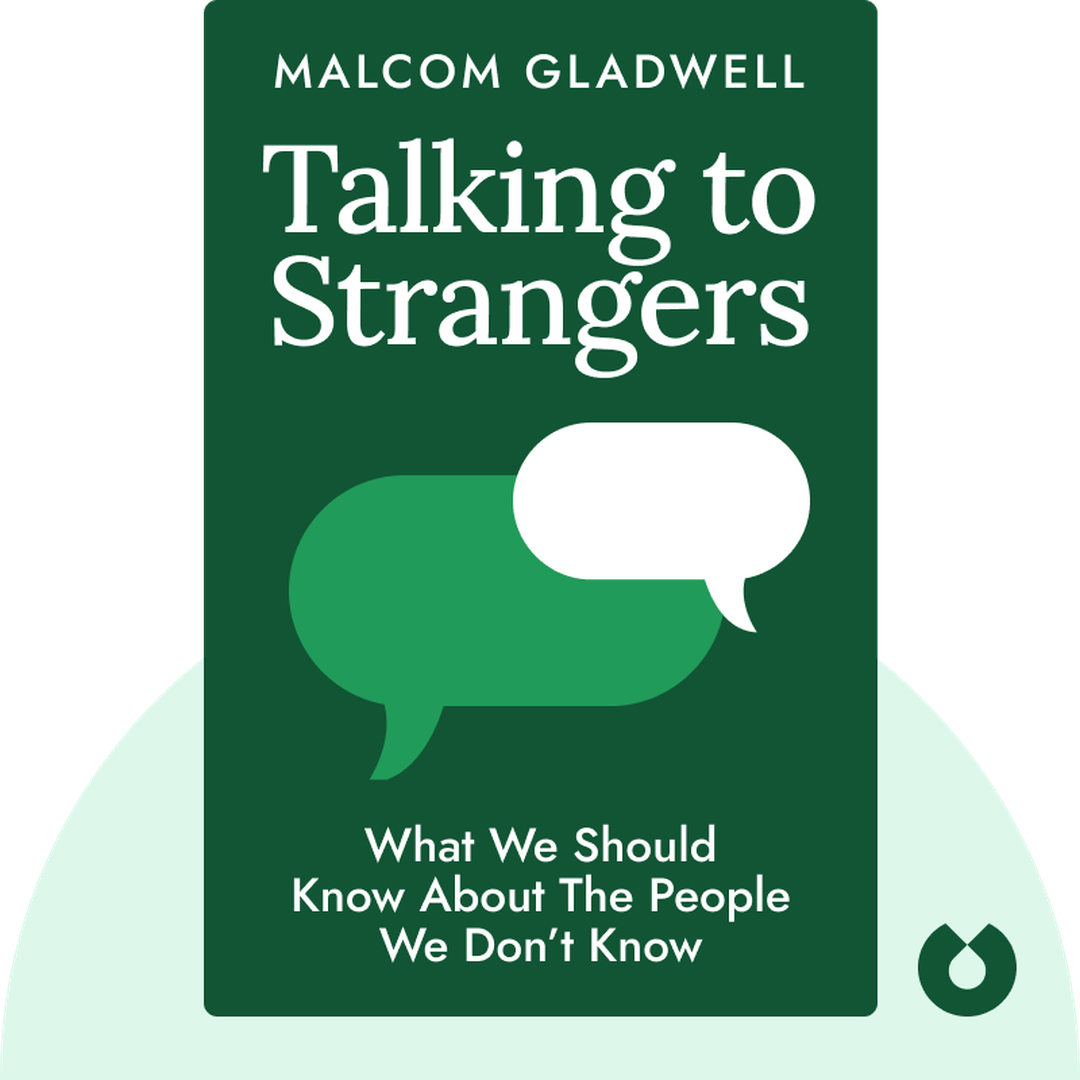
Talking to Strangers (2019) is a powerful exploration of how little we know about the people we don’t know. It explores how we misjudge and misunderstand strangers, sometimes with terrible consequences, making a powerful case for more tolerance and patience in our dealings with others.
Who Should Listen to Talking to Strangers?
- City dwellers living in a crowd of strangers
- Malcolm Gladwell fans
- Those who think they’re a good judge of character
Books Similar to Talking to Strangers
Readers who enjoyed this also liked these titles.