If You're Curious About These Questions...
You should listen to this audiobook
- Did you know that changing just one small word in a question can be the hidden difference between getting a "yes" or a "no"?
- Have you ever wondered why some conversations feel like a smooth dance while others are a complete train wreck?
- What if you could decode the invisible "blueprint" of human interaction to navigate even the most difficult social situations with ease?
Listen to Talk — Cinematic Audio Edition
Loading player...
Key Takeaways from Talk
- Master the predictable patterns of turn-taking and adjacency pairs to avoid awkward interruptions and prevent coming across as rude or unreasonable.
- Discover why seemingly meaningless greetings like 'How are you?' are actually crucial social tools for building rapport rather than seeking factual information.
- Learn a simple trick for sales and service professionals to make standard greetings sound genuine and spontaneous by delivering them out of conversational sequence.
- Understand what conversational pauses really mean by recognizing that silences usually signal an upcoming 'no' or negative response, rather than someone simply searching for words.
- Decode the hidden meanings behind common filler words like 'um,' 'oh,' and 'so' to quickly identify when someone encounters unexpected information or reaches a mental turning point.
Learning Tools
Reinforce what you learned from Talk
Mind Map
Talk
Conversation Mechanics+
Openings & Rapport+
Decoding Fillers & Pauses+
The Body Language Myth+
Choice Architecture & Wording+
Service & Requests+
Navigating Offers+
Real Analysis vs Role-Play+
Quiz — Test Your Understanding
Question 1 of 9
What happens when someone responds to a standard greeting with an immediate demand instead of a reciprocal greeting?
Question 2 of 9
How can customer service workers make the standard inquiry 'How are you?' feel more genuine rather than scripted?
Question 3 of 9
According to conversation analysts, what does a pause before responding to a question usually indicate?
Question 4 of 9
In the context of conversation analysis, what does the filler word 'so' typically signal?
Question 5 of 9
Why is the widely repeated statistic that '93 percent of communication is body language' considered inaccurate?
Question 6 of 9
Why did doctors get a much higher positive response rate when they asked patients, 'Is there SOME other issue you'd like to address?' instead of using the word ANY?
Question 7 of 9
What impression is created when a person uses indirect, apologetic phrases to make a request, such as 'I was wondering if it would be possible to...'?
Question 8 of 9
How should you respond to a 'serial recruiter' who places the mental burden on you to make an offer (e.g., 'Let's make a time to chat')?
Question 9 of 9
Why do conversation analysts consider communications role-playing in the workplace to be a flawed exercise?
Talk — Full Chapter Overview
- 1Recommendation
- 2Deconstructing talk into basic units shows that most interactions follow predictable patterns.
- 3Bland-sounding conversation openings actually serve a crucial function.
- 4Understanding how to read pauses and filler words reveals what people are really thinking about.
- 5Deeds don’t always speak louder than words.
- 6The words you use can influence the responses of others.
- 7How we shape our questions influences the quality of service we get.
- 8There’s an art to offering and accepting in conversation.
- 9Communication role-plays fall short; we need real-time conversation analysis.
Talk Summary & Overview
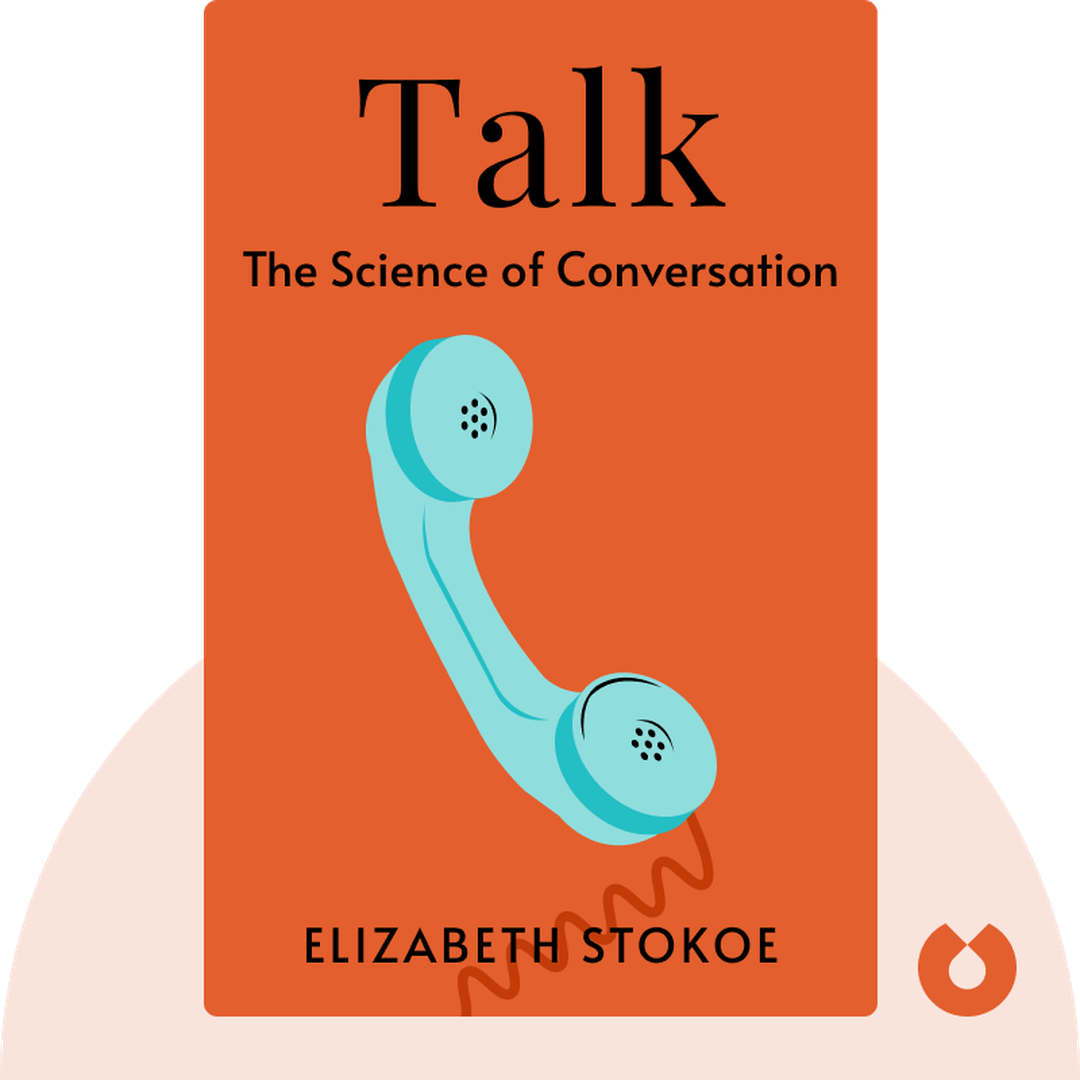
From small talk with the barista to water-cooler chat with colleagues, we spend a lot of our time talking — yet very few of us understand the science that underpins how we talk. Talk (2018) breaks down the fundamental building blocks and typical patterns of conversational encounters to reveal the structures and strategies behind what we say, and offers a blueprint for how we can learn to talk and listen more effectively.
Who Should Listen to Talk?
- Anyone who’s ever had trouble getting a point across
- Anyone who’s ever suffered a communication breakdown
- People who want to take their conversational skills up a notch
Books Similar to Talk
Readers who enjoyed this also liked these titles.