If You're Curious About These Questions...
You should listen to this audiobook
- Have you ever wondered why, despite all your accomplishments, your inner voice still defaults to feelings of guilt, shame, and 'not being enough'?
- What if you could identify the invisible 'patriarchal programming' in your brain and replace it with thought patterns that actually serve your own goals?
- Are you curious about how reclaiming your mental space from societal expectations could be the key to unlocking the professional and personal confidence you’ve been missing?
Listen to Take Back Your Brain — Free Audiobook
Loading player...
Key Takeaways from Take Back Your Brain
- Discover how the critical voice in your head isn't actually your own, but rather the unconscious absorption of internalized misogyny and societal biases.
- Learn to close the 'brain gap' by embracing the realization that your thoughts aren't always true and that you can intentionally rewire them.
- Overcome 'limbic friction'—your brain's natural resistance to changing ingrained habits—by appending the self-compassionate phrase 'how human of me' to self-critical thoughts.
- Understand why you should 'receive' rather than suppress negative emotions, allowing difficult waves of feeling to safely pass in just 90 seconds.
- Master practical somatic exercises like shifting to peripheral vision, cross-body stimulation, and box breathing to calm your nervous system and process emotions fearlessly.
Learning Tools
Reinforce what you learned from Take Back Your Brain
Mind Map
Take Back Your Brain
1. Internalized Misogyny+
2. The Cognitive Framework+
3. Receiving Feelings Fearlessly+
4. Actively Rewiring Thoughts+
5. Stepping Into Your Power+
Quiz — Test Your Understanding
Question 1 of 7
According to the book, what does the term 'brain gap' refer to?
Question 2 of 7
What is 'limbic friction' in the context of rewiring your thoughts?
Question 3 of 7
The author suggests that instead of 'resisting' or 'reacting' to feelings, we should 'receive' them. How long does research suggest a wave of feeling takes to pass if we simply receive it?
Question 4 of 7
What is the fundamental premise about emotions presented in the book's thought management model?
Question 5 of 7
How does the 'thought ladder' exercise help individuals change their limiting beliefs?
Question 6 of 7
How does the book suggest women should view their personal agency in relation to societal obstacles?
Question 7 of 7
In the book's model of behavior (thought → feeling → action → return), what do 'returns' represent?
Take Back Your Brain — Full Chapter Overview
- 1Recommendation
- 2Reclaim your mind by rewiring your thoughts
- 3Welcome your feelings without fear
- 4Consciously rewire your thought patterns
- 5Step boldly into your power
Take Back Your Brain Summary & Overview
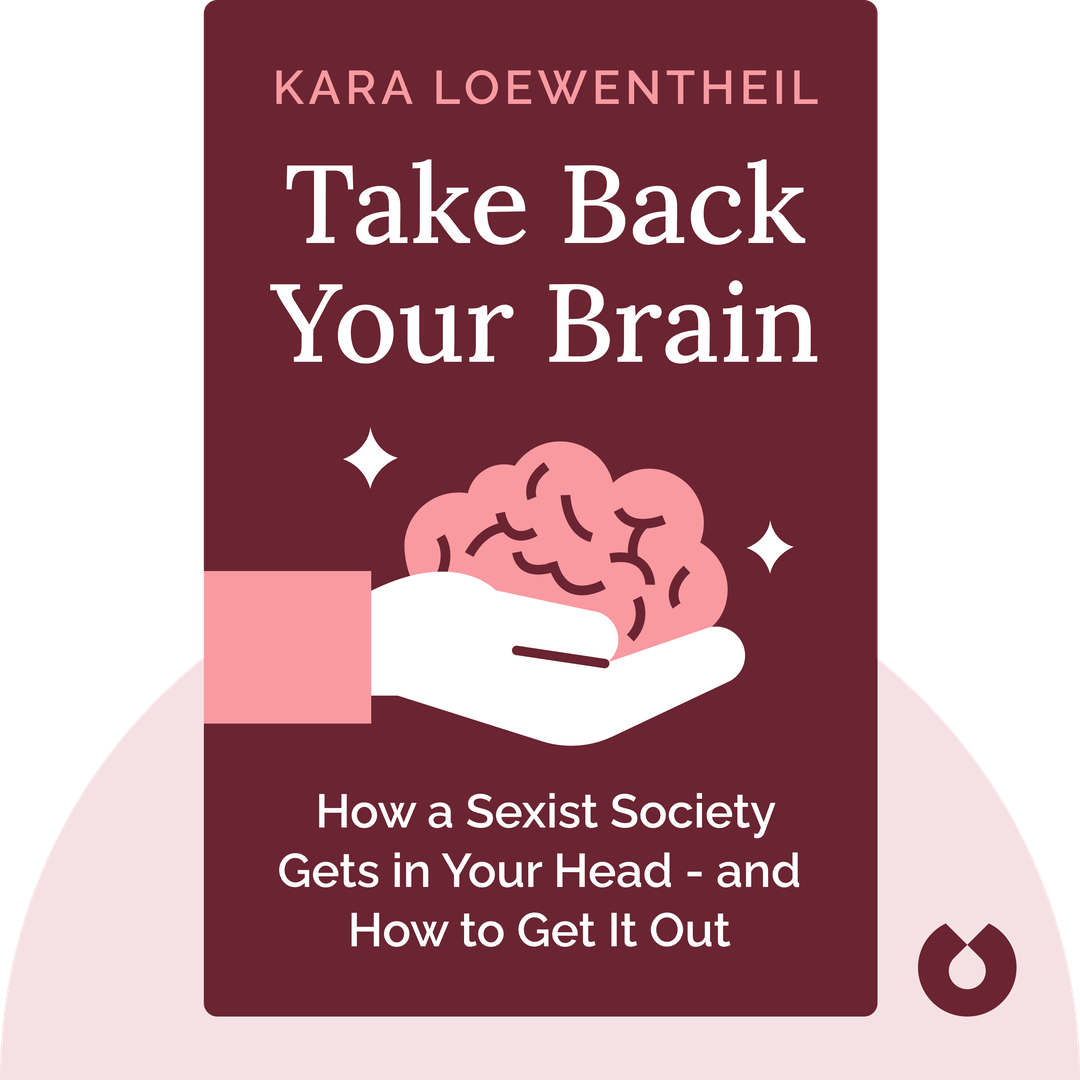
Take Back Your Brain (2024) explores how patriarchal society programs women's thoughts with self-limiting beliefs, leading to feelings of anxiety, guilt, and shame despite their accomplishments. It offers strategies based on cognitive psychology and feminist theory to help women rewire their thought patterns, overcome internalized misogyny, and unlock their true potential, ultimately transforming their lives and creating new possibilities for themselves and the world.
Who Should Listen to Take Back Your Brain?
- Any woman who feels like she hasn’t reached her full professional potential
- Any woman who feels less-than because she’s single or childfree
- Any woman who’s scared to be demanding, unlikeable, or loud
Books Similar to Take Back Your Brain
Readers who enjoyed this also liked these titles.