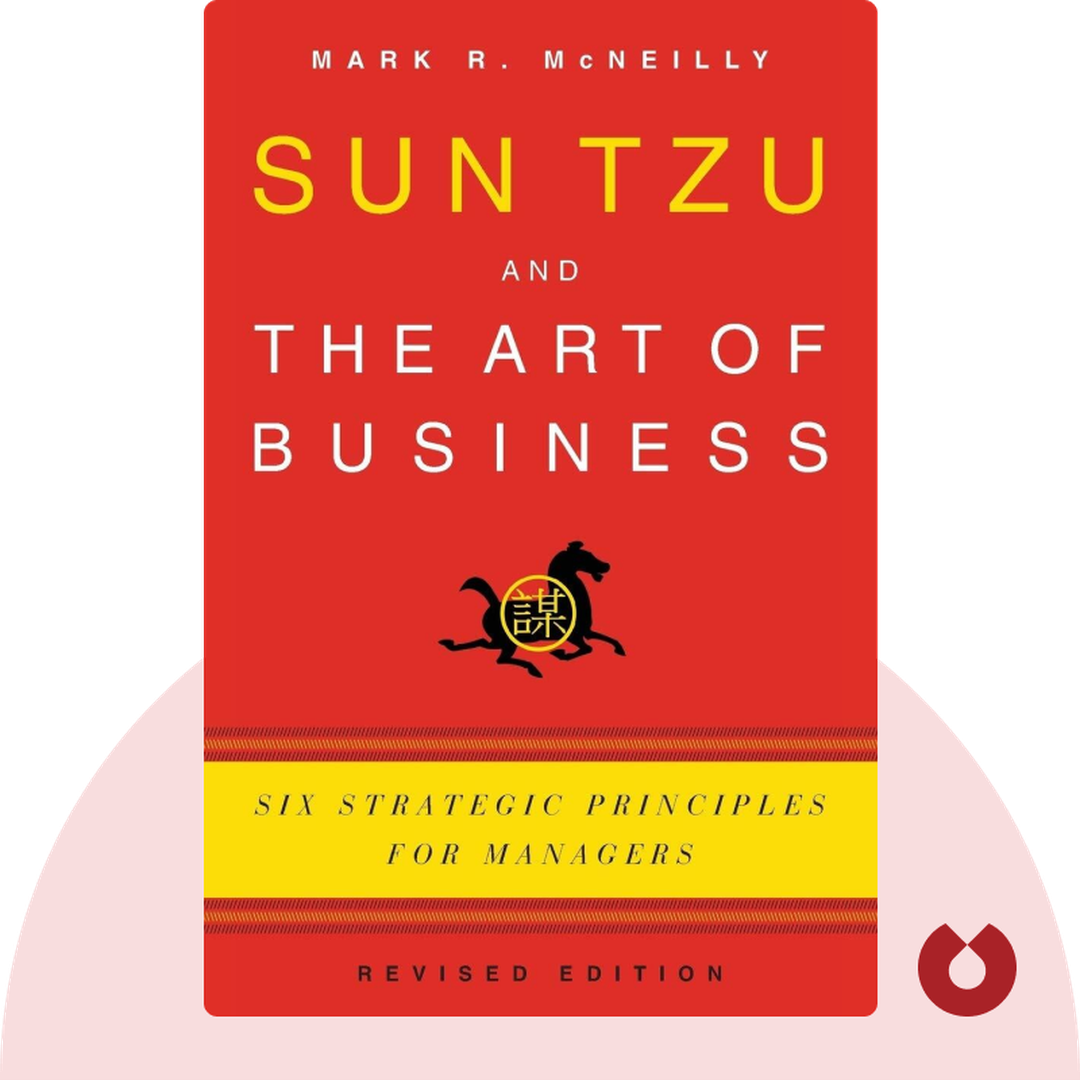
Sun Tzu and the Art of Business
Start ListeningDownload Try free on iPhoneScan to start in 5 seconds
Categories:
If You're Curious About These Questions...
You should listen to this audiobook
- What if you could defeat your toughest competitors without ever engaging in a direct, costly battle?
- Have you ever wondered how ancient military tactics can help you pinpoint a competitor’s hidden weaknesses before they even realize they’re vulnerable?
- Are you curious about how the world’s most successful leaders use 2,500-year-old strategies to achieve total market domination today?
Listen to Sun Tzu and the Art of Business — Free Audiobook
Loading player...
Key Takeaways from Sun Tzu and the Art of Business
- Learn how to apply Sun Tzu's ancient military strategies to modern business to defeat competitors and secure long-term prosperity with a fraction of their resources.
- Understand why you must capture market dominance without destroying the industry's profitability, avoiding disastrous price wars like the one sparked by Philip Morris.
- Discover why imitating your rivals' strengths is a costly mistake, and learn how to flow like water to ruthlessly exploit their weakest links instead.
- Master the art of competitor research by dismantling their products and analyzing their executives' backgrounds to uncover their true corporate culture.
- Find out how gaining foreknowledge of your competitors' plans and mindsets allows you to preemptively block their attacks and maintain your market supremacy.
Learning Tools
Reinforce what you learned from Sun Tzu and the Art of Business
Mind Map
Sun Tzu and the Art of Business
Market Dominance+
Competitive Strategy+
Intelligence Gathering+
Resource Efficiency+
Surprise Offensives+
Leadership Traits+
Quiz — Test Your Understanding
Question 1 of 6
What does Sun Tzu's principle to 'take All-under-heaven intact' mean when applied to business?
Question 2 of 6
Why does the book argue that imitating a competitor's strength is a strategic mistake?
Question 3 of 6
According to the text, what is the most effective way to truly uncover a competitor's corporate culture?
Question 4 of 6
How does speed compensate for a lack of resources in a business context?
Question 5 of 6
In Sun Tzu's two-pronged strategy, what is the primary purpose of a 'direct attack'?
Question 6 of 6
Why does Sun Tzu consider excessive compassion to be a dangerous trait for a leader?
Sun Tzu and the Art of Business — Full Chapter Overview
- 1Recommendation
- 2Seize your rival’s territory, but avoid ruining it in the conquest.
- 3Shun your rivals’ strengths; strike at their weaknesses.
- 4Do in-depth research on your competitors.
- 5Speed compensates for any lack of resources.
- 6Engage your opponent in two locations at once.
- 7Leaders must embody five key traits, and avoid several others.
Sun Tzu and the Art of Business Summary & Overview
Sun Tzu and the Art of Business (1996) explains how ancient Chinese general Sun Tzu’s classic text The Art of War applies to the hyper-competitive environment of modern business. These blinks explore how business leaders can integrate Sun Tzu’s battle strategies into their own plans for market domination.
Who Should Listen to Sun Tzu and the Art of Business?
- Entrepreneurs hoping to disrupt their industry
- Strategy consultants wanting a new angle
- Business students looking for fresh insights
Books Similar to Sun Tzu and the Art of Business
Readers who enjoyed this also liked these titles.