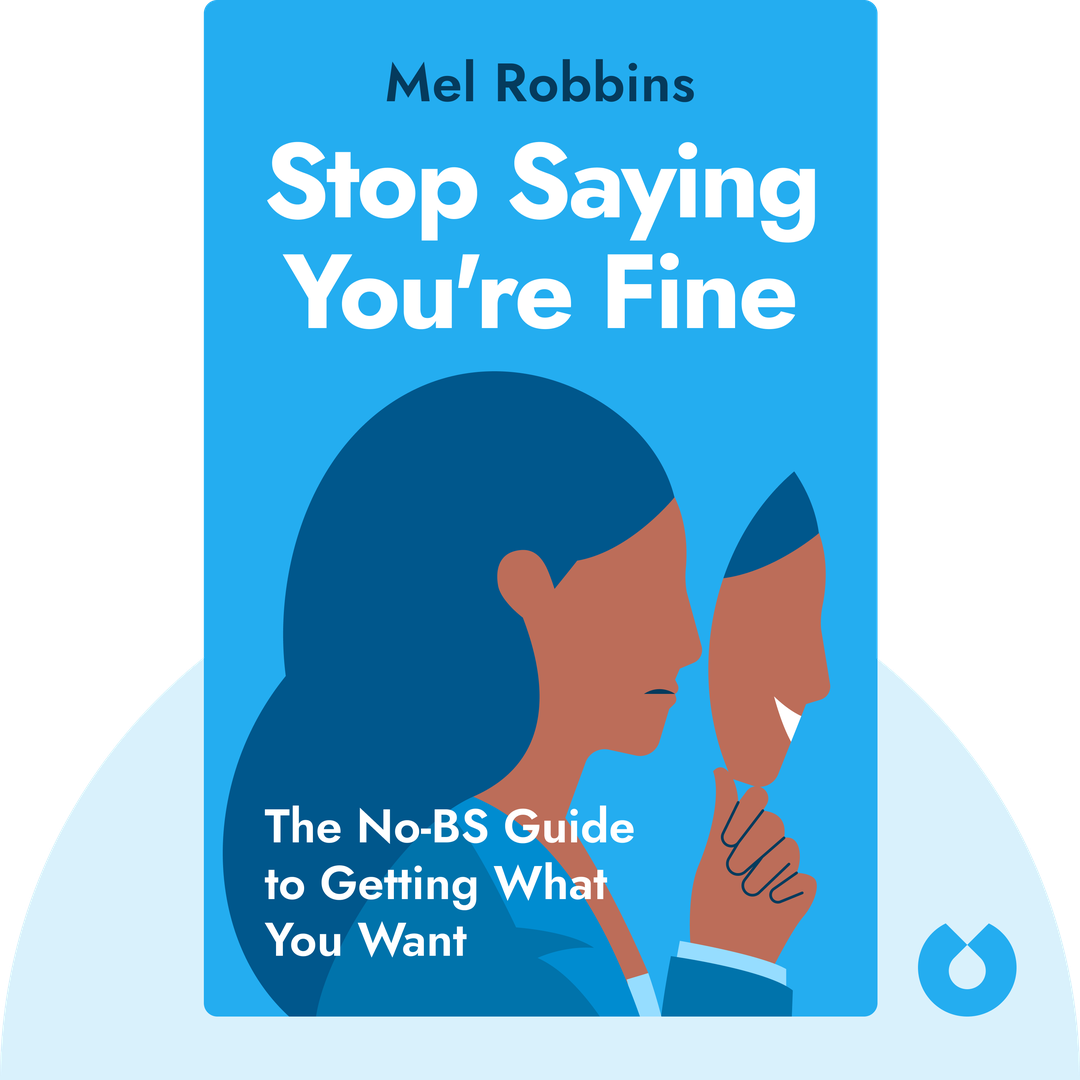
Stop Saying You're Fine
Start ListeningDownload Try free on iPhoneScan to start in 5 seconds
Categories:
If You're Curious About These Questions...
You should listen to this audiobook
- Have you ever wondered why your brain is biologically wired to keep you stuck in an unsatisfying routine, even when you’re desperate for change?
- Did you know that saying you're "fine" is actually a dangerous survival mechanism that prevents you from ever reaching your true potential?
- What’s the secret to outsmarting your brain’s natural resistance and turning small, immediate actions into the major life improvements you’ve been putting off?
Listen to Stop Saying You're Fine — Free Audiobook
Loading player...
Key Takeaways from Stop Saying You're Fine
- Discover why you remain stuck by identifying the two self-defeating mindsets of resistance: the fearful 'chicken' and the blame-shifting 'jerk.'
- Learn how to bridge the gap between intention and action by using the five-second rule to execute positive impulses before your brain generates excuses.
- Understand the power of dedicating just 5 percent of your time to activities that inspire you, creating a meaningful anchor that transforms your entire perspective.
- Recognize how your own mind acts as a saboteur by prioritizing perceived threats and generating distracting 'anti-actions' designed to protect the status quo.
- Master the art of embracing discomfort and taking absolute ownership of your goals by pushing past doubt with the simple mantra, 'Shut up, I'm doing it anyway.'
Learning Tools
Reinforce what you learned from Stop Saying You're Fine
Mind Map
Stop Saying You're Fine
1. The Problem: Resistance & Inaction+
2. The Saboteur Within+
3. Breaking Free: The Audit+
4. Taking Control+
5. Mapping Your Future+
Quiz — Test Your Understanding
Question 1 of 6
According to the author, how does the 'jerk' mindset manifest resistance to change?
Question 2 of 6
What is the primary purpose of Mel Robbins's 'five-second rule'?
Question 3 of 6
How does the book define 'anti-actions'?
Question 4 of 6
Why do people often focus on 'decoy' problems, like Sarah complaining about her boyfriend's morning noise?
Question 5 of 6
When mapping out a path to your goals, why does the author suggest drawing 'stones across a river' rather than a sequential list?
Question 6 of 6
What is the benefit of the 'follow the leader' strategy when trying to achieve a goal?
Stop Saying You're Fine — Full Chapter Overview
- 1Recommendation
- 2Hitting the snooze button
- 3Leap into action
- 4The inner saboteur
- 5You know the truth
- 6Charting your future
Stop Saying You're Fine Summary & Overview
Stop Saying You're Fine (2011) explores why people feel stuck in unsatisfying routines and offers readers practical strategies to break free from their self-imposed limitations. It provides science-backed techniques for outsmarting your brain's natural resistance to change and turning small actions into big life improvements.
Who Should Listen to Stop Saying You're Fine?
- People seeking greater fulfillment in their careers or personal lives
- Individuals struggling to overcome self-sabotaging patterns
- Anyone seeking practical tools for reaching their full potential
Books Similar to Stop Saying You're Fine
Readers who enjoyed this also liked these titles.