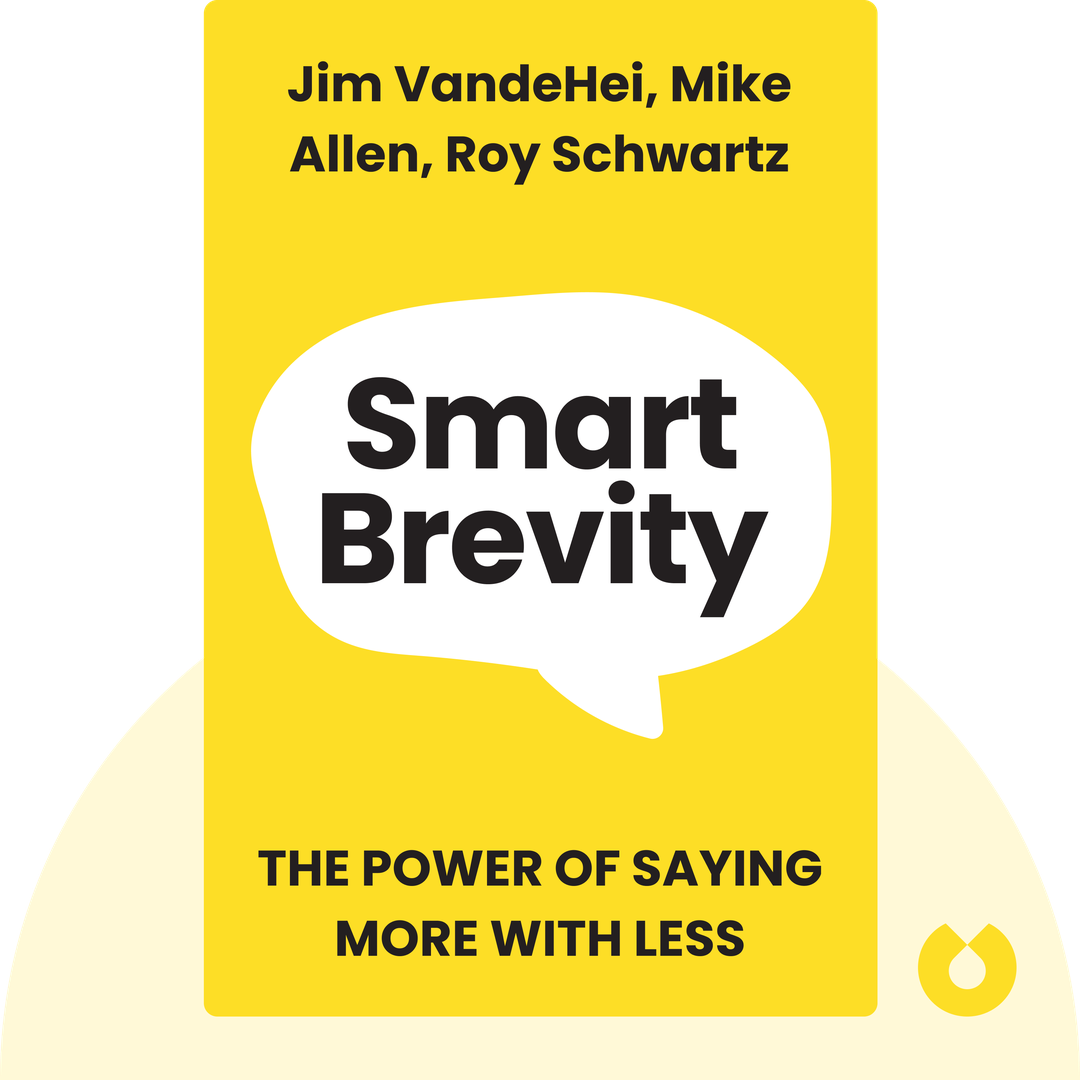
If You're Curious About These Questions...
You should listen to this audiobook
- Have you ever wondered why most people stop reading your emails after just a few seconds, and how you can fix it instantly?
- What if you could master the exact communication formula used by top media moguls to command attention in a world of information overload?
- What’s the secret to making your ideas stick in a reader's mind without wasting a single word of their time?
Listen to Smart Brevity — Free Audiobook
Loading player...
Key Takeaways from Smart Brevity
- Discover why traditional, verbose communication fails in an era of fractured attention and how the smart brevity framework cuts through the noise.
- Learn how to deliver maximum value in minimum time by focusing on your audience's actual needs rather than ego-driven word counts.
- Master the art of the tease by crafting six-word, mobile-friendly headlines with bold, active verbs that immediately hook your reader's attention.
- Craft a powerful lede by distilling your core message into a single, punchy opening sentence, treating it like a brief, high-stakes elevator pitch.
- Understand the importance of providing context by explicitly explaining the 'why' behind your facts instead of assuming your audience is already in the know.
Learning Tools
Reinforce what you learned from Smart Brevity
Mind Map
Smart Brevity
Core Philosophy+
The Four Elements+
Workplace Applications+
Quiz — Test Your Understanding
Question 1 of 7
Why do the authors argue that traditional forms of communication are failing today?
Question 2 of 7
According to the principles of 'The Tease,' what is the recommended maximum length for a headline to ensure it is mobile-friendly?
Question 3 of 7
What is the primary function of the 'lede' in Smart Brevity?
Question 4 of 7
How does Smart Brevity suggest writers provide context without overwhelming the reader?
Question 5 of 7
What is the purpose of the 'Go deeper' section in a Smart Brevity piece?
Question 6 of 7
How can the principles of Smart Brevity be applied to transform work meetings?
Question 7 of 7
When creating a newsletter using Smart Brevity, what is the recommended word count limit for the entire document?
Smart Brevity — Full Chapter Overview
- 1Recommendation
- 2What smart brevity means
- 3Element #1: The hook
- 4Element #2: The opener
- 5Element #3: The background
- 6Element #4: Dig deeper
- 7Using smart brevity at work
Smart Brevity Summary & Overview
Smart Brevity (2022) offers a guide to effective communication in an age of information overload. It emphasizes the importance of conveying ideas succinctly and clearly and provides practical strategies to streamline communication across various platforms, from emails and meetings to presentations and social media.
Who Should Listen to Smart Brevity?
- Professionals seeking effective communication skills
- Entrepreneurs in digital media and journalism
- Anyone interested in concise writing techniques
Books Similar to Smart Brevity
Readers who enjoyed this also liked these titles.