If You're Curious About These Questions...
You should listen to this audiobook
- What if you could turn being 'stuck in the middle' into your greatest professional advantage by leading in both directions?
- Have you ever wondered why the most effective way to empower your team is actually to 'serve' your boss first?
- Are you curious about the specific mindset shift that transforms a standard manager into a high-impact coach?
Listen to Serve Up, Coach Down — Free Audiobook
Loading player...
Key Takeaways from Serve Up, Coach Down
- Understand why "serving up" requires trusting your boss's vision and translating their strategy into action, rather than simply passing your team's complaints up the ladder.
- Discover the crucial difference between genuinely serving up as an agenda-free team player and manipulatively sucking up to further your own career.
- Learn how to break down toxic corporate silos by "serving out" to your middle-management peers and actively asking how you can make their jobs easier.
- Master the art of dividing your energy equally between supporting your boss and coaching your team to fulfill the complete demands of middle management.
- Find out how to empower your staff using sports coaching tactics, like implementing daily practice drills and focusing your energy on top performers so coaching is viewed as a reward.
Learning Tools
Reinforce what you learned from Serve Up, Coach Down
Mind Map
Serve Up, Coach Down
Serving Up (Managing Upward)+
Serving Out (Managing Across)+
Coaching Down (Managing Downward)+
Navigating Change & Communication+
Time Management+
Accountability & Loyalty+
Owning Middle Power+
Quiz — Test Your Understanding
Question 1 of 8
What is the primary difference between 'serving up' and 'sucking up' according to the author?
Question 2 of 8
How does a middle manager effectively combat 'silofication' within a company?
Question 3 of 8
When coaching a team, the author suggests middle managers should adopt a sports coach's mentality. Which of the following is a key part of this approach?
Question 4 of 8
What should a middle manager do when senior leadership introduces a change that the manager doesn't fully understand?
Question 5 of 8
If a team is failing to implement new knowledge due to a 'lack of skill,' how should a middle manager respond?
Question 6 of 8
In the context of effective time management, how does the author distinguish between 'important' and 'urgent' tasks?
Question 7 of 8
According to the book, which team member deserves the most loyalty from a middle manager?
Question 8 of 8
How can middle managers unknowingly give up their power and authority when communicating with their team?
Serve Up, Coach Down — Full Chapter Overview
- 1Recommendation
- 2Serving up means trusting your boss’s vision.
- 3Serving your peers sets both you and your company up for success.
- 4Split your energy equally between your boss and your team.
- 5You can embrace change even when you don’t fully understand it.
- 6Middle managers are essential to closing the knowledge gap.
- 7Effective time management comes down to priorities.
- 8Value your team members for the contributions they make.
- 9The middle can be a powerful place to be – if you play your cards right.
- 10Final summary
Serve Up, Coach Down Summary & Overview
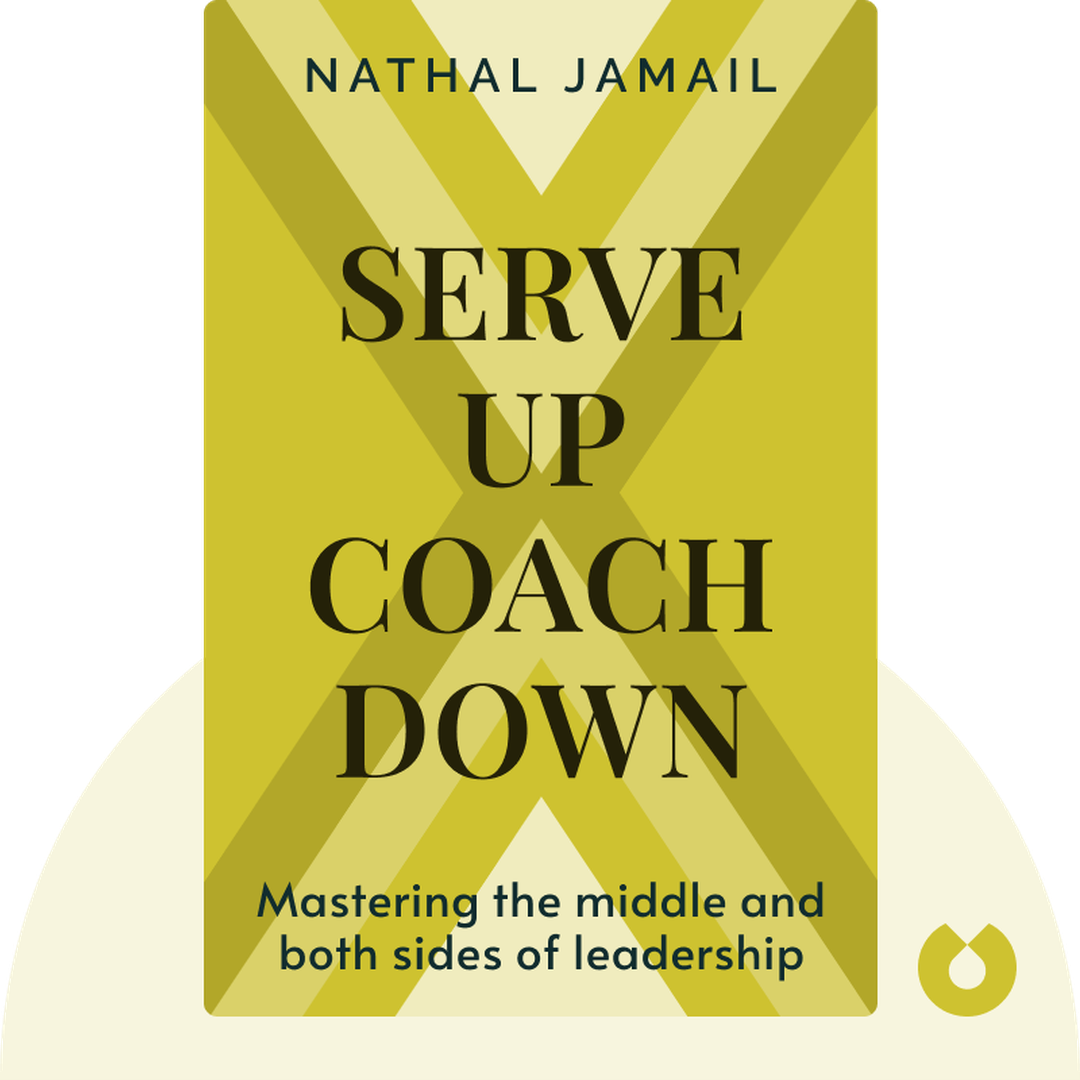
Serve Up, Coach Down (2018) is a corporate leadership guide for middle managers. It empowers workers to “master the middle” by sharing the strategies they need to effectively manage both their team and their boss.
Who Should Listen to Serve Up, Coach Down?
- Middle managers hungry to hone their leadership skills
- Team leaders who want to inspire their staff to do great work
- Employees aiming to get the most out of their professional relationships
Books Similar to Serve Up, Coach Down
Readers who enjoyed this also liked these titles.