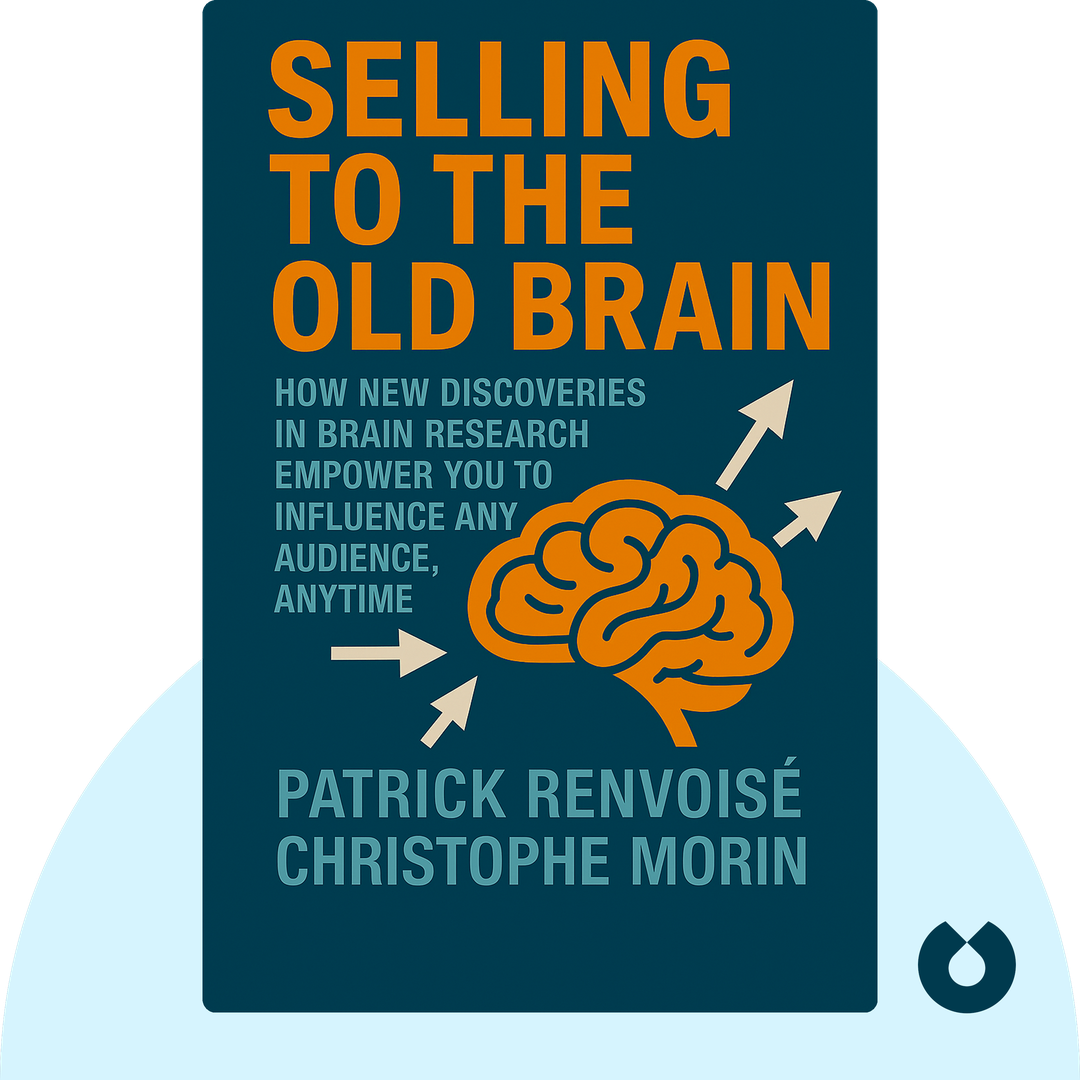
Selling to the Old Brain
Start ListeningDownload Try free on iPhoneScan to start in 5 seconds
Categories:
If You're Curious About These Questions...
You should listen to this audiobook
- Did you know that your customers’ logical minds aren't actually the ones making the final purchase decision?
- What if you could bypass a client’s skepticism and speak directly to the primal part of the brain that triggers an instant 'yes'?
- What’s the secret to crafting a message so simple and high-contrast that the human brain is biologically wired to respond to it?
Listen to Selling to the Old Brain — Free Audiobook
Loading player...
Key Takeaways from Selling to the Old Brain
- Discover why logical pitches fail and how targeting the 'old brain'—the ancient, instinct-driven neural center—is the true key to influencing buying decisions.
- Learn how to speak to the selfish nature of the deciding brain by framing every pitch around the buyer's immediate needs rather than your company's achievements.
- Master the use of stark contrast and tangible language to present clear before-and-after scenarios that the old brain can instantly grasp without confusing jargon.
- Understand the crucial role of timing in presentations by placing your most important ideas at the very beginning and the end, ensuring your core message sticks.
- Find out how to bypass complex data by using striking visuals and emotional triggers, which are the fastest ways to get the old brain to process and remember your offer.
Learning Tools
Reinforce what you learned from Selling to the Old Brain
Mind Map
Selling to the Old Brain
The Three Brains+
6 Triggers of the Old Brain+
The 4-Step Selling Formula+
Messaging Strategy+
Quiz — Test Your Understanding
Question 1 of 7
According to the book, what are the primary functions of the new, middle, and old brain respectively?
Question 2 of 7
Why is it highly effective to use 'before and after' scenarios in a sales pitch?
Question 3 of 7
How should a presentation be structured to align with how the old brain retains information?
Question 4 of 7
Which of the following represents the four-step formula recommended for converting a pitch into a decision?
Question 5 of 7
What is the primary psychological benefit of frequently using the word 'you' in your sales messaging?
Question 6 of 7
Why does the author recommend using a picture of a cracked phone screen instead of a bulleted list of features?
Question 7 of 7
When diagnosing a buyer's pain, what does the 'drill vs. clean hole in the wall' analogy illustrate?
Selling to the Old Brain — Full Chapter Overview
- 1Recommendation
- 2To truly persuade, speak to the part of the brain that actually truly makes all final decisions
- 3Address the self-centered brain, show clear contrast, and keep things simple
- 4Want to stay memorable? Focus on emotion, visuals, and timing
- 5To sell more effectively, address pain, provide proof, and speak to the true decision maker
- 6If you want attention, make it entirely about your buyer
Selling to the Old Brain Summary & Overview
Selling to the Old Brain (2003) explains how people make decisions using the oldest part of the brain, which is driven by emotion, survival, and instinct – not logic. It presents a set of tools to craft messages that connect with this primal decision-maker using visual cues, emotional hooks, and simple, high-contrast language. The goal is to help anyone become more persuasive by communicating in a way the brain is wired to respond to.
Who Should Listen to Selling to the Old Brain?
- Sales professionals who want more impact
- Marketers crafting persuasive campaigns
- Entrepreneurs pitching to investors or clients
Books Similar to Selling to the Old Brain
Readers who enjoyed this also liked these titles.