If You're Curious About These Questions...
You should listen to this audiobook
- Have you ever wondered why a single piece of constructive feedback can build trust in one culture but completely destroy a professional relationship in another?
- What if you could master the invisible social currency that dictates the success of every negotiation and team interaction?
- What’s the secret to giving high-stakes feedback that preserves dignity and boosts productivity, even in a remote or global workplace?
Listen to Saving Face — Free Audiobook
Loading player...
Key Takeaways from Saving Face
- Understand the concept of 'face' as a complex social currency representing respect and dignity that, much like money, can be accrued or lost over time.
- Discover why losing face is like spilling a cup of coffee—almost impossible to fully undo—and why proactively approaching situations with empathy is your best prevention.
- Learn how to successfully navigate cross-cultural business interactions by adapting to different social expectations, such as strict international hierarchies, to avoid mutual embarrassment.
- Master the art of 'honoring face' by taking an authentic, sincere interest in the worth of others rather than relying on superficial tactics just to avoid workplace friction.
- Find out how to effectively build face in your professional relationships by understanding what truly motivates your employees, offering them tailored recognition and autonomy instead of just mechanical rewards.
Learning Tools
Reinforce what you learned from Saving Face
Mind Map
Saving Face
The Concept of Face+
Honoring Face at Work+
The BUILD Framework+
Cultural Agility (AAA Model)+
Navigating Workplace Sexism+
Giving Proper Feedback+
Quiz — Test Your Understanding
Question 1 of 10
What does the concept of 'face' refer to in the context of this book?
Question 2 of 10
Why does the author compare 'face' to spilled coffee?
Question 3 of 10
According to the book, what is the difference between merely 'saving' face and 'honoring' face?
Question 4 of 10
How does the book suggest handling workplace conflict to best preserve face?
Question 5 of 10
Based on Google's research and Amy Edmondson's theories, what is the primary characteristic of a 'psychologically safe' workplace?
Question 6 of 10
In the BUILD acronym for constructing custom business relationships, what do the 'B' and 'U' stand for?
Question 7 of 10
What are the three steps of the AAA model for practicing cultural agility?
Question 8 of 10
What strategy, known as 'amplifying', is recommended for women facing micro-inequalities in the workplace?
Question 9 of 10
When assessing an employee's performance, what is the main focus of 'feedforward'?
Question 10 of 10
According to the actionable advice in the final summary, what communication style should be avoided in cross-cultural interactions?
Saving Face — Full Chapter Overview
- 1Recommendation
- 2Face is a nuanced social currency shaping our relationships today.
- 3The surest way to save face is to prevent losing it from happening in advance.
- 4Honoring face demands a genuine interest in others.
- 5You cannot preserve face by sidestepping conflict.
- 6Honor face by building a psychologically safe workplace.
- 7The strongest relationships are constructed from the ground up.
- 8Preserve face by boosting your cultural agility today.
- 9Workplace sexism can render saving face especially vital for women.
- 10Preserve everyone’s face by providing appropriate feedback.
Saving Face Summary & Overview
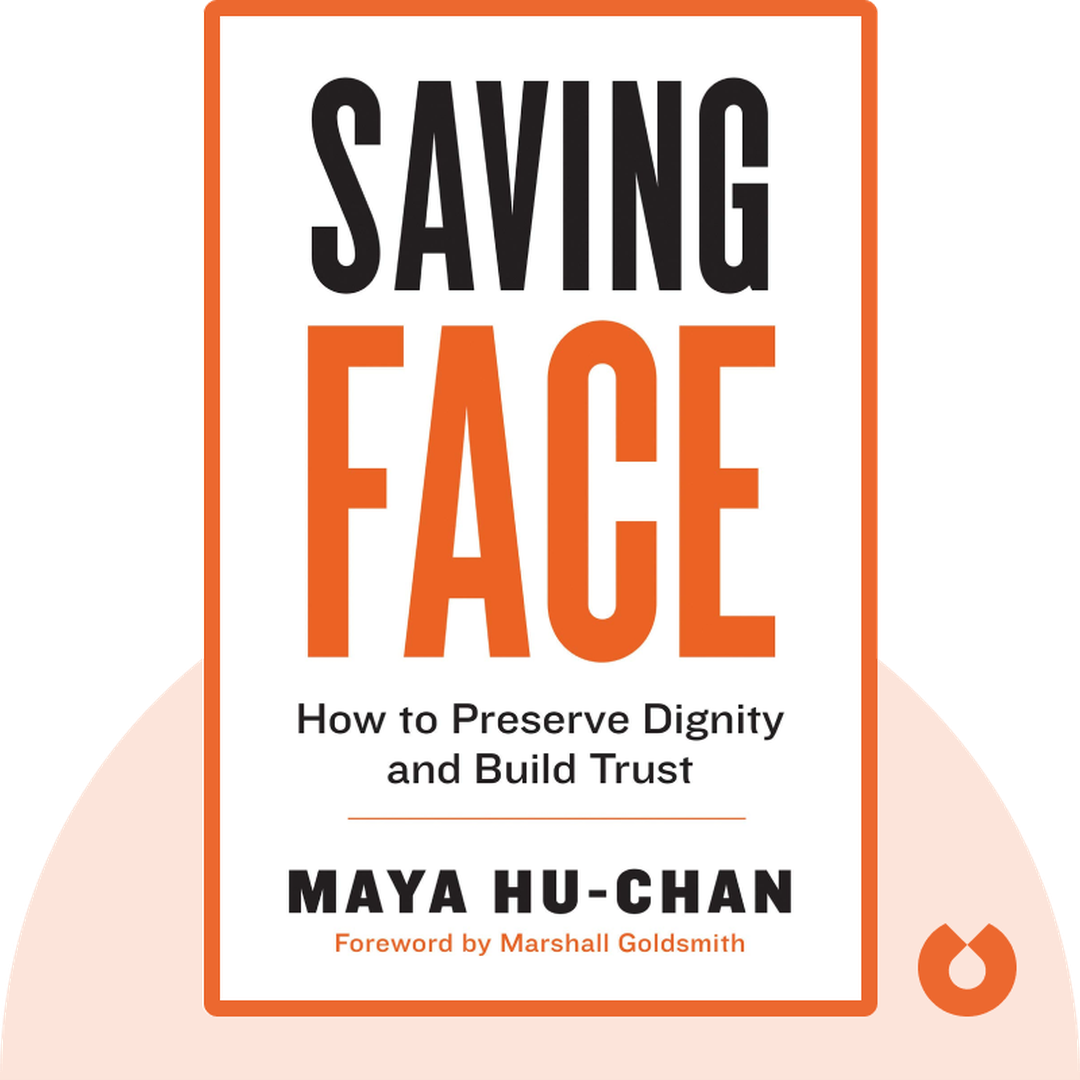
Saving Face (2020) adapts the multifaceted concept of “face” to the modern world. This practical guide shows how to build and maintain healthy and productive business and social relations across time and space.
Who Should Listen to Saving Face?
- Managers interested in fostering a humane, communicative, and inspiring workplace
- Remote workers attempting to sustain healthy business relationships
- Anyone curious about cross-cultural psychology
Books Similar to Saving Face
Readers who enjoyed this also liked these titles.