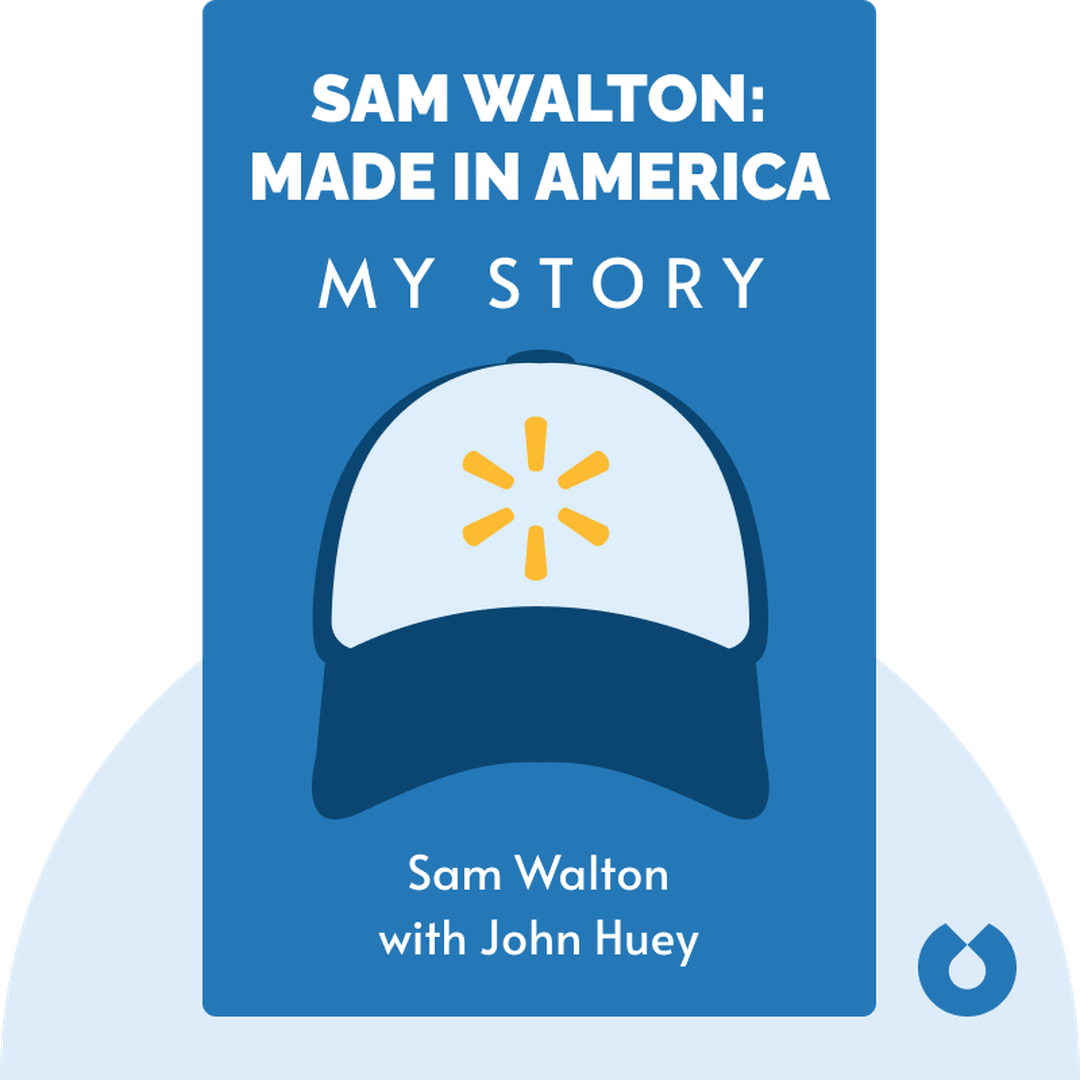
Sam Walton: Made in America
Start ListeningDownload Try free on iPhoneScan to start in 5 seconds
Categories:
If You're Curious About These Questions...
You should listen to this audiobook
- Have you ever wondered how a small-town variety store in rural Arkansas transformed into the world’s largest retail empire?
- What’s the secret to Sam Walton’s 'customer-first' philosophy that allowed him to consistently outmaneuver much larger and wealthier competitors?
- Are you curious about the specific leadership habits and unconventional rules that fueled one of the greatest rags-to-riches stories in American history?
Listen to Sam Walton: Made in America — Cinematic Audio Edition
Loading player...
Key Takeaways from Sam Walton: Made in America
- Discover how early experiences during the Great Depression taught Sam Walton that relentless hard work and taking initiative are the foundational keys to building a massive enterprise.
- Learn why you shouldn't hesitate to blatantly copy and improve upon the successful ideas of others, from centralized store layouts to employee morale-boosting cheers.
- Understand how to implement a relentless customer-first philosophy by extending hours, expanding selections, and investing money upfront to improve the shopping experience.
- Explore how Walton justified Walmart's controversial impact on local businesses by trusting that customers will naturally gravitate toward stores that best meet their everyday needs.
- Find out why embracing fierce competition instead of fearing it can force your business to innovate and execute bold, highly successful promotional strategies.
Learning Tools
Reinforce what you learned from Sam Walton: Made in America
Mind Map
Sam Walton: Made in America
Foundations & Work Ethic+
Copying & Improving Ideas+
Customer-First Approach+
Embracing Competition+
Empowering Employees+
Handling Failure & Success+
Community Impact+
Actionable Advice+
Quiz — Test Your Understanding
Question 1 of 8
How did Sam Walton's father's approach to finances differ from Sam's later business strategies?
Question 2 of 8
What was Sam Walton’s attitude toward his competitors' business practices?
Question 3 of 8
How did Walton respond to criticisms that Walmart was harmful to local small businesses?
Question 4 of 8
What lesson did Walton learn from the intense price war with Kmart over items like toothpaste?
Question 5 of 8
What specific event prompted Sam Walton to change how he treated and compensated his employees?
Question 6 of 8
What was the underlying cause of the 'Saturday Massacre' at Walmart?
Question 7 of 8
In addition to providing educational scholarships, what did Walton argue was Walmart’s greatest form of 'charity' to the community?
Question 8 of 8
According to the book's actionable advice, what extreme measure did Walton encourage to understand the competition?
Sam Walton: Made in America — Full Chapter Overview
- 1Recommendation
- 2Growing up through the Great Depression, Sam Walton learned the importance of hard work.
- 3Some of Walton’s success came from openly copying the smart ideas of many other people.
- 4Walton consistently put customers first, though not without stirring controversy.
- 5Other large retailers didn’t scare Walton; he knew that competition only made Walmart stronger.
- 6Though it took time, Walton eventually came to value his employees, calling them all associates.
- 7Walton understood how to celebrate his successes and learn lessons from failures.
- 8Walton likewise recognized the importance of giving back to the community.
Sam Walton: Made in America Summary & Overview
Made in America (1992) tells the inspirational rags-to-riches story of Sam Walton, the founder of Walmart, one of the biggest companies in the world. Find out how Walton used a customer-first approach to turn a small variety store into a global business empire and how a poor boy from Oklahoma went on to become one of the richest people in the world.
Who Should Listen to Sam Walton: Made in America?
- Executives interested in tips on successful business practices
- Entrepreneurs looking for insight on how to grow a business
- Anyone wanting an inspirational story of an American dream come true
Books Similar to Sam Walton: Made in America
Readers who enjoyed this also liked these titles.