If You're Curious About These Questions...
You should listen to this audiobook
- What’s the secret to building a thriving company culture when your team members are hundreds of miles apart?
- Have you ever wondered why traditional leadership strategies often backfire in a remote environment?
- What if you could redesign your workday to be both more human-centered and more productive than it ever was in the office?
Listen to Remote, Not Distant — Free Audiobook
Loading player...
Key Takeaways from Remote, Not Distant
- Master the five key mindset shifts for a successful hybrid workplace, including prioritizing measurable impact over hours worked and embracing the messy reality of remote life.
- Learn how to maximize team productivity by promoting asynchronous collaboration and empowering employees to define their own peak working schedules.
- Understand why true workplace culture is defined by the actual behaviors you reward and punish, rather than superficial office perks or written mission statements.
- Discover how to foster a shared sense of purpose and belonging by perfectly balancing organizational alignment with individual worker autonomy.
- Find out how to cultivate psychological safety in a remote team by treating feedback as an omnidirectional gift focused on future growth instead of past mistakes.
Learning Tools
Reinforce what you learned from Remote, Not Distant
Mind Map
Remote, Not Distant
5 Key Mindset Shifts+
The Role of Purpose+
Psychological Safety+
Effective Asynchronous Collaboration+
Hybrid Work Ground Rules+
Quiz — Test Your Understanding
Question 1 of 6
According to the text, how should a successful hybrid workplace evaluate employee performance?
Question 2 of 6
What is one of the key mindset shifts required regarding traditional work-life boundaries in a remote setting?
Question 3 of 6
How do employees primarily understand and interpret an organization's culture?
Question 4 of 6
In a remote team that cultivates psychological safety, how should feedback be handled?
Question 5 of 6
What is presented as a major advantage of embracing asynchronous communication over synchronous work?
Question 6 of 6
When laying the ground rules for a hybrid work model, how does the author suggest companies handle employee compensation?
Remote, Not Distant — Full Chapter Overview
- 1Recommendation
- 2Rethink how you approach your daily work
- 3Purpose is essential for companies and their teams
- 4Build psychological safety to achieve success
- 5Collaboration doesn’t need to be in-person to be effective
- 6Set the ground rules for your new hybrid work model
Remote, Not Distant Summary & Overview
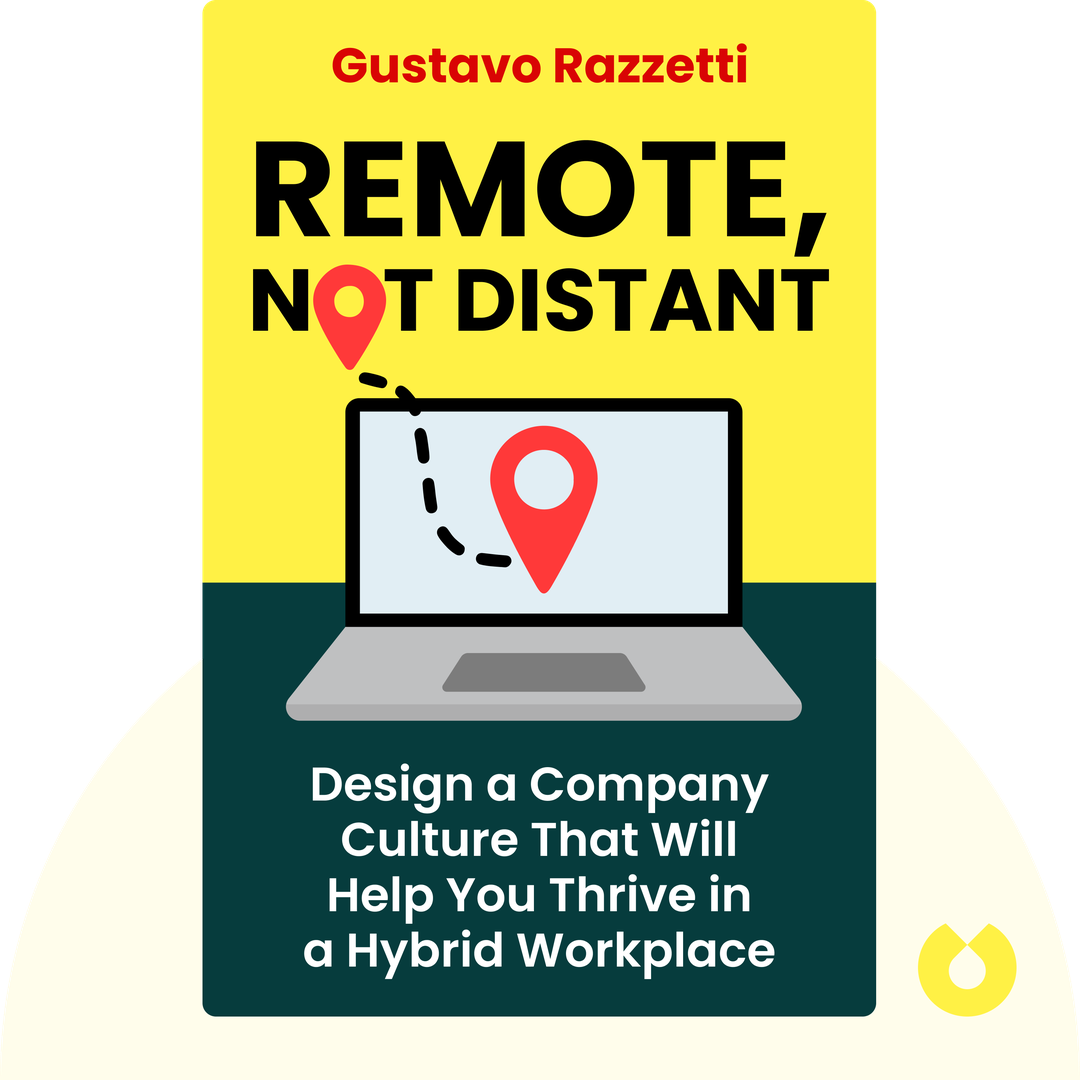
Remote but not Distant (2022) explores the many facets of remote work and its impact on teams and individual employees. It delves into how technology, mindset, and leadership strategies can be used to create a more effective and human-centered remote-working environment, and provides practical tips and insights for managers and employees alike.
Who Should Listen to Remote, Not Distant?
- Managers and entrepreneurs who want to shift to a flexible remote-working model
- Office workers who want to convince their bosses to switch to a hybrid work model
- Remote workers who feel their current work model needs an overhaul
Books Similar to Remote, Not Distant
Readers who enjoyed this also liked these titles.