If You're Curious About These Questions...
You should listen to this audiobook
- Did you know that the leadership habits that made you successful in the office might actually be the very things holding your remote team back?
- Have you ever wondered why the shift to hybrid work is actually the best opportunity you’ll ever have to become a world-class leader?
- What’s the secret to maintaining a high-performance culture when your team is no longer working in the same room?
Listen to Smart Work — Free Audiobook
Loading player...
Key Takeaways from Smart Work
- Discover why the future of work is inherently hybrid, combining the deep focus of remote work with the trust-building and collaborative power of the physical office.
- Understand the major paradigm shift from outdated 'command-and-control' management to a modern leadership style that empowers highly skilled, autonomous professionals.
- Learn why the old Machiavellian tactic of leading by fear is dead, and how granting employees greater autonomy is the true key to retaining top talent.
- Find out why leaders must avoid the trap of using intrusive surveillance software, and instead embrace relinquishing control to foster a culture of genuine trust.
- Master the strategy of hiring for values rather than just skills to construct robust, highly dependable teams that thrive in remote work environments.
Learning Tools
Reinforce what you learned from Smart Work
Mind Map
Smart Work
Paradigm Shift in Work+
The Hybrid Workplace+
Trust-Based Leadership+
Hiring for Values+
Effective Delegation+
Quiz — Test Your Understanding
Question 1 of 6
According to Jo Owen, why will physical offices continue to play an important role in the future of hybrid work?
Question 2 of 6
How does the author respond to Machiavelli's classic question of whether a leader should be loved or feared in the context of modern management?
Question 3 of 6
What is the author's view on using surveillance technologies like keyboard loggers and always-on video for remote workers?
Question 4 of 6
Why does the author recommend hiring for values rather than just skills, especially for remote teams?
Question 5 of 6
In the context of team values, what is the primary benefit of cultivating 'positive regard' among colleagues?
Question 6 of 6
What mindset shift does the author suggest to help leaders kickstart the 'virtuous cycle' of delegation?
Smart Work — Full Chapter Overview
- 1Recommendation
- 2The future of working is hybrid.
- 3Effective leadership isn’t control; it is about trust.
- 4Hiring for values, not skills, will help you form a strong team.
- 5Delegating meaningful work fosters trust and motivation.
Smart Work Summary & Overview
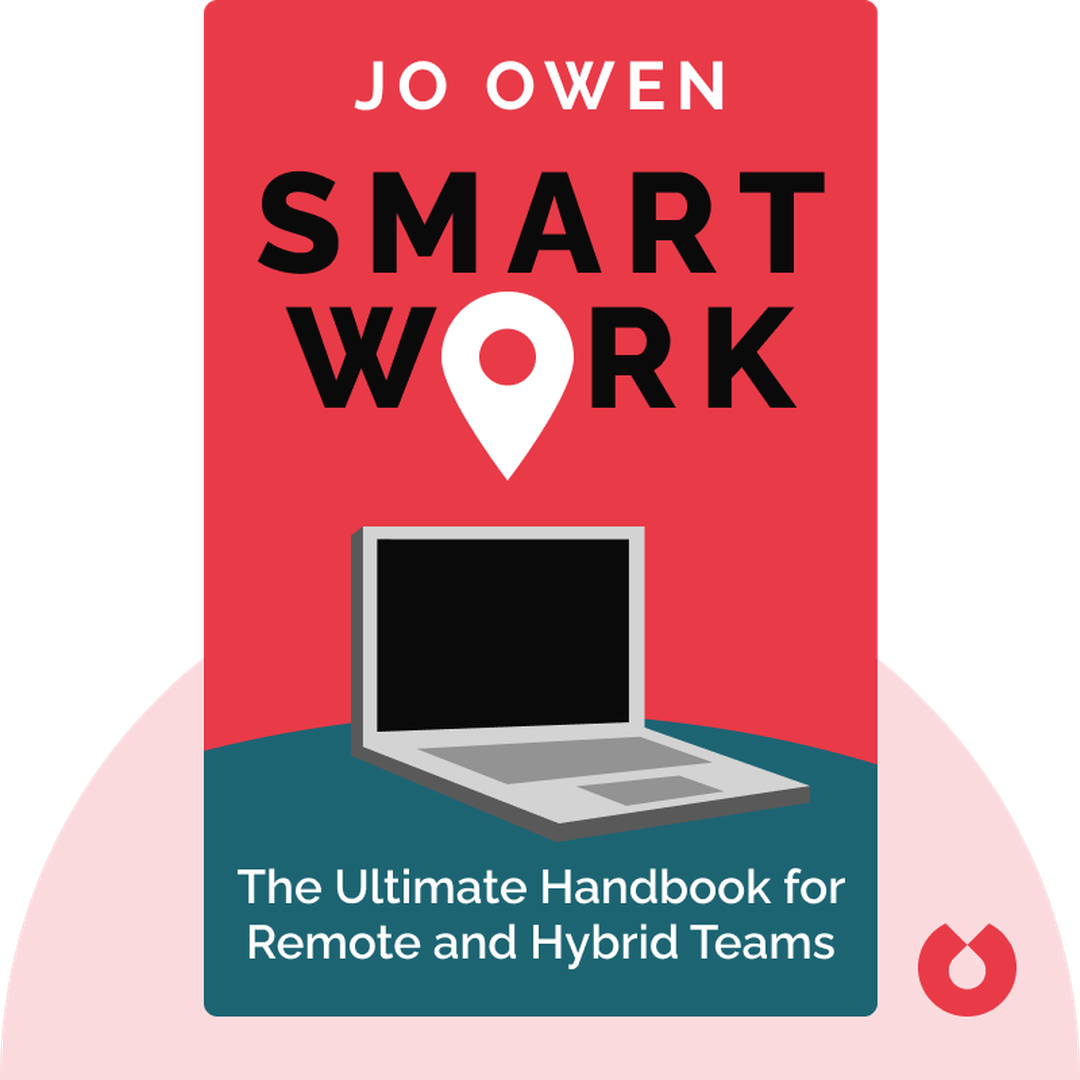
Smart Work (2022) is a handbook for leaders navigating the post-pandemic transition into a world of remote and hybrid work. These are challenging times for managers, argues author Jo Owen. What worked in the office won’t necessarily work in remote teams. But if there’s one thing Covid-19 showed us, it’s that we can adapt – fast. And change is a good thing, he insists. Why? Well, mastering these challenges isn’t just about future-proofing your job – it’ll also make you a better leader.
Who Should Listen to Smart Work?
- Leaders and managers
- Team players
- Self-starters
Books Similar to Smart Work
Readers who enjoyed this also liked these titles.