If You're Curious About These Questions...
You should listen to this audiobook
- Have you ever wondered why jumping straight into action is often the biggest mistake you can make when chasing a new goal?
- What if you could bridge the gap between your wildest dreams and a concrete, actionable plan that actually works?
- Are you curious about the secret to maintaining momentum even when you feel like you’ve lost your sense of direction?
Listen to Ready Aim Fire! — Free Audiobook
Loading player...
Key Takeaways from Ready Aim Fire!
- Master the three-step "Ready, Aim, Fire" method to transform vague dreams into concrete, achievable objectives.
- Understand why evaluating your current life stage and daily schedule is crucial for setting realistic goals that actually fit your available free time.
- Discover how to expose the hidden disconnect between what you claim your life priorities are and how you actually spend your free time.
- Learn how seeking objective feedback from five trusted friends can reveal blind spots in your daily focus and highlight neglected priorities.
- Uncover how to use the "Wheel of Life" exercise to assess seven key areas and determine exactly where you should direct your immediate focus.
Learning Tools
Reinforce what you learned from Ready Aim Fire!
Mind Map
Ready Aim Fire!
The Core Framework+
Step 1: READY (Assess & Clarify)+
Step 2: AIM (Target & Define)+
Step 3: FIRE (Execute & Sustain)+
Golden Rule+
Quiz — Test Your Understanding
Question 1 of 9
What does the 'Aim' step represent in the authors' target-practice metaphor for goal setting?
Question 2 of 9
How do the authors suggest you gain objectivity about your true life priorities?
Question 3 of 9
After rating the seven areas of your 'wheel of life,' what should you do with the two areas that received the lowest scores?
Question 4 of 9
According to the text, which of the following is the best example of a SMART goal?
Question 5 of 9
Why do the authors recommend writing down seven specific reasons for pursuing your goal?
Question 6 of 9
What famous example is used in the text to demonstrate the power of visualizing success?
Question 7 of 9
When creating a to-do list for your goal, what question should you ask yourself to determine your daily sub-subtasks?
Question 8 of 9
In the book's three-level support network, who typically makes up 'Level 3'?
Question 9 of 9
What is the authors' primary actionable advice regarding pursuing multiple goals at once?
Ready Aim Fire! — Full Chapter Overview
- 1Recommendation
- 2To set and achieve a goal, you need to prepare yourself, aim at a target, and then take action.
- 3Prepare to set a goal by thinking about where you are in life and how much free time you actually have.
- 4Think about your true priorities to begin narrowing down a specific goal.
- 5Evaluate your personal “wheel of life” to better understand where to direct your attention.
- 6You need to choose a SMART aim – one that is specific, measurable, achievable, relevant, and time-bound.
- 7Keep your drive alive by recalling why your goal matters and picturing yourself succeeding.
- 8Make your objective feel doable by using a to-do list and a consistent routine.
- 9Turn to friends, family, and colleagues for help when your motivation starts to fade.
Ready Aim Fire! Summary & Overview
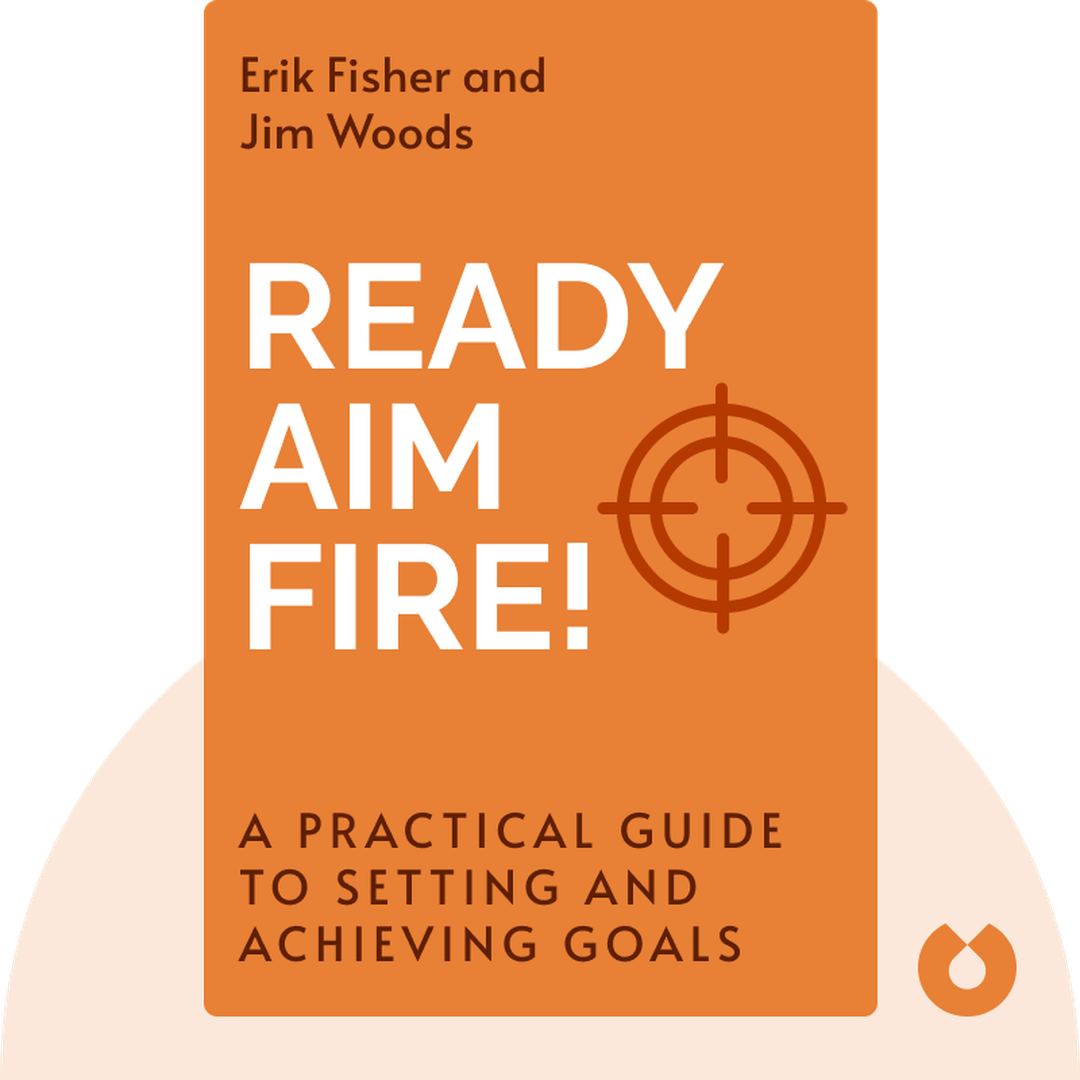
Ready Aim Fire! (2014) is a step-by-step guide to setting and achieving personal and professional goals. If you want to accomplish more in life but aren’t sure where to begin, it provides an accessible starting point for learning the art of turning dreams into realities.
Who Should Listen to Ready Aim Fire!?
- Newcomers to goal setting
- High achievers who want to go back to the basics
- Anyone who could use some more direction in life
Books Similar to Ready Aim Fire!
Readers who enjoyed this also liked these titles.