If You're Curious About These Questions...
You should listen to this audiobook
- What if the biggest obstacle to your greatness isn’t a lack of effort, but simply choosing the wrong things to work on?
- Have you ever wondered why some goals feel like a chore while others ignite your soul—and how you can tell the difference before you even start?
- What's the secret to identifying a 'worthy goal' that matters to you personally, rather than just meeting the expectations of everyone around you?
Listen to How to Begin — Free Audiobook
Loading player...
Key Takeaways from How to Begin
- Understand why true fulfillment requires you to plot your own personal path instead of following the pre-established destinations found in standard self-help books.
- Discover the three essential qualities of a 'Worthy Goal' and learn why your biggest life projects must be simultaneously daunting, important, and thrilling.
- Learn how to avoid the trap of unfulfilling success by ensuring your goals don't just serve others, but also genuinely excite and thrill you.
- Master the art of the 'crappy first draft' by using a simple 10-minute word association exercise to get your ambitious ideas out of your head and onto paper.
- Find out how to stress-test your new mission statement using the 'spouse-ish test' to guarantee your goal truly aligns with your core values and personality.
Learning Tools
Reinforce what you learned from How to Begin
Mind Map
How to Begin
Core Philosophy+
The 3 Qualities of a Worthy Goal+
Step 1: The Crappy First Draft+
Step 2: Stress-Testing+
Step 3: Refining and Adding Spice+
Step 4: The Commitment Test+
Step 5: Action and Evaluation+
Quiz — Test Your Understanding
Question 1 of 8
How does Michael Bungay Stanier's approach to goal-setting differ from many traditional self-help books?
Question 2 of 8
According to the author, what are the three distinctive qualities every 'Worthy Goal' must possess?
Question 3 of 8
Why does the author recommend starting with a 'crappy first draft' of your goal?
Question 4 of 8
What is the primary purpose of the 'spouse-ish test'?
Question 5 of 8
When applying the 'Goldilocks test' to your goal, what are you trying to achieve?
Question 6 of 8
How does the author suggest you 'add spice' to your draft to make it more impactful?
Question 7 of 8
During the final commitment test, what two things are you asked to compare against each other?
Question 8 of 8
What evaluation schedule does the author recommend once you start taking action on your Worthy Goal?
How to Begin — Full Chapter Overview
- 1Recommendation
- 2Worthy goals share three distinctive qualities.
- 3Everything begins with a rough first draft.
- 4Make sure your goal is feasible before moving ahead.
- 5Small adjustments can make your goal much clearer.
- 6Weigh the risks and rewards of your goal to decide if you’re ready to commit.
- 7Avoid endless planning — take action, and evaluate your progress as you go.
How to Begin Summary & Overview
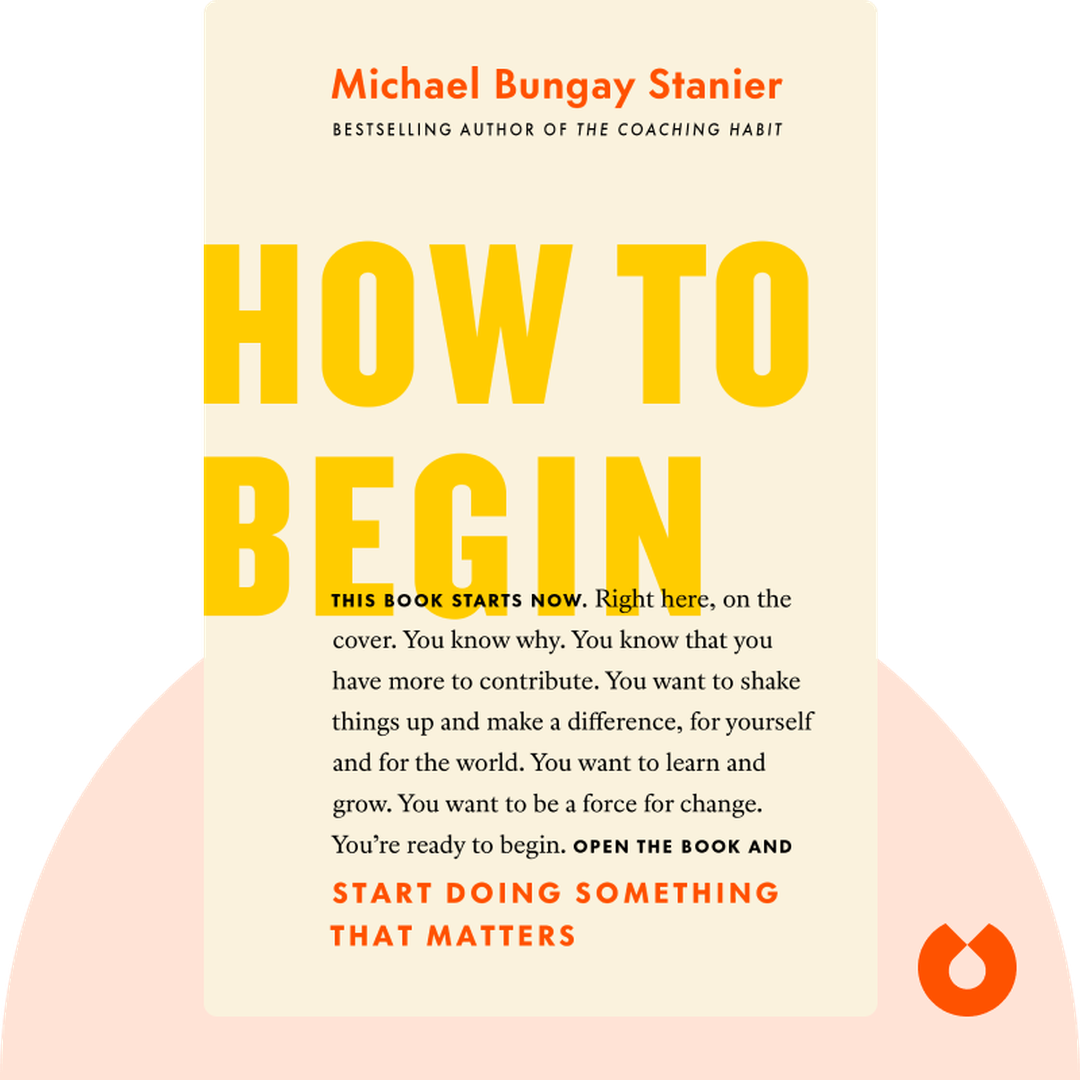
How to Begin (2022) argues that you unlock your greatness by working on the hard things. The things that matter. Not to your partner, friends, or family – but to you. The hardest part isn’t the work itself, though. It’s identifying the kinds of projects that are worth investing your time in. Projects which give your life meaning. And that’s what this book is really about: helping you discover worthy goals.
Who Should Listen to How to Begin?
- Self-improvers stuck in a rut
- Thinkers and doers
- Anyone who wants to live their best life
Books Similar to How to Begin
Readers who enjoyed this also liked these titles.