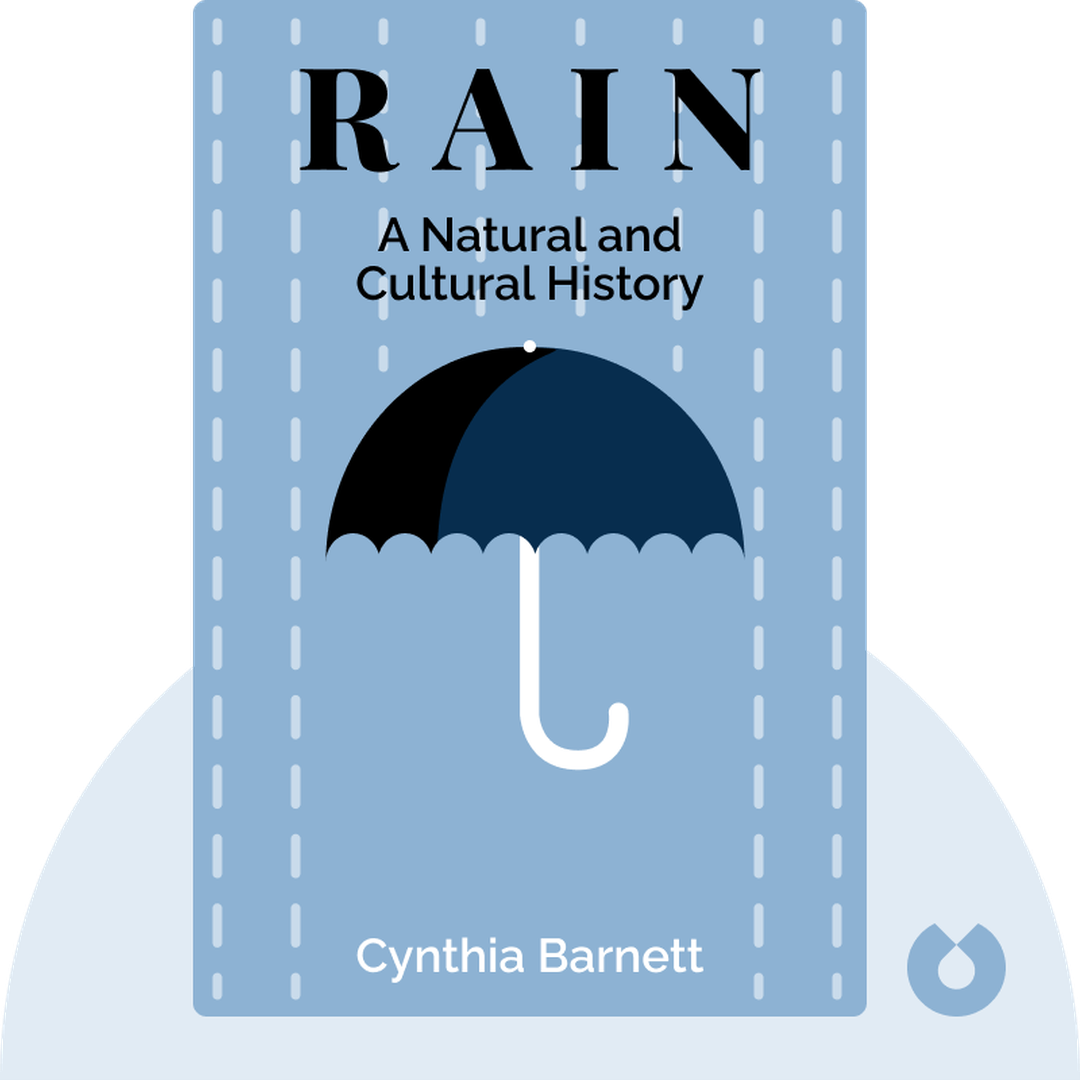
If You're Curious About These Questions...
You should listen to this audiobook
- Have you ever wondered if there is a genuine scientific explanation behind the legendary phenomenon of raining frogs?
- Did you know that our ancestors' ancient rituals and rain worship still influence how we perceive the environment today?
- Are you curious about how the history of weather forecasting reflects our long-standing struggle to master one of Earth’s most unpredictable forces?
Listen to Rain — Free Audiobook
Loading player...
Key Takeaways from Rain
- Discover how humanity's complex relationship with rain has shaped history, from inspiring ancient religious worship to causing the devastating Great Famine and brutal witch hunts.
- Learn about the surprisingly ancient origins of meteorology and rain gear, including Aristotle's early weather studies and the collapsible umbrellas used over 3,000 years ago.
- Understand how desperate nineteenth-century American farmers were duped by fraudulent 'rainmakers' who charged massive fees to magically summon storms.
- Explore the profound connection between wet weather and human creativity, revealing why rainy climates consistently inspire prolific writers, musicians, and filmmakers.
- Find out the fascinating truth behind bizarre meteorological events, including documented historical accounts of storms that literally drop frogs and fish from the sky.
Learning Tools
Reinforce what you learned from Rain
Mind Map
Rain
Dual Nature+
Science and Shelter+
Swindlers and Illusions+
Inspiration and Commerce+
Freak Phenomena+
Quiz — Test Your Understanding
Question 1 of 5
According to the text, what was the primary cause of the Great Famine of 1315–1322 in Europe, and what social consequence did it lead to?
Question 2 of 5
Which of the following statements about the history of umbrellas and rain protection is true based on the book?
Question 3 of 5
Why were 19th-century American farmers in regions like Dakota and Kansas easily exploited by 'rainmakers' like Frank Melbourne?
Question 4 of 5
How do modern retailers commonly capitalize on the concept of rain?
Question 5 of 5
What is the meteorological explanation provided for the phenomenon of 'raining frogs' or fish?
Rain — Full Chapter Overview
- 1Recommendation
- 2The Motel Where Trouble Sleeps
- 3The House Behind the Screen
- 4Rooms She Can Almost Save
- 5The Neighbor’s Kitchen and the Old Escape
- 6Mrs Briggs in the Pink Room
- 7The Favorite Ghost and the Living Daughter
- 8Why She Was Born
- 9The Flight Back Through Dry Weather
- 10What Rain Can and Cannot Wash Clean
Rain Summary & Overview
Rain (2015) tells the story of one of the most valued, destructive and inspiring natural forces on our planet. These blinks trace a journey from rain worship in ancient cultures to the use of weather forecasting throughout the ages – and even the scientific explanation behind raining frogs.
Who Should Listen to Rain?
- Anyone interested in the relationship between the natural world and human civilization
- Hobby meteorologists seeking some background to the science
Books Similar to Rain
Readers who enjoyed this also liked these titles.