If You're Curious About These Questions...
You should listen to this audiobook
- What’s the secret to how a nation that is 60% desert managed to overcome a perpetual water scarcity and become a global leader in water abundance?
- Did you know that one country has mastered wastewater recycling so effectively that it has fundamentally changed the future of global agriculture?
- Have you ever wondered how a unique combination of political foresight and high-tech innovation could provide the ultimate blueprint for solving the world's looming water shortage?
Listen to Let There Be Water — Free Audiobook
Loading player...
Key Takeaways from Let There Be Water
- Learn how cultivating national water mindfulness and investing in long-term infrastructure can build the foundation for total resource self-sufficiency.
- Discover how revolutionary innovations like drip irrigation and Sand Aquifer Treatment can double agricultural output while recycling over 85 percent of wastewater.
- Understand why the breakthrough of reverse osmosis desalination transformed a desert region into a water-abundant nation capable of withstanding severe droughts.
- Find out how Israel turned its domestic water conservation expertise into a lucrative global export industry that helps tackle worldwide water shortages.
- Explore how sharing cutting-edge water technology serves as a powerful diplomatic tool to overcome international isolation and forge peaceful alliances.
Learning Tools
Reinforce what you learned from Let There Be Water
Mind Map
Let There Be Water
Culture & Mindfulness+
Policy & Infrastructure+
Technological Innovations+
Global Diplomacy & Exports+
Regional Peace & Cooperation+
Fostering Innovation+
Quiz — Test Your Understanding
Question 1 of 7
Why was the National Water Carrier project, completed in 1964, a crucial step for Israel's early water self-sufficiency?
Question 2 of 7
What observation led Jewish water engineer Simcha Blass to develop the concept of drip irrigation?
Question 3 of 7
How does Israel successfully treat and reuse over 85 percent of its sewage water for agriculture?
Question 4 of 7
What was the breakthrough technology developed by Sidney Loeb in 1966 that made large-scale desalination practical for Israel?
Question 5 of 7
How did Israel's expertise in water technology influence its diplomatic relations with China?
Question 6 of 7
Which of the following is one of the three key policy factors that currently maintains Israel's water abundance?
Question 7 of 7
What ambitious regional water project involves cooperation between Israel, the Palestinian National Authority, and Jordan?
Let There Be Water — Full Chapter Overview
- 1Recommendation
- 2Water awareness and long-term planning laid the groundwork for water self-sufficiency.
- 3Israeli scientists developed innovations like drip irrigation and sewage water treatment.
- 4Desalination advanced Israel’s water solutions and secured the country’s self-sufficiency.
- 5Israeli water expertise has grown into a thriving export industry.
- 6Water is central to Israel’s diplomatic ties with China and other countries.
- 7Public ownership, real-cost pricing, and innovation keep Israel’s taps flowing at full capacity.
- 8Final summary
Let There Be Water Summary & Overview
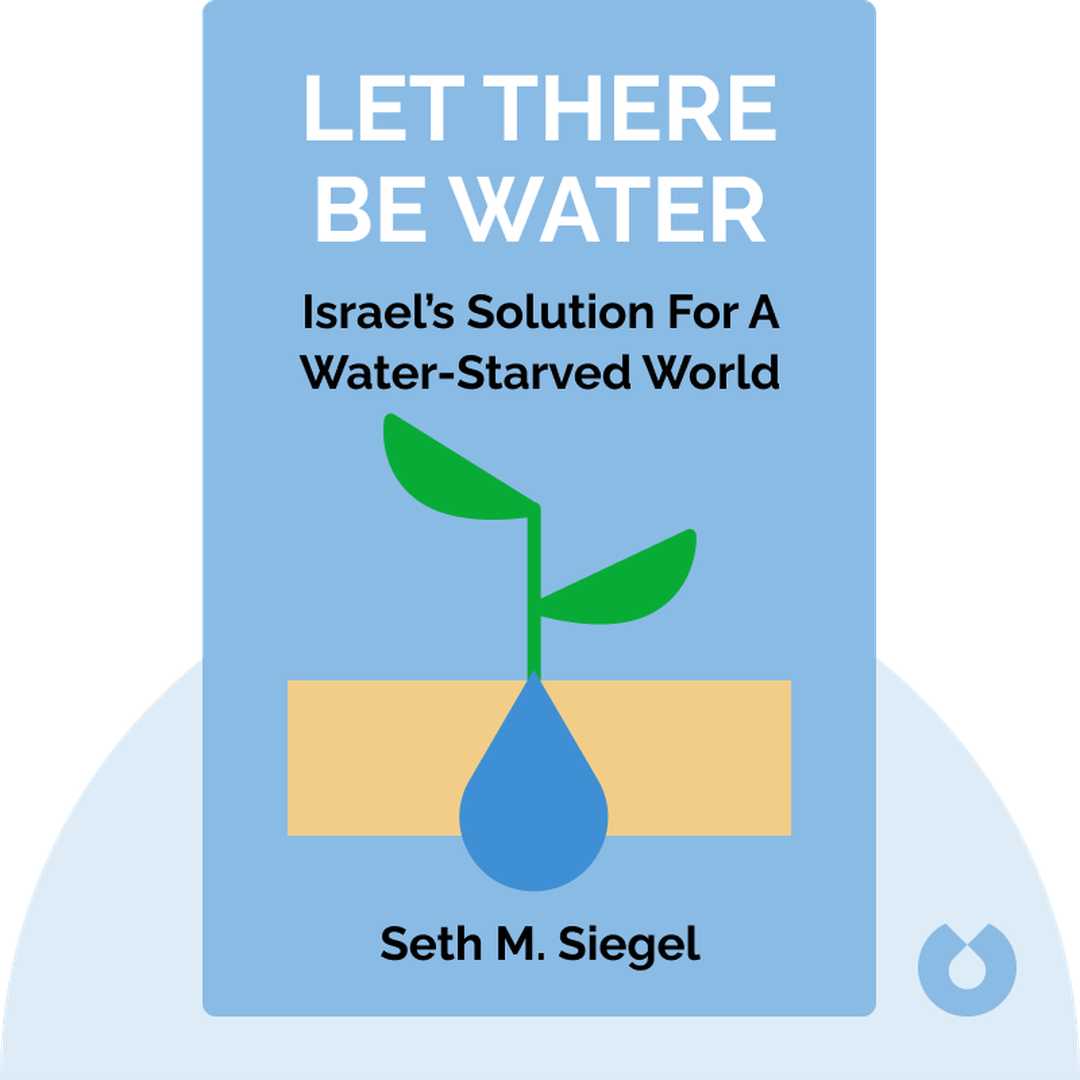
Let There Be Water (2015) sheds light on Israel’s solutions to water problems. Thanks to technological innovation, clever engineering and political foresight, Israel stands out as one country that can teach other nations how to provide water in abundance for its citizens.
Who Should Listen to Let There Be Water?
- People interested in the state of Israel and its policies
- Engineers and students of water policy
- Environmentalists and anyone concerned about the world’s looming water crisis
Books Similar to Let There Be Water
Readers who enjoyed this also liked these titles.