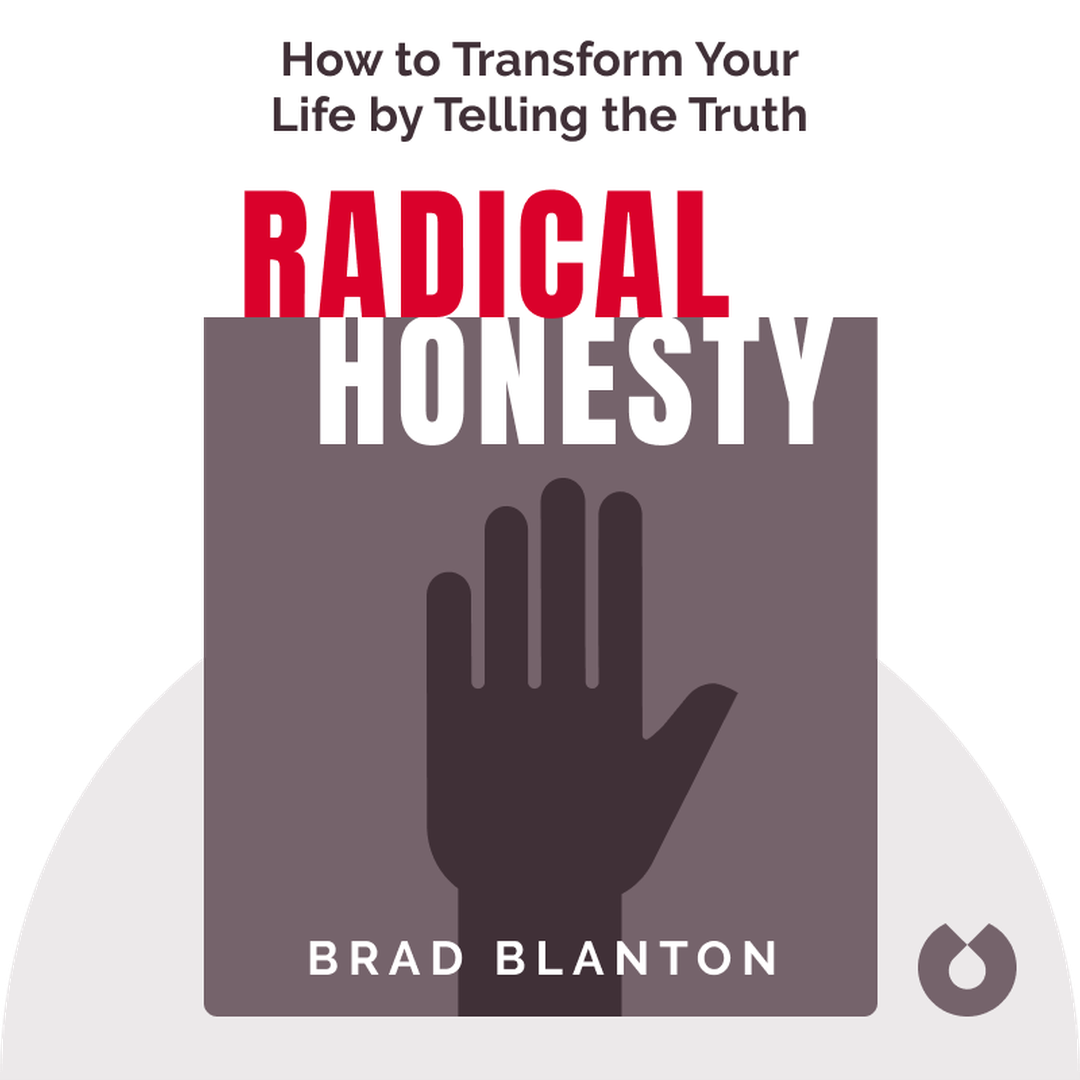
If You're Curious About These Questions...
You should listen to this audiobook
- Did you know that the 'polite' lies you tell every day might be the very thing keeping you trapped in a cycle of stress and anxiety?
- What if you could stop managing everyone else's impressions of you and finally experience the relief of being completely yourself?
- Have you ever wondered why total honesty—even the uncomfortable kind—is actually the fastest way to build deep, unshakable intimacy in your relationships?
Listen to Radical Honesty — Cinematic Audio Edition
Loading player...
Key Takeaways from Radical Honesty
- Understand how societal 'moralism' causes your mind to dominate your natural state of being and forces you to live an unhealthy lie.
- Discover why the everyday lies we tell to protect our identities act like a slow-killing disease on our physical and mental well-being.
- Master the three distinct levels of radical honesty by stating the bare facts, revealing your true emotional state, and fully living out your authentic, flawed identity.
- Learn how to confess deeply uncomfortable truths to your loved ones by using descriptive language instead of relying on rigid judgments of right and wrong.
- Find out how neurosis stems from a refusal to accept your present reality, and how embracing unflinching honesty can relieve the physical stress that wears you down.
Learning Tools
Reinforce what you learned from Radical Honesty
Mind Map
Radical Honesty
The Problem with Lying & Moralism+
The Three Levels of Truth+
Practicing Radical Honesty+
Processing Anger+
Transforming Relationships+
Taking Responsibility+
Quiz — Test Your Understanding
Question 1 of 7
According to the author, what does it mean to be a 'moralist' or 'field dependent'?
Question 2 of 7
What is the third level of radical honesty, as described in the text?
Question 3 of 7
How does the author define 'neurosis'?
Question 4 of 7
When practicing radical honesty about difficult situations (like infidelity), what type of language does the author recommend using?
Question 5 of 7
What is the author's view on holding onto or repressing anger?
Question 6 of 7
In the context of relationships, what is the difference between Martin Buber's concepts of 'I-You' and 'I-It' communication?
Question 7 of 7
Why does the author recommend physical disciplines like yoga and body therapy for his patients?
Radical Honesty — Full Chapter Overview
- 1Recommendation
- 2Moralism is when your mind rules your being.
- 3We all lie our heads off, and it hurts us.
- 4Radical honesty means telling the full truth, no matter how uncomfortable that feels.
- 5Clinging to your anger isn’t noble self-sacrifice — it’s just mere repression.
- 6Speaking the truth — the entire truth — is essential to any relationship.
- 7To break free from moralism and live a radically honest life, take responsibility now.
Radical Honesty Summary & Overview
Radical Honesty (first published 1993, this edition 2004) is a guide to help you tell the truth. We all lie, all the time, and it’s only through extreme honesty that we can escape from the moralism that surrounds us and truly be ourselves.
Who Should Listen to Radical Honesty?
- People who want to express themselves more clearly
- Couples struggling to communicate
- Self-improvement fans
Books Similar to Radical Honesty
Readers who enjoyed this also liked these titles.