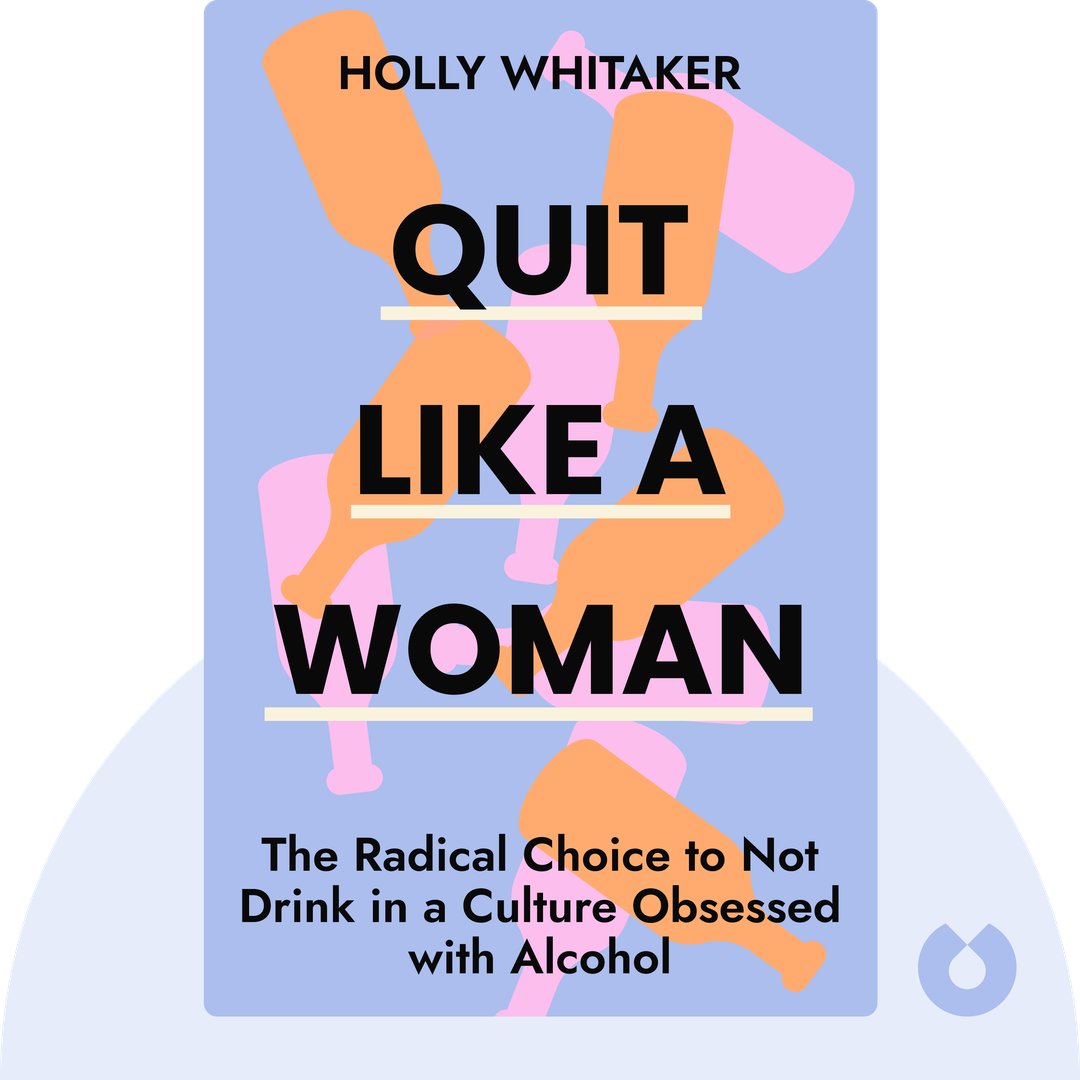
If You're Curious About These Questions...
You should listen to this audiobook
- Why does the author argue that traditional recovery programs like Alcoholics Anonymous might actually be counterproductive for women living in a patriarchal society?
- How does the cultural myth of the 'normal, healthy drinker' versus the 'problem alcoholic' secretly benefit large alcohol conglomerates while harming everyday consumers?
- Why should anyone questioning their drinking habits stop asking 'Am I an alcoholic?' and what empowering question should they ask themselves instead?
Listen to Quit Like a Woman — Free Audiobook
Loading player...
Key Takeaways from Quit Like a Woman
- The cultural distinction between 'normal' drinkers and 'alcoholics' is a harmful myth; alcohol is inherently poisonous and damages your body and brain even in moderation.
- Overcoming alcohol dependence requires addressing both the physiological cycle of addiction in the midbrain and the emotional root causes you are trying to escape.
- Unlike traditional, masculine-centric recovery programs that focus on humility and cataloging flaws, a feminine-centric approach treats sobriety as an act of self-care designed to uncover your already whole, perfect self.
- Sobriety should be viewed as an evolving practice built on self-forgiveness and resilience, rather than a rigid, zero-sum game where a single slip-up erases all progress.
- Successfully quitting alcohol involves actively 'mothering' yourself by replacing drinking with nourishing daily rituals and giving yourself permission to binge on harmless habits.
Learning Tools
Reinforce what you learned from Quit Like a Woman
Mind Map
Quit Like a Woman
The Feminist Framework+
The Myth of the Normal Drinker+
The Mechanics of Drinking+
Feminine-Centric Recovery+
Practical Strategies+
Quiz — Test Your Understanding
Question 1 of 5
According to the text, why is asking 'Am I an alcoholic?' the wrong question to ask yourself?
Question 2 of 5
How does alcohol consumption alter brain chemistry to create a cycle of addiction, according to the book?
Question 3 of 5
Why does the author argue that conventional sobriety programs like Alcoholics Anonymous (AA) are not designed with women in mind?
Question 4 of 5
In the feminine-centric approach to recovery, how is a relapse or 'falling off the wagon' viewed?
Question 5 of 5
Which of the following is recommended by the author as a strategy to help move away from alcohol dependence?
Quit Like a Woman — Full Chapter Overview
- 1Recommendation
- 2Alcoholic or moderate drinker? The difference doesn’t matter.
- 3Understanding why you drink is the first step toward stopping.
- 4Traditional sobriety programs weren’t created for women.
- 5Use intentional strategies to step away from dependence.
Quit Like a Woman Summary & Overview
Quit Like a Woman (2019) encourages women to reconsider their relationship with alcohol, uncovering the misogynist underpinnings of how alcohol is packaged and marketed to women and proposing a new, feminist road map to sobriety. Through personal anecdotes, insights, and research, the narrative provides a road map for individuals seeking a path to sobriety that aligns more closely with their own experiences and identities.
Who Should Listen to Quit Like a Woman?
- Women who feel increasingly dependent on alcohol to wind down and relax
- Newly sober women eager for guidance on this exciting journey
- Women in recovery who are tired of patriarchal programme-speak
Books Similar to Quit Like a Woman
Readers who enjoyed this also liked these titles.