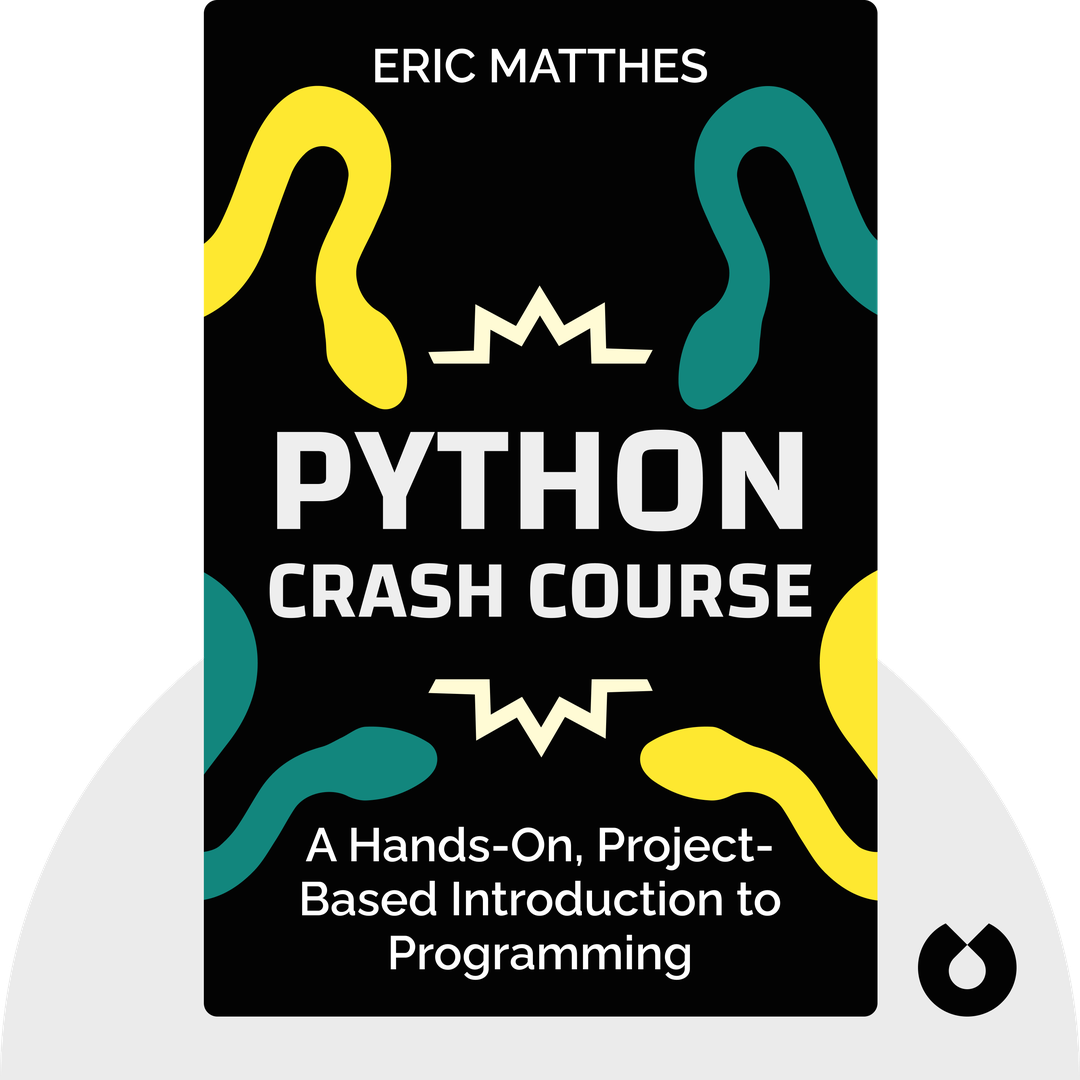
If You're Curious About These Questions...
You should listen to this audiobook
- What if you could master a single language that empowers you to build high-speed games, launch dynamic websites, and visualize complex data all at once?
- Have you ever wondered why Python has become the essential "first language" for anyone looking to break into the world of professional coding?
- Are you curious about the secret to transitioning from writing simple lines of code to deploying your own fully functional, data-driven applications?
Listen to Python Crash Course — Cinematic Audio Edition
Loading player...
Key Takeaways from Python Crash Course
- Discover the 'Zen of Python' to write readable, simple code by mastering fundamental building blocks like variables, strings, and conditional statements.
- Learn how to efficiently organize and manipulate complex, real-world data using powerful built-in structures like ordered lists and key-value dictionaries.
- Master object-oriented programming by using classes and functions to encapsulate tasks, greatly enhancing your code's reusability and efficiency.
- Understand how to build reliable programs by handling errors gracefully with exceptions and employing the unittest module for test-driven development.
- Find out how to craft engaging visual narratives from raw data sets using customizable tools like the Matplotlib library.
Learning Tools
Reinforce what you learned from Python Crash Course
Mind Map
Python Crash Course
Philosophy & Scope+
Core Basics & Data Structures+
Efficiency & Reliability+
Data Visualization+
Web Development (Django)+
Quiz — Test Your Understanding
Question 1 of 6
According to the "Zen of Python," what are the core guiding principles of Python's design philosophy?
Question 2 of 6
How do dictionaries differ from lists in the way they store data in Python?
Question 3 of 6
What mechanism does Python use to handle potential runtime issues, such as a missing file, in a controlled manner?
Question 4 of 6
In the context of data visualization, what is the primary function of Python's requests module?
Question 5 of 6
When building a web application with Django, what is the purpose of using a decorator like @login_required?
Question 6 of 6
What is the role of a 'class' in Python's object-oriented programming?
Python Crash Course — Full Chapter Overview
- 1Recommendation
- 2Mastering the fundamentals of a powerful language
- 3Boosting code efficiency and reliability
- 4Painting with data: creating engaging visual stories in Python
- 5Building digital dreams: creating web apps with Python and Django
Python Crash Course Summary & Overview
Python Crash Course (2015) offers a comprehensive journey into the world of Python programming. From building dynamic web applications and engaging games to visualizing data and exploring core programming concepts, it equips learners with the skills to master this versatile language.
Who Should Listen to Python Crash Course?
- Aspiring programmers looking to break into the world of coding
- Coders and programmers seeking a Python refresher
- Web designers wanting to design and deploy dynamic, data-driven websites
Books Similar to Python Crash Course
Readers who enjoyed this also liked these titles.