If You're Curious About These Questions...
You should listen to this audiobook
- Have you ever wondered why the 'pictures in our heads' rarely match the reality of the world outside, and who is responsible for painting them?
- Did you know that the very foundation of democracy might be at risk because we live in a 'pseudo-environment' shaped by media and psychological shortcuts?
- Are you curious about how our reliance on stereotypes makes it possible for public opinion to be manufactured and controlled without us even realizing it?
Listen to Public Opinion — Free Audiobook
Loading player...
Key Takeaways from Public Opinion
- Understand the concept of the 'pseudo-environment' and discover how media, culture, and past experiences actively distort your perception of reality.
- Discover how everyday barriers like self-censorship, limited direct experience, and short attention spans force us to rely on incomplete, second-hand information.
- Learn why we use stereotypes as mental shortcuts to navigate a complex world, and how to actively overcome these harmful blind spots through education and diverse perspectives.
- Find out how politicians, corporations, and advertisers manipulate public behavior by appealing to your personal and emotional interests rather than presenting logical facts.
- Recognize how the nuance of important democratic issues is often stripped away and reduced to oversimplified, binary choices that ultimately distort the true public will.
Learning Tools
Reinforce what you learned from Public Opinion
Mind Map
Public Opinion
The Pseudo-Environment+
Stereotypes+
Shaping Public Opinion+
The Limits of Democracy+
Media and News Consumption+
Strategies for Reform+
Quiz — Test Your Understanding
Question 1 of 7
According to Walter Lippmann, what is a 'pseudo-environment'?
Question 2 of 7
How does the text describe the primary function of stereotypes in human perception?
Question 3 of 7
Why is appealing to personal interests often considered a more powerful tool in shaping public opinion than logical arguments?
Question 4 of 7
What is one of the negative consequences of reducing complex democratic debates into binary, yes-or-no decisions?
Question 5 of 7
According to the text, why do newspapers often fail to provide a complete and accurate picture of reality?
Question 6 of 7
What effect does being a 'constant reader' of a single news source have on an individual?
Question 7 of 7
In the context of creating positive change, what is the strategy of the 'entering wedge'?
Public Opinion — Full Chapter Overview
- 1Recommendation
- 2Obstacles to reality
- 3Stereotypes as mental shortcuts
- 4The interests of the public
- 5The limitations of democracy
- 6Buyer, be wary
- 7Transforming the future
Public Opinion Summary & Overview
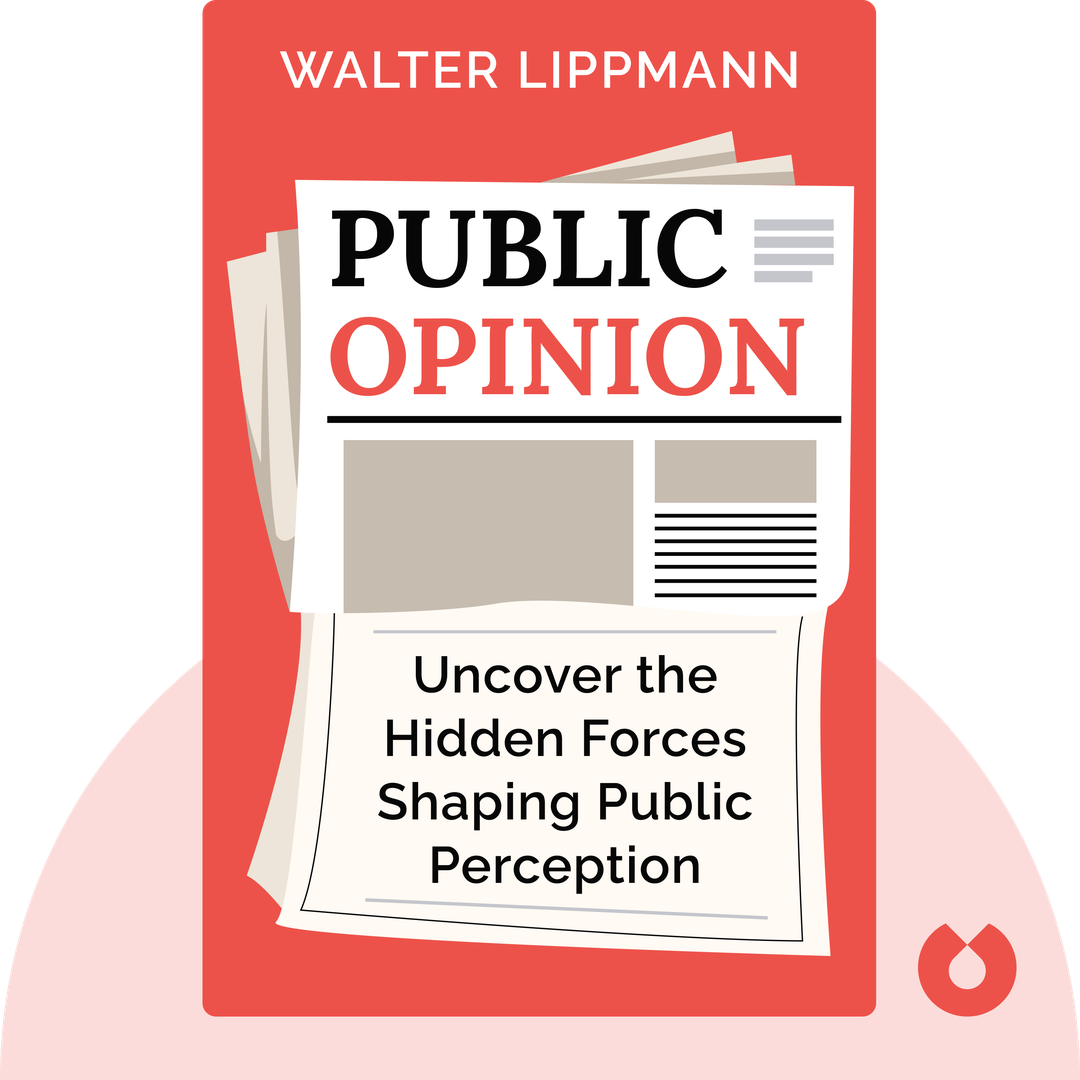
Public Opinion (1922) offers valuable insights into how media and psychological factors shape our perceptions of the world and influence public opinion. It provides a thought-provoking analysis of how “reality” can be distorted and how our understanding and decision-making, as well as public opinion, can be influenced.
Who Should Listen to Public Opinion?
- Political science buffs
- People worried about democracy
- Anyone interested in media literacy
Books Similar to Public Opinion
Readers who enjoyed this also liked these titles.