If You're Curious About These Questions...
You should listen to this audiobook
- Did you know that trying to 'calm down' before a high-pressure moment is actually counterproductive, and there’s a much more effective way to channel your nerves?
- What if you could use the same scientifically-proven 'pre-game' rituals as elite athletes and surgeons to ensure you’re at your best when it matters most?
- Are you curious about the secret psychology behind why having a rival can actually be the key to unlocking your highest level of success?
Listen to Psyched Up — Free Audiobook
Loading player...
Key Takeaways from Psyched Up
- Discover how to transform debilitating pre-performance anxiety into powerful excitement simply by verbally declaring "I'm so excited" before an event.
- Learn to regain focus under pressure using a martial arts centering technique that concentrates your body's energy just beneath your belly button before releasing it.
- Understand why adopting consistent pre-performance rituals, whether individually or as a team, dramatically improves your execution and camaraderie.
- Find out how the psychological phenomenon of "positive contagion" can instantly boost your abilities just by believing you are using tools previously owned by experts.
- Master the art of staying cool during high-stakes presentations by relying on a fully memorized, "autopilot" introduction to seamlessly engage your audience.
Learning Tools
Reinforce what you learned from Psyched Up
Mind Map
Psyched Up
Managing Anxiety+
Rituals & Beliefs+
Mental States & Priming+
Effective Pep Talks+
Power of Music+
Competition & Rivalry+
Performance-Enhancing Drugs+
Quiz — Test Your Understanding
Question 1 of 8
According to Alison Brooks's research, what is the most effective way to deal with pre-performance anxiety?
Question 2 of 8
What does the concept of 'positive contagion' refer to in the context of performance improvement?
Question 3 of 8
Why might a speaker intentionally rely on Daniel Kahneman's 'System 1' cognition (autopilot) during the introduction of a presentation?
Question 4 of 8
To put listeners in a 'growth mindset' during a pep talk, what should the speaker emphasize?
Question 5 of 8
According to Tiffanye Vargas's research, when is it most effective for a coach to use an information-heavy, factual speech rather than an emotional one?
Question 6 of 8
How does listening to highly motivational music physically improve athletic performance?
Question 7 of 8
What did researcher Gavin Kilduff discover about the effects of rivalry on performance?
Question 8 of 8
Why do some individuals, like journalist Scott Stossel, take the beta blocker propranolol before high-pressure situations?
Psyched Up — Full Chapter Overview
- 1Recommendation
- 2You can manage performance anxiety by reappraising it and centering yourself effectively.
- 3Routines and beliefs can enhance your performance.
- 4Knowing when to switch to autopilot can boost performance, and priming may influence it, too.
- 5When delivering pep talks, place listeners in a growth mindset and tailor the content to the situation at hand.
- 6Use music to boost your physical performance.
- 7Competition and rivalry enhance performance.
- 8Some people find performance-enhancing drugs helpful, but they may cause dangerous side effects.
Psyched Up Summary & Overview
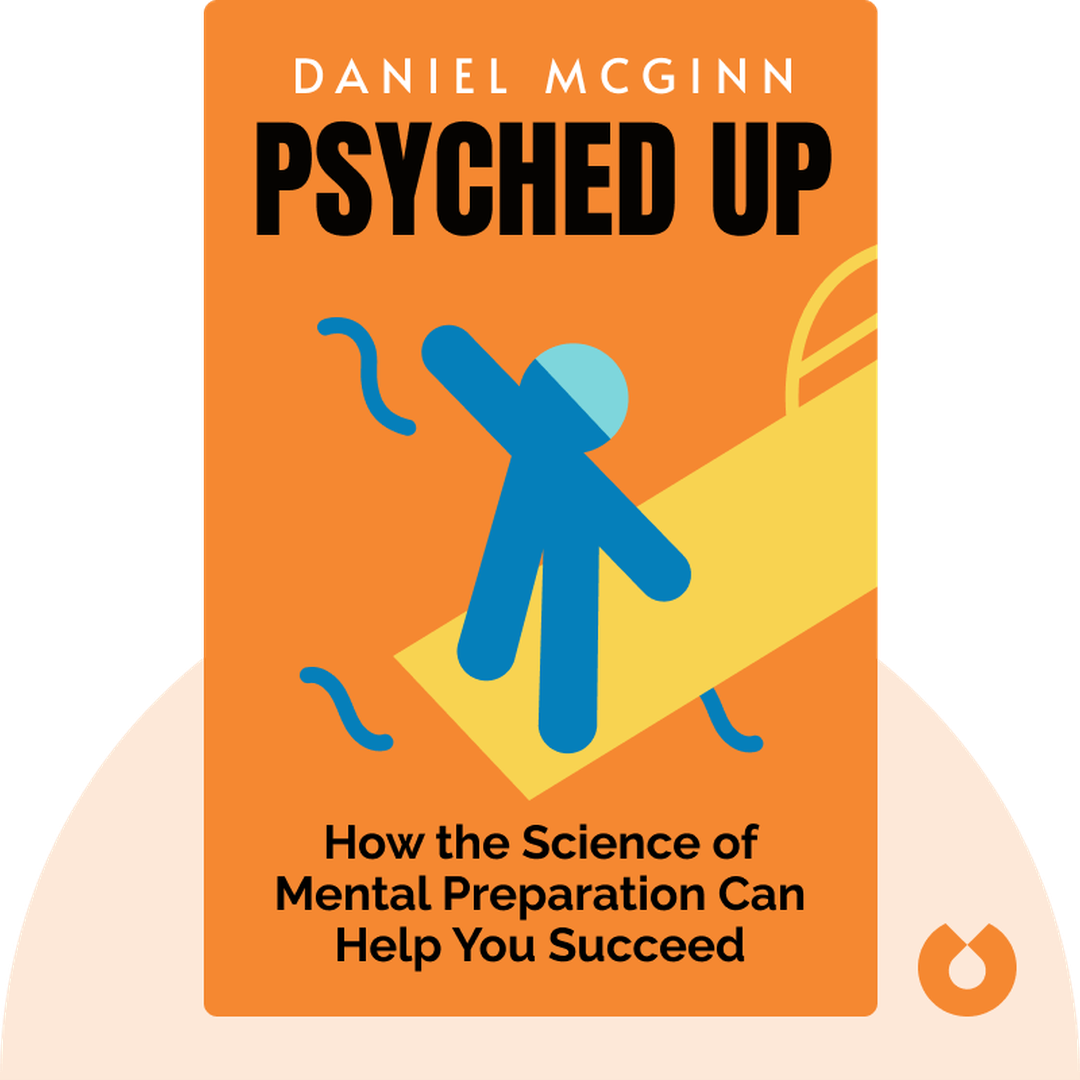
Psyched Up (2017) takes on the subject of performance. It looks at how top performers in a variety of fields psych themselves up for action and provides actionable advice to help you prepare and perform better.
Who Should Listen to Psyched Up?
- Those who experience performance anxiety
- People curious about the psychology of top performers
- Underperformers trying to get back on top of their game
Books Similar to Psyched Up
Readers who enjoyed this also liked these titles.