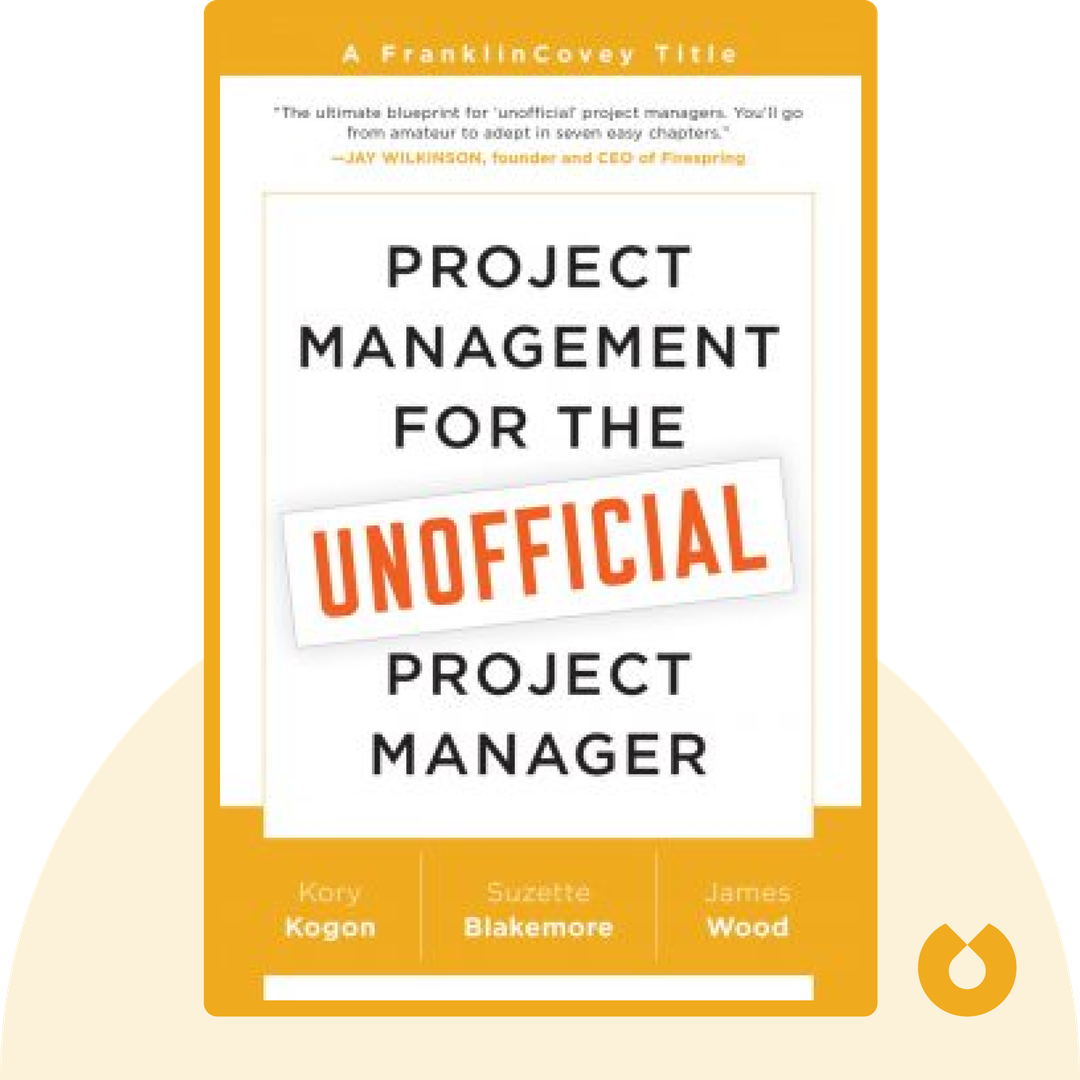
Project Management for the Unofficial Project Manager
Start ListeningDownload Try free on iPhoneScan to start in 5 seconds
Categories:
If You're Curious About These Questions...
You should listen to this audiobook
- Did you know that most people leading projects today have no formal training, and that there’s a specific 'secret sauce' that separates the winners from the rest?
- What if the secret to project success isn’t a complex software tool, but a simple blend of leadership and logic that anyone can learn?
- Have you ever wondered why even the best-planned projects often fail, and what 'unofficial' project managers do differently to ensure they cross the finish line every time?
Listen to Project Management for the Unofficial Project Manager — Free Audiobook
Loading player...
Key Takeaways from Project Management for the Unofficial Project Manager
- Understand why you don't need formal training or an official title to successfully lead workplace projects and prevent them from failing.
- Discover how to radiate informal authority by inspiring your team through your strength of character rather than relying on a formal job title.
- Master the four fundamental leadership behaviors of demonstrating respect, listening first, clarifying big-picture expectations, and practicing strict accountability.
- Learn how to properly initiate a project by identifying all relevant stakeholders and interviewing them to align expectations before execution begins.
- Find out why identifying project risks and creating mitigation strategies with your team must happen before you even start scheduling deliverables.
Learning Tools
Reinforce what you learned from Project Management for the Unofficial Project Manager
Mind Map
Project Management for the Unofficial Project Manager
Core Premise+
Foundational Leadership Behaviors+
Phase 1: Initiate+
Phase 2: Plan+
Phase 3: Execute+
Phase 4: Monitor and Control+
Phase 5: Close+
Quiz — Test Your Understanding
Question 1 of 8
Why do the authors argue that the vast majority of people conducting project-based work are 'unofficial' project managers?
Question 2 of 8
What is the foundational concept behind 'informal authority' as described in the book?
Question 3 of 8
According to the four fundamental behaviors of effective leaders, how should an unofficial project manager handle clarifying expectations?
Question 4 of 8
What is the crucial first step in the project initiation phase?
Question 5 of 8
When building a project plan, what should a project manager do before figuring out deliverables and scheduling?
Question 6 of 8
How does the book recommend handling mistakes or falling behind on deadlines during the execution phase?
Question 7 of 8
What does the term 'scope creep' refer to in project management?
Question 8 of 8
What is recommended as a highly effective way to celebrate a successful project conclusion with your team?
Project Management for the Unofficial Project Manager — Full Chapter Overview
- 1Recommendation
- 2Chapter 1. Inspiring leadership is the most important part of project management.
- 3Chapter 2. Initiation
- 4Chapter 3. Planning
- 5Chapter 4. Execution
- 6Chapter 5. Monitoring and Controlling
- 7Chapter 6. Closing
- 8Final summary
Project Management for the Unofficial Project Manager Summary & Overview
Project Management for the Unofficial Project Manager (2015) examines the phenomenon that so many people face – they’re tasked with managing projects but have no formal training in project management. If you’re in this situation, don’t worry. By learning how to combine inspiring leadership with effective project management, you’re guaranteed to increase the chances of your next project succeeding.
Who Should Listen to Project Management for the Unofficial Project Manager?
- Employees who have unexpectedly been given the lead on a project
- Anyone who’s struggled with project management in the past
- People looking to rock an upcoming or ongoing project
Books Similar to Project Management for the Unofficial Project Manager
Readers who enjoyed this also liked these titles.