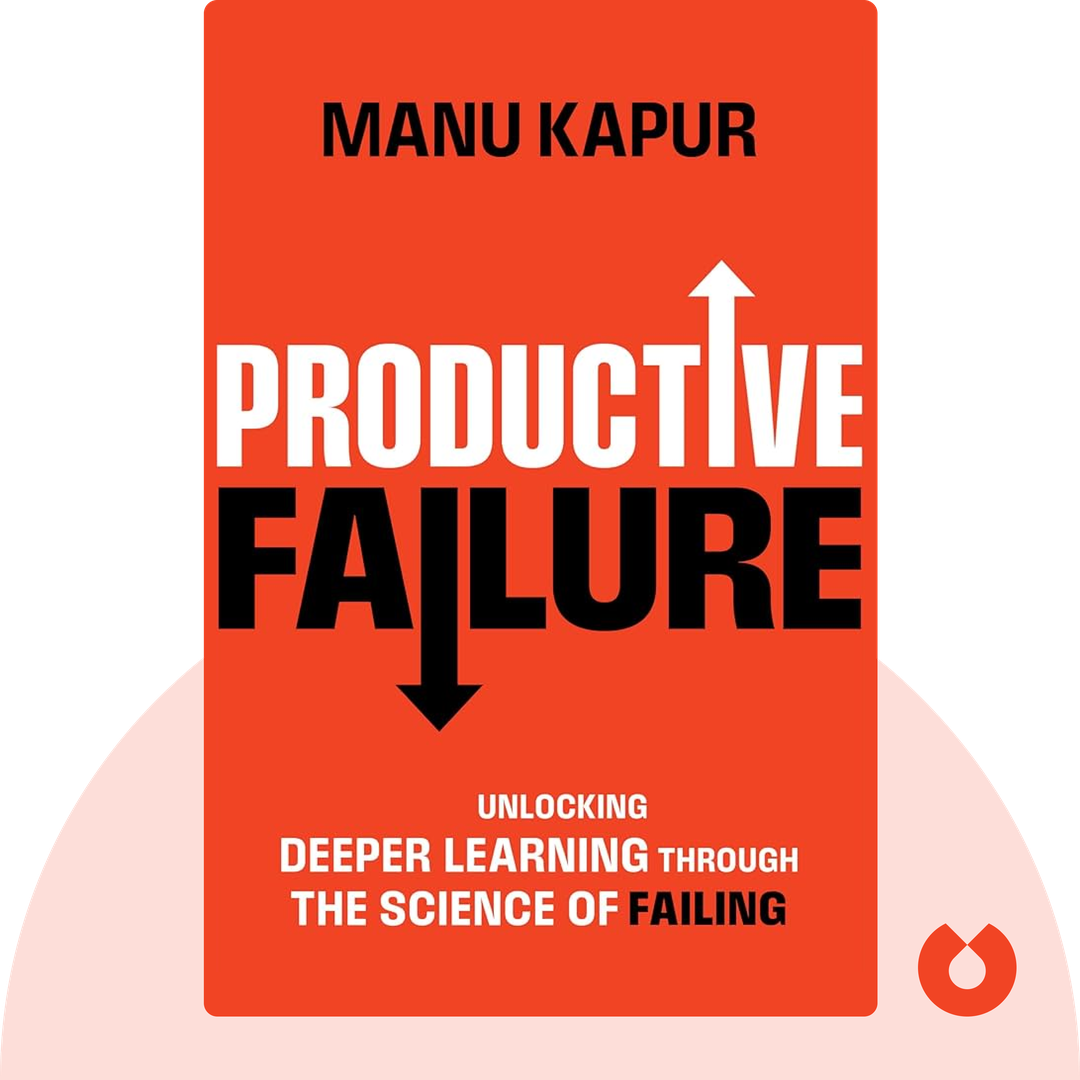
If You're Curious About These Questions...
You should listen to this audiobook
- What if the key to mastering a new skill isn't getting the right answer quickly, but intentionally struggling with a problem you don't yet know how to solve?
- Have you ever wondered why traditional teaching methods often fail to produce long-term retention, and what simple shift in timing could change everything?
- Did you know that there is a specific type of failure that actually accelerates deep learning and boosts critical thinking far more than immediate success?
Listen to Productive Failure — Free Audiobook
Loading player...
Key Takeaways from Productive Failure
- Discover why forgetting and struggling to retrieve information actually strengthens your long-term memory far better than just reviewing familiar material.
- Learn how the Productive Failure method flips traditional instruction by having you grapple with complex problems before receiving explanations, resulting in deeper conceptual understanding.
- Understand the failed generation effect, where putting effort into trying and failing to solve a problem perfectly primes your brain to absorb the correct information later.
- Find out how interactive problem-solving activates your prior knowledge, forcing deeper cognitive effort that makes connecting and retaining new material much smoother.
- Explore how getting stuck and realizing you do not know a solution builds crucial metacognitive awareness and fosters greater problem-solving creativity.
Learning Tools
Reinforce what you learned from Productive Failure
Mind Map
Productive Failure
The Problem with Traditional Learning+
The Productive Failure Model+
Cognitive Mechanisms+
The Emotional Journey+
Classroom Implementation+
Quiz — Test Your Understanding
Question 1 of 7
According to the text, why is forgetting not always a bad thing in the learning process?
Question 2 of 7
How does direct instruction compare to Productive Failure, according to comparative studies mentioned in the text?
Question 3 of 7
What is the 'failed generation effect'?
Question 4 of 7
In the context of Productive Failure, what is the primary benefit of reaching an 'impasse' or getting stuck on a problem?
Question 5 of 7
How does the Zeigarnik Effect contribute to the success of Productive Failure?
Question 6 of 7
When implementing Productive Failure in the classroom, how should educators design tasks for their students?
Question 7 of 7
What is the recommended approach for student collaboration in a Productive Failure environment?
Productive Failure — Full Chapter Overview
- 1Recommendation
- 2Why we struggle to learn and recall
- 3Productive Failure for deeper understanding
- 4How activation enhances learning
- 5How failure fosters metacognitive awareness
- 6The emotional journey of learning via failure
- 7Implementing Productive Failure within the classroom
Productive Failure Summary & Overview
Productive Failure (2023) explores how allowing learners to struggle with difficult problems before receiving instruction leads to deeper understanding and better long-term retention. It emphasizes the benefits of learning through failure, encouraging students to engage in critical thinking and problem-solving before being guided toward the correct solution. By encouraging productive struggle, it offers a new approach to education that promotes more meaningful learning outcomes.
Who Should Listen to Productive Failure?
- Educators seeking innovative teaching methods for deeper learning
- Students interested in improving critical thinking and problem-solving skills
- Parents who want to support their children’s independent learning strategies
Books Similar to Productive Failure
Readers who enjoyed this also liked these titles.