If You're Curious About These Questions...
You should listen to this audiobook
- Have you ever wondered why some industries thrive by embracing their biggest disasters while others stay stuck in a cycle of repeated mistakes?
- What if you could transform your most painful setbacks into your greatest competitive advantage?
- Are you curious about the simple psychological shift that separates world-class performers from those who are held back by the fear of failure?
Listen to Black Box Thinking — Cinematic Audio Edition
Loading player...
Key Takeaways from Black Box Thinking
- Learn how to reframe failure from a source of personal shame into a vital feedback mechanism that is essential for progress.
- Understand why our innate desire to protect our self-esteem makes it incredibly difficult to admit mistakes, a psychological flaw that even prevents prosecutors from overturning wrongful convictions.
- Discover how iterative trial-and-error acts as a precursor to success, allowing you to use every misstep as crucial data to adjust your behavior and achieve your goals.
- Recognize the danger of avoiding accountability for your errors, a habit that guarantees total stagnation and allows harmful or ineffective practices to continue unchecked.
- Master the art of actively subjecting your theories to failure by using tools like randomized control tests to shatter comforting assumptions and uncover the truth.
Learning Tools
Reinforce what you learned from Black Box Thinking
Mind Map
Black Box Thinking
The Psychology of Failure+
The Cost of Denial+
The Mechanics of Progress+
Systems for Testing+
Cultivating a Growth Mindset+
Quiz — Test Your Understanding
Question 1 of 7
Why do people, such as the prosecutors in the Juan Rivera case, often refuse to admit their mistakes even when presented with indisputable evidence?
Question 2 of 7
According to the text, how is a basketball player improving their shot similar to biological evolution and Unilever's nozzle design?
Question 3 of 7
Why did historical practices like bloodletting and pseudo-sciences like astrology fail to progress over centuries?
Question 4 of 7
What is the primary benefit of using a Randomized Control Test (RCT), as described in the hypothetical bloodletting experiment?
Question 5 of 7
When attempting to improve complex systems, such as the quality of local schools in Kenya, what approach does the text recommend?
Question 6 of 7
What psychological behavior is demonstrated by students who choose to party the night before a major exam?
Question 7 of 7
In the Michigan State University experiment, what differentiated the children who successfully learned from their failures from those who simply gave up?
Black Box Thinking — Full Chapter Overview
- 1Recommendation
- 2People fear failure because it threatens their self-esteem.
- 3Failure hurts, but it’s essential for improvement.
- 4If you can’t admit mistakes, you can’t make progress.
- 5To learn and grow, you must test your theories against failure.
- 6Failure sparks great solutions and helps refine complex processes.
- 7To reach your full potential, you need to embrace failure.
- 8Final summary
Black Box Thinking Summary & Overview
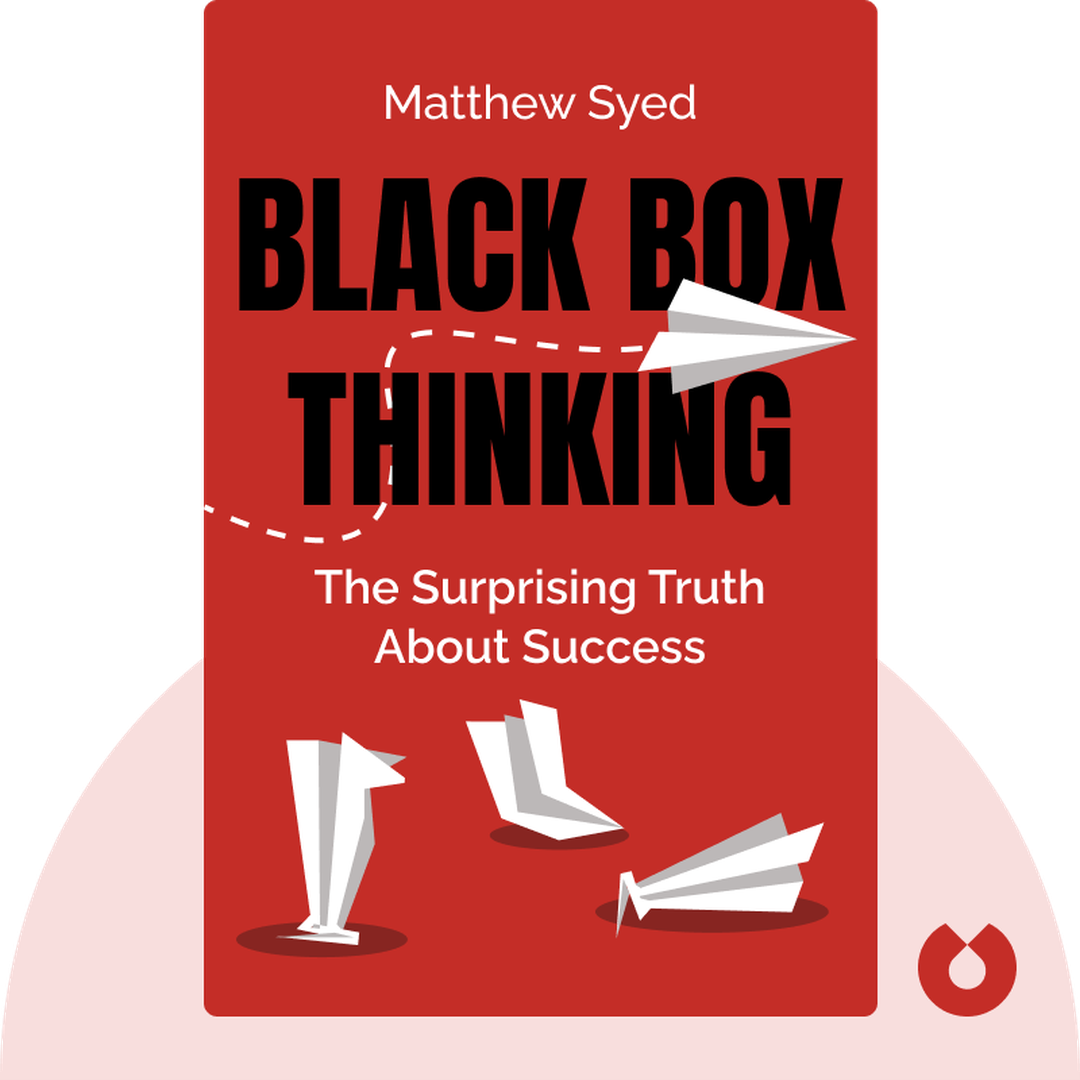
Black Box Thinking (2015) explores the ways in which failure, despite all the shame and pain associated with it, is actually one of our greatest assets. Full of practical tips on how to develop a healthy, productive relationship to failure, Black Box Thinking will put you on the path to success.
Who Should Listen to Black Box Thinking?
- Psychology enthusiasts
- Anyone who is sick of making the same mistakes
- People who want to turn their failures into successes
Books Similar to Black Box Thinking
Readers who enjoyed this also liked these titles.