If You're Curious About These Questions...
You should listen to this audiobook
- Why does the author compare personal data to a toxic substance like asbestos, and how do historical events prove that simply collecting this information can literally be a matter of life and death?
- How are third-party companies using your digital footprint to calculate secret 'consumer scores,' and in what surprising ways are these hidden metrics used to actively discriminate against you in everyday life?
- What specific realization did Google have in the year 2000 about 'data exhaust' that birthed modern surveillance capitalism, and why does the author argue that the resulting targeted advertising industry might actually be a massive waste of money?
Listen to Privacy Is Power — Free Audiobook
Loading player...
Key Takeaways from Privacy Is Power
- Surveillance capitalism has turned personal data—once considered 'data exhaust'—into a highly profitable commodity used to influence your behavior and voting habits.
- Everyday 'smart' objects, including tea kettles, cars, and even shoes, act as double agents that monitor your movements, health, and private conversations.
- The data economy was inaugurated by Google when it began using search history to build precise user profiles for third-party advertisers.
- Opening a standard email can compromise your privacy, as roughly 40 percent of them contain trackers that identify you and follow your activity across the web.
- The loss of privacy is a direct threat to personal autonomy and democracy, as your data is used to nudge you into financial and political decisions.
Learning Tools
Reinforce what you learned from Privacy Is Power
Mind Map
Privacy Is Power
Ubiquitous Surveillance+
Surveillance Capitalism+
How Data Weaponizes Power+
Data as a Toxic Substance+
Dismantling Big Tech's Narrative+
The Need for Strict Regulation+
Practical Steps for Digital Defense+
Quiz — Test Your Understanding
Question 1 of 8
According to the book, what surprising fact demonstrates the ubiquity of surveillance in our daily communications?
Question 2 of 8
How did Google inaugurate the era of 'surveillance capitalism' in the early 2000s?
Question 3 of 8
Besides targeted advertising and political influence, how else is personal data commonly used against consumers by third parties?
Question 4 of 8
Why does the author compare personal data to asbestos?
Question 5 of 8
What historical example does the author use to illustrate that the mere collection of personal data can be deadly?
Question 6 of 8
How does the failure of Google Glass contradict Big Tech's narrative about data privacy?
Question 7 of 8
According to the author, what is one of the primary legislative actions governments should take to heavily regulate the data economy?
Question 8 of 8
Which of the following is recommended by the author as a practical step individuals can take to protect their privacy?
Privacy Is Power — Full Chapter Overview
- 1Recommendation
- 2You’re being monitored wherever you go, every moment of the day.
- 3Google launched surveillance capitalism by turning personal data into profit.
- 4Your personal data is powerful because it gives those who hold it control over you.
- 5We must regulate data like any other dangerous toxic material.
- 6We must challenge Big Tech’s grip on the stories we tell about data privacy.
- 7We must impose strong regulations on the data-driven economy.
- 8You can take straightforward actions to safeguard your privacy online.
Privacy Is Power Summary & Overview
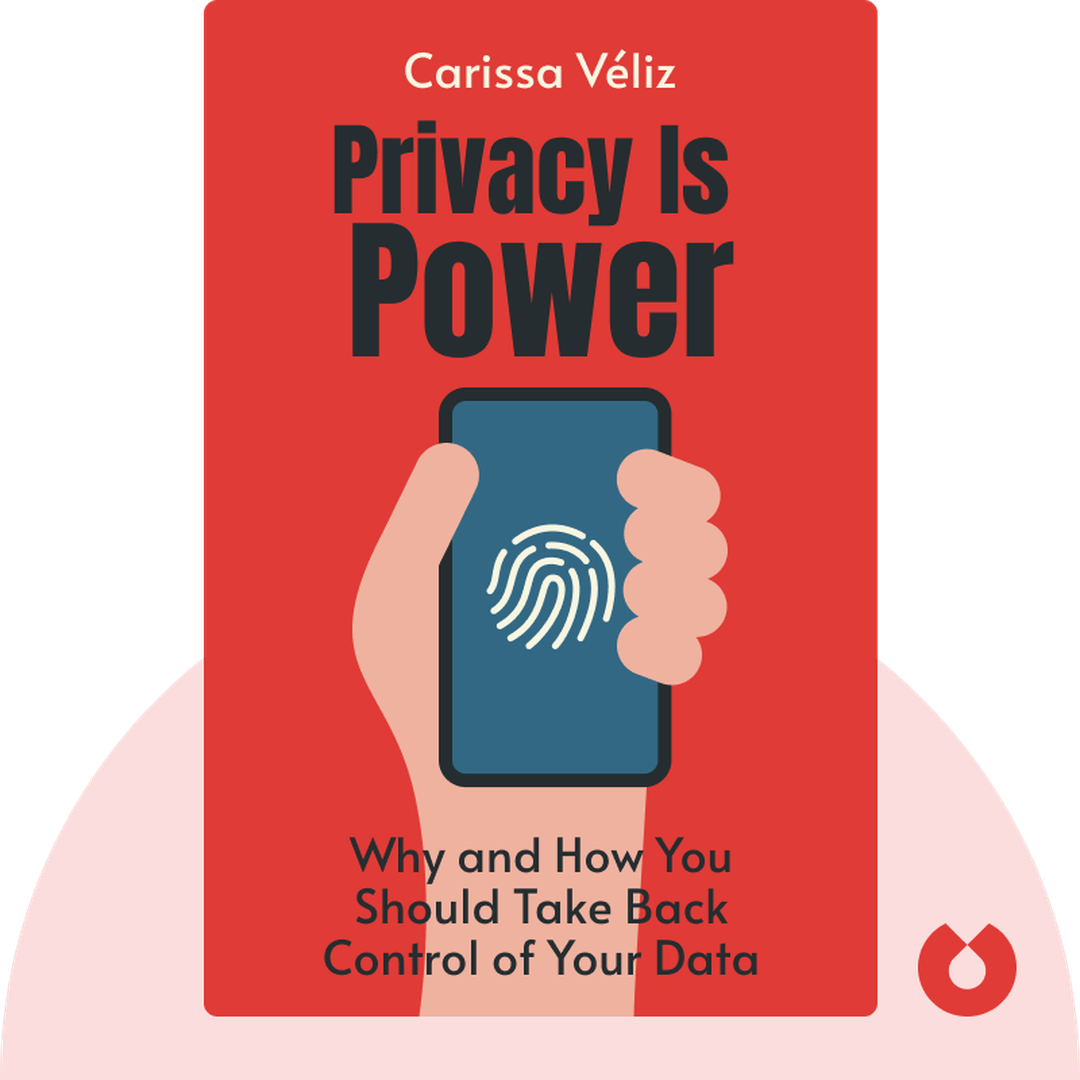
Privacy is Power (2020) is a shocking exposé of the inner workings of surveillance capitalism. It reveals how, every day, hundreds of interested parties are violating your privacy and capitalizing on your personal data. Corporations, governments, and criminals alike are all busy collecting and exploiting your data in an effort to influence the way you think and behave. In these blinks, you’ll learn why your privacy is so important and what you can do to protect it.
Who Should Listen to Privacy Is Power?
- Those perturbed by governments and corporations snooping on our private lives
- People untroubled by digital surveillance because they believe they have nothing to hide
- Anyone looking for actionable ways to protect their privacy now
Books Similar to Privacy Is Power
Readers who enjoyed this also liked these titles.