If You're Curious About These Questions...
You should listen to this audiobook
- Did you know that the secret to true influence has nothing to do with effort or control, but lies in a hidden distinction between power and force?
- Have you ever wondered if there’s a way to instantly tell the difference between truth and falsehood in every area of your life?
- What if you could unlock a specific level of consciousness that not only transforms your own reality but also ripples out to change the world around you?
Listen to Power vs. Force — Free Audiobook
Loading player...
Key Takeaways from Power vs. Force
- Discover the crucial difference between true internal power and temporary force to achieve lasting, peaceful transformation without relying on external manipulation.
- Understand how to navigate the scale of human consciousness, elevating your mindset from limiting states like fear and shame to empowering levels like courage and love.
- Harness the profound power of clear intentions to fuel your goals, guide your actions, and create positive ripple effects in the world around you.
- Master the art of surrender by recognizing that letting go of control isn't giving up, but rather a courageous step that unlocks deep personal growth.
- Learn how to become a truly powerful leader by utilizing inspiration and influence instead of falling into the short-term traps of control and coercion.
Learning Tools
Reinforce what you learned from Power vs. Force
Mind Map
Power vs. Force
Core Philosophy+
Map of Consciousness+
Fueling Power with Intention+
The Art of Surrender+
Leadership Styles+
Peaceful Conflict Resolution+
Applied Kinesiology+
Quiz — Test Your Understanding
Question 1 of 8
According to the text, what is the primary difference between power and force?
Question 2 of 8
On the author's scale of consciousness (1 to 1000), at what level does a person transition from limiting states to taking responsibility and facing their fears?
Question 3 of 8
What concept is described as the 'fuel' for power that guides our actions and shapes our reality?
Question 4 of 8
How does the author define the act of 'surrendering' in the face of adversity?
Question 5 of 8
Which historical figure is used as an example of leading with 'power' rather than 'force'?
Question 6 of 8
In the context of business leadership, why is Walmart's founder, Sam Walton, highlighted as a powerful leader?
Question 7 of 8
When approaching conflict resolution from a perspective of true power, what is the primary focus?
Question 8 of 8
According to the text, how can applied kinesiology be used to discern the truth of a statement?
Power vs. Force — Full Chapter Overview
- 1Recommendation
- 2Elevate your awareness every day
- 3Set thoughtful intentions
- 4Master the practice of surrender
- 5Lead through power, not force
- 6Rise above conflict peacefully
- 7Detect truth in any situation accurately using applied kinesiology
Power vs. Force Summary & Overview
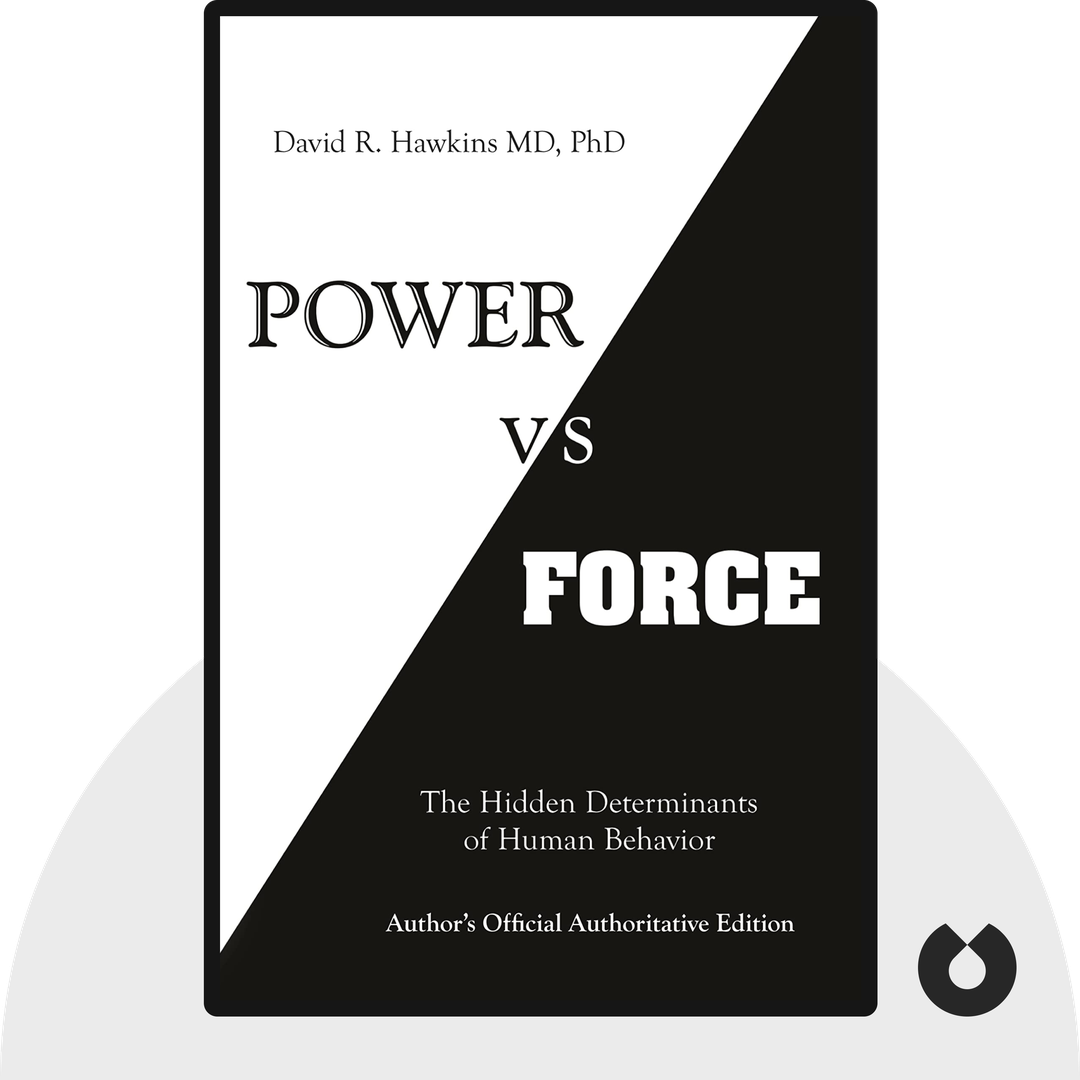
Power vs. Force (2014) explains how anyone can tap into their inner power to change their lives and the lives of those around them. It demonstrates that with consciousness, intention and discernment, anyone can find their truth and follow it toward a more fulfilled and impactful life.
Who Should Listen to Power vs. Force?
- People interested in alternative theories about science and humanity
- Anyone who faces major doubts in their lives
- Humanity nerds
Books Similar to Power vs. Force
Readers who enjoyed this also liked these titles.