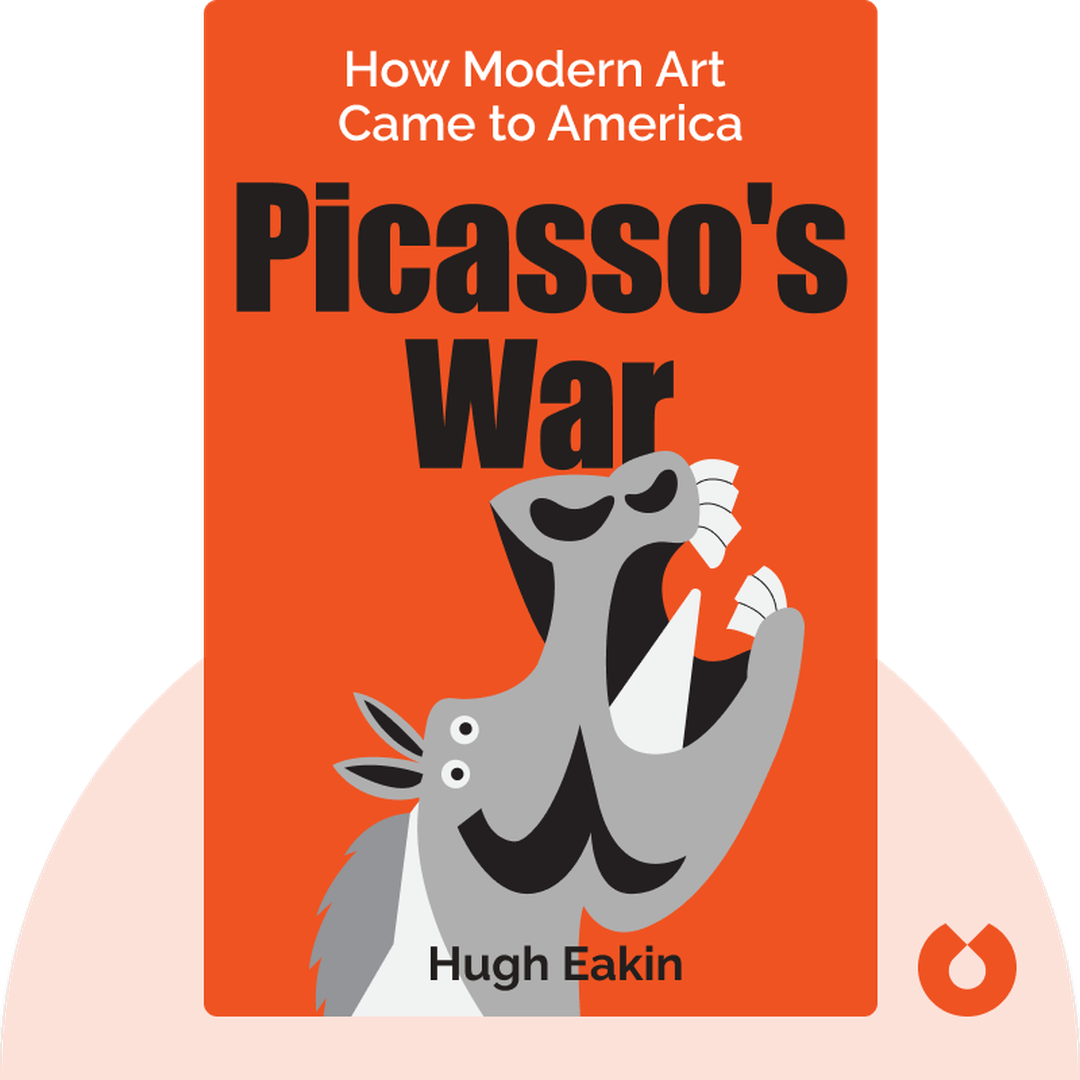
If You're Curious About These Questions...
You should listen to this audiobook
- Did you know that some of the world’s most celebrated modern masterpieces were once denounced in America as "degenerate art" and a threat to society?
- Have you ever wondered how a small, determined group of individuals single-handedly turned a hostile United States into the ultimate global haven for progressive artists?
- Are you curious about the hidden battle fought behind the scenes to convince a skeptical American public that Pablo Picasso was a genius rather than a fraud?
Listen to Picasso's War — Free Audiobook
Loading player...
Key Takeaways from Picasso's War
- Understand why early twentieth-century America was fiercely hostile toward modern art, viewing the works of Picasso and Matisse as threats to society rather than strokes of genius.
- Discover how successful lawyer John Quinn became a pivotal cultural conduit, using his wealth and influence to champion cutting-edge European art in a reluctant United States.
- Learn the true story behind the infamous 1913 Armory Show, an exhibition that introduced radical modern art to America but was initially met with intense public scorn and political backlash.
- Find out how the successful lobbying to repeal prohibitive import taxes on foreign art finally broke the barrier that had kept the American art scene 50 years behind Europe.
- Explore the foundational partnership between Pablo Picasso and ambitious art dealer Daniel-Henry Kahnweiler, who built a market for Cubism by letting the genius of the work speak for itself.
Learning Tools
Reinforce what you learned from Picasso's War
Mind Map
Picasso's War
Early American Hostility+
John Quinn's Crusade+
The European Dealers+
Birth of MoMA+
The Tide Turns+
Picasso Conquers America+
Quiz — Test Your Understanding
Question 1 of 8
How did the American public and press primarily react to modern art in the early twentieth century?
Question 2 of 8
What significant legal obstacle did John Quinn successfully lobby to remove in 1913 to help modernize the American art scene?
Question 3 of 8
Despite nostalgic narratives claiming the 1913 Armory Show was a triumphant success, what was the actual general consensus at the time?
Question 4 of 8
How did the outbreak of the First World War alter Pablo Picasso's representation in the art market?
Question 5 of 8
What motivated Lillie P. Bliss, Abby Aldrich Rockefeller, and Mary Sullivan to establish the Museum of Modern Art in 1929?
Question 6 of 8
As the first director of the Museum of Modern Art, how did Alfred Barr revolutionize the way art was exhibited?
Question 7 of 8
Why was Alfred Barr so determined to host a comprehensive exhibition of Pablo Picasso's work?
Question 8 of 8
What ultimately convinced art dealer Paul Rosenberg to send a massive collection of Picasso's work to America for the 1939 exhibition?
Picasso's War — Full Chapter Overview
- 1Recommendation
- 2A First Look
- 3Protests and Tariffs
- 4Working with Picasso
- 5Premature Endings
- 6Modern Art Takes Its Victory Lap
Picasso's War Summary & Overview
Picasso’s War (2022) reveals the fascinating story behind America’s rocky relationship with modern art. It shows how a small group of individuals were able to overcome ridicule and accusations of “degenerate art” in order to turn the country into a haven for the world’s most progressive artists.
Who Should Listen to Picasso's War?
- History buffs
- Fans of Pablo Picasso and modern art
Books Similar to Picasso's War
Readers who enjoyed this also liked these titles.