Theme Song
If You're Curious About These Questions...
You should listen to this audiobook
- Have you ever wondered why paying your employees more could actually be the most profitable decision a business owner can make?
- Did you know that the current corporate obsession with short-term profits might be the single biggest threat to the survival of democratic capitalism?
- What if the secret to a booming American economy isn't cutting costs, but radically rethinking how we distribute wealth to the people who power it?
Listen to Pay the People! — Free Audiobook
Loading player...
Key Takeaways from Pay the People!
- Discover why paying fair wages and investing in employee development is a proven business strategy that reduces turnover and boosts profits, as demonstrated by Walmart's massive corporate overhaul.
- Understand the mechanics of the 'Jenga economy' that has transferred $50 trillion to the top 1% since 1981, and why this extreme inequality threatens the foundation of democratic capitalism.
- Learn why a coalition of wealthy individuals called the Patriotic Millionaires is actively fighting against their own tax cuts to advocate for systemic wage equality.
- Uncover the private reality of corporate America, where business leaders secretly acknowledge that higher minimum wages directly drive consumer spending and boost overall economic growth.
- Find out how raising the minimum wage creates a powerful ripple effect throughout the workforce, naturally lifting up wages for millions of indirect workers and fueling a thriving bottom-up economy.
Learning Tools
Reinforce what you learned from Pay the People!
Mind Map
Pay the People!
The Core Argument+
The Jenga Economy+
Wages vs. Economic Growth+
Debunking Wage Myths+
The Wage Theft Epidemic+
Labor Dynamics & Corporate Models+
Solutions for a Better System+
Quiz — Test Your Understanding
Question 1 of 8
According to the text, what was the outcome of Walmart's decision to raise wages and invest in comprehensive employee training?
Question 2 of 8
What is the primary motivation uniting the Patriotic Millionaires in their advocacy for fair wages and equitable tax policies?
Question 3 of 8
What did an internal poll by the U.S. Chamber of Commerce reveal about its member executives' stance on minimum wages?
Question 4 of 8
When comparing identical border communities in New York (which raised its minimum wage) and Pennsylvania (which did not), what did a Federal Reserve study find?
Question 5 of 8
Which of the following statistics accurately describes the demographics of minimum wage workers today, debunking a common myth?
Question 6 of 8
How does the financial scale of wage theft compare to shoplifting in the United States?
Question 7 of 8
What did an internal prediction at Amazon reveal about the consequences of its high-turnover labor strategy?
Question 8 of 8
What systematic approach to minimum wages has been successfully implemented in thirteen U.S. states to protect workers' purchasing power?
Pay the People! — Full Chapter Overview
- 1Recommendation
- 2The Jenga-like economy
- 3Pay, profits, and prosperity
- 4Minimum wage fallacies
- 5Theft in plain sight
- 6A story of two retailers
- 7Creating a better wage system
Pay the People! Summary & Overview
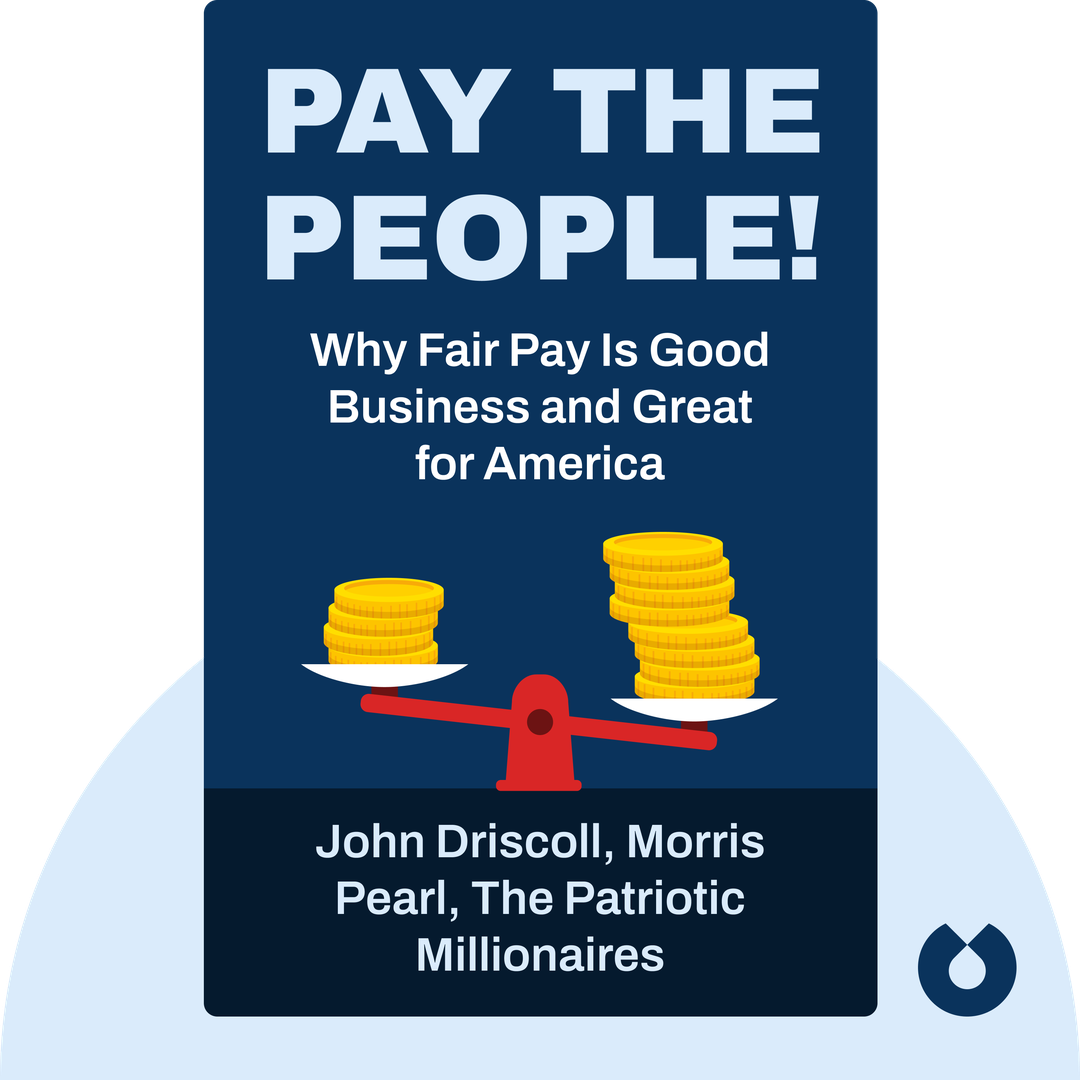
Pay the People! (2024) examines how America's economy suffers when businesses and policymakers prioritize short-term profits over fair wages for workers. It argues that raising wages across all levels would benefit everyone – from working families to business owners – by strengthening consumer spending power and preserving democratic capitalism.
Who Should Listen to Pay the People!?
- Business owners and executives seeking to understand the broader economic impact of wage policies
- Policy makers and public officials involved in labor legislation
- Anyone who wants to understand more about the American economy
Books Similar to Pay the People!
Readers who enjoyed this also liked these titles.