If You're Curious About These Questions...
You should listen to this audiobook
- Have you ever wondered why the wealthiest nation on Earth continues to have more poverty than any other advanced democracy—and who actually benefits from this persistence?
- Did you know that many of the policies meant to address poverty might actually be subsidizing the lifestyles of the affluent instead of helping those in need?
- What if the secret to truly abolishing poverty isn't just about more government spending, but about fundamentally changing how we all participate in the American economy?
Listen to Poverty, by America — Free Audiobook
Loading player...
Key Takeaways from Poverty, by America
- Understand why systemic poverty persists in the United States despite its massive economic wealth, and learn how it extends far beyond a simple lack of income.
- Discover how modern labor exploitation thrives on stagnant wages and temporary work, and find out why regular minimum wage adjustments are essential for economic justice.
- Learn how implementing sectoral bargaining and restoring union power can give a unified voice to both full-time employees and independent contractors.
- Find out how the rental market unfairly capitalizes on low-income neighborhoods, and explore housing solutions like government-backed mortgages and tenant-owned cooperatives.
- Discover how predatory payday lenders trap the poor in debt, and understand why providing government-backed credit alternatives is the ultimate antidote to financial exploitation.
Learning Tools
Reinforce what you learned from Poverty, by America
Mind Map
Poverty, by America
The Poverty Paradox+
Worker Exploitation+
Consumer Exploitation+
Imbalanced Safety Net+
Invisible Segregation+
Individual Action+
Quiz — Test Your Understanding
Question 1 of 7
What is the central paradox of poverty in the United States highlighted in the text?
Question 2 of 7
According to the text, why do corporations frequently utilize temp agencies and independent contractors?
Question 3 of 7
What surprising insight does the text reveal about the rental housing market in impoverished neighborhoods?
Question 4 of 7
How does the author suggest solving the problem of exploitative fringe institutions like payday lenders?
Question 5 of 7
What is a major flaw in the current US federal welfare and tax system highlighted in the text?
Question 6 of 7
How do exclusionary zoning laws perpetuate poverty and segregation?
Question 7 of 7
What is one way the text suggests ordinary individuals can participate in the fight against poverty?
Poverty, by America — Full Chapter Overview
- 1Recommendation
- 2End the exploitation of laborers
- 3Eliminate consumer exploitation
- 4Rebalance social safety net policies to aid the poor
- 5Integrate, don’t segregate
- 6Participate in the battle against poverty
Poverty, by America Summary & Overview
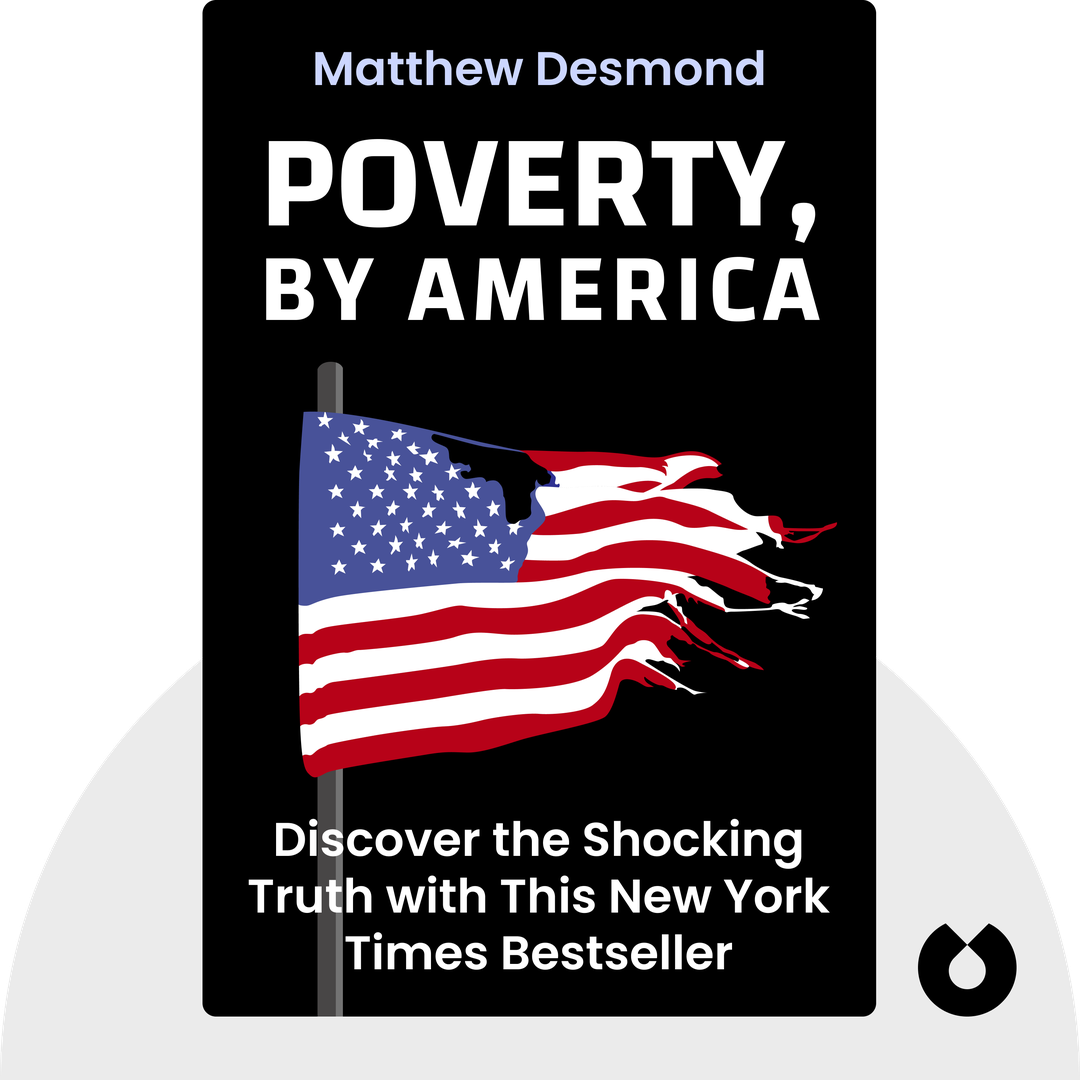
Poverty, by America (2023) delves into the paradoxical issue of poverty in the abundant country of the United States. It explores potential solutions to this pervasive issue, based on extensive research.
Who Should Listen to Poverty, by America?
- Poverty abolitionists
- Lawmakers
- Corporate leaders and shareholders
Books Similar to Poverty, by America
Readers who enjoyed this also liked these titles.