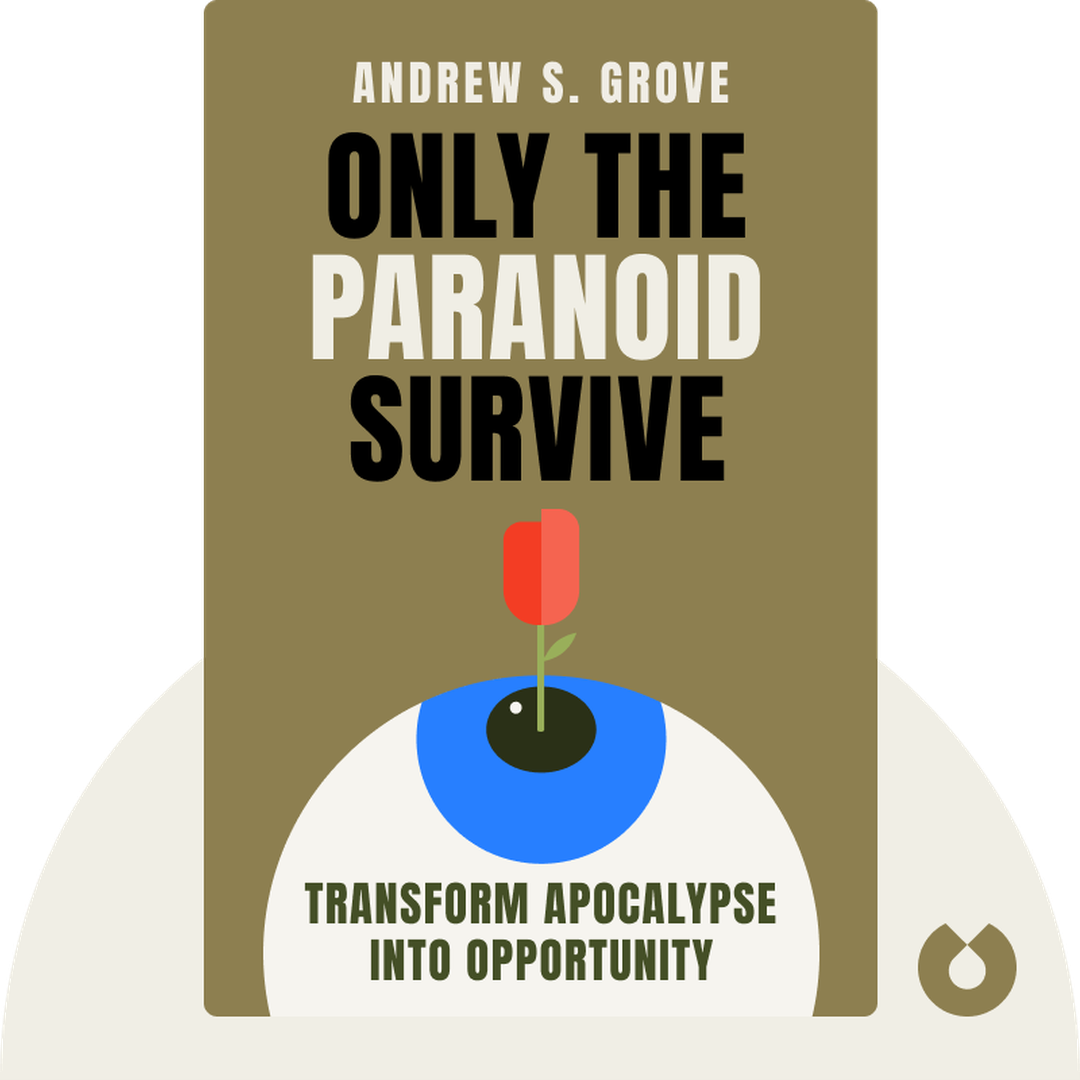
Only the Paranoid Survive
Start ListeningDownload Try free on iPhoneScan to start in 5 seconds
Categories:
If You're Curious About These Questions...
You should listen to this audiobook
- What if being "paranoid" was actually the ultimate competitive advantage for protecting your business from sudden failure?
- Have you ever wondered how to identify the exact "inflection point" where your current business strategy stops working and starts becoming a liability?
- Are you curious about how the world’s most successful CEOs turn industry-shaking threats into massive opportunities for growth?
Listen to Only the Paranoid Survive — Cinematic Audio Edition
Loading player...
Key Takeaways from Only the Paranoid Survive
- Understand the concept of a strategic inflection point and how these inevitable shifts can either destroy your business or create incredible new growth.
- Discover the six critical factors of competitive well-being and how to recognize a '10X change' that drastically disrupts your industry's landscape.
- Learn why relying on past strategies guarantees failure against a superior competitor, making absolute adaptability your most essential survival tool.
- Master the art of spotting vague industry shifts early by asking critical questions, such as identifying the single competitor you would save your one silver bullet for.
- Recognize the emotional phases of managing a business crisis and find out how to overcome the dangerous 'inertia of success' that keeps leaders trapped in denial.
Learning Tools
Reinforce what you learned from Only the Paranoid Survive
Mind Map
Only the Paranoid Survive
Strategic Inflection Points (SIPs)+
Leadership During Crises+
Organizational Adaptability+
Vigilance & Preparation+
Quiz — Test Your Understanding
Question 1 of 8
According to Andrew Grove, what is a 'Strategic Inflection Point' (SIP)?
Question 2 of 8
How did Intel successfully navigate its existential crisis caused by the Japanese memory-chip industry?
Question 3 of 8
Why does Grove emphasize that Strategic Inflection Points (SIPs) are relevant to all employees, not just CEOs?
Question 4 of 8
Why does Grove recommend soliciting objective opinions from outsiders like consultants during a crisis?
Question 5 of 8
What is a primary reason upper management should maintain open communication with middle management?
Question 6 of 8
When communicating a new strategy during an SIP, why is it crucial to use a simple message?
Question 7 of 8
How should a company handle situations where the outcome of a market shift (like the Blu-Ray vs. HD-DVD format war) is unpredictable?
Question 8 of 8
Which of the following is NOT explicitly mentioned in the text as one of the six forces that affect a company's 'competitive well-being'?
Only the Paranoid Survive — Full Chapter Overview
- 1Recommendation
- 2Strategic inflection points arise when markets change significantly and firms must rethink their strategies from scratch.
- 3Employees must respond to strategic inflection points within their own firms and the broader market as well today.
- 4Strategic inflection points may drive a company toward disaster or toward fresh opportunities for future success.
- 5SIPs can create confusion in business; strong leadership ensures companies stay focused and remain relevant during transitions.
- 6For internal and external teams to adopt a new strategy, companies must communicate a clear, simple message consistently.
- 7Because employees feel emotionally tied to their company, leaders must seek objective opinions from outsiders.
- 8To remain current in the market, companies need open communication with employees, outside experts, and journalists.
- 9Companies must build flexible teams of creative employees who feel comfortable with change daily.
- 10Business conditions can shift instantly, so companies must stay vigilant and prepare for multiple scenarios in advance.
Only the Paranoid Survive Summary & Overview
Only The Paranoid Survive (1999) presents the experiences and invaluable advice of one of the most admired and successful CEOs of recent times: Andrew S. Grove. In this book, Grove suggests many strategies that companies can adopt to survive – and even exploit – what he terms Strategic Inflection Points: those sink-or-swim moments in a company’s existence. The book provides the reader with a deeper understanding of the ways in which strategic decisions are made, and, specifically, of what’s involved in directing a leading tech company.
Who Should Listen to Only the Paranoid Survive?
- Anybody who owns or runs a business
- Anyone interested in the decision-making of a large company
- People who want to learn how to overcome the critical moments in a company’s life
Books Similar to Only the Paranoid Survive
Readers who enjoyed this also liked these titles.