If You're Curious About These Questions...
You should listen to this audiobook
- Did you know that a single summer in 1927 was the precise moment the United States transformed from an isolated nation into the world’s leading superpower?
- Have you ever wondered what dark secrets and social unrest were brewing beneath the surface of the Roaring Twenties' most glamorous headlines?
- Are you curious about how the legendary feats of icons like Babe Ruth and Charles Lindbergh were unexpectedly linked to the events that triggered the Great Depression?
Listen to One Summer — Free Audiobook
Loading player...
Key Takeaways from One Summer
- Discover how Charles Lindbergh’s historic transatlantic flight in 1927 revolutionized American aviation, transforming the nation from an industry laggard into a global aerospace powerhouse.
- Learn how the release of the first 'talkie' film and the unprecedented celebrity of Babe Ruth shifted cultural dominance away from Europe and cemented American national pride.
- Understand why the 1920s should also be remembered as the 'Age of Loathing' due to the rampant xenophobia, extreme racism, and shocking popularity of eugenics.
- Find out how the unparalleled economic boom of 1927 fueled mass consumerism and stock market growth, while dangerously relying on the fragile foundation of rampant public borrowing.
- Explore how the pivotal summer of 1927 perfectly encapsulated the dawn of American global supremacy while simultaneously hiding early omens of the impending Great Depression.
Learning Tools
Reinforce what you learned from One Summer
Mind Map
One Summer
Aviation Revolution+
Cultural Influence & Pride+
Social Turmoil+
Unprecedented Wealth+
Path to the Great Depression+
Quiz — Test Your Understanding
Question 1 of 6
Why was Charles Lindbergh’s 1927 flight across the Atlantic considered a pivotal moment for the United States?
Question 2 of 6
How did the 1927 release of the film 'The Jazz Singer' significantly impact American cultural influence globally?
Question 3 of 6
According to the text, why might the 1920s in the United States be more accurately described as the 'Age of Loathing' rather than the 'Roaring Twenties'?
Question 4 of 6
What underlying flaw in the unprecedented economic wealth of the United States in 1927 eventually contributed to the Great Depression?
Question 5 of 6
How did the actions of international bankers and the Federal Reserve in 1927 inadvertently lay the groundwork for the Great Depression?
Question 6 of 6
How did President Calvin Coolidge's leadership style affect the United States' economic policies during this era?
One Summer — Full Chapter Overview
- 1Recommendation
- 2The United States trailed the world in aviation until Charles Lindbergh’s historic flight carried him across the Atlantic Ocean.
- 3America’s cultural influence and national pride swelled in 1927, propelled largely by Hollywood’s booming film industry and the enduring celebrity of Babe Ruth.
- 4In 1927, the United States grappled with social ills including racism, xenophobia, and widespread paranoia.
- 5America’s economic wealth was unprecedented in 1927, yet it still depended heavily on extensive borrowing.
- 6Economic policies adopted in 1927 inflated a bubble that, when it burst, triggered the Great Depression.
One Summer Summary & Overview
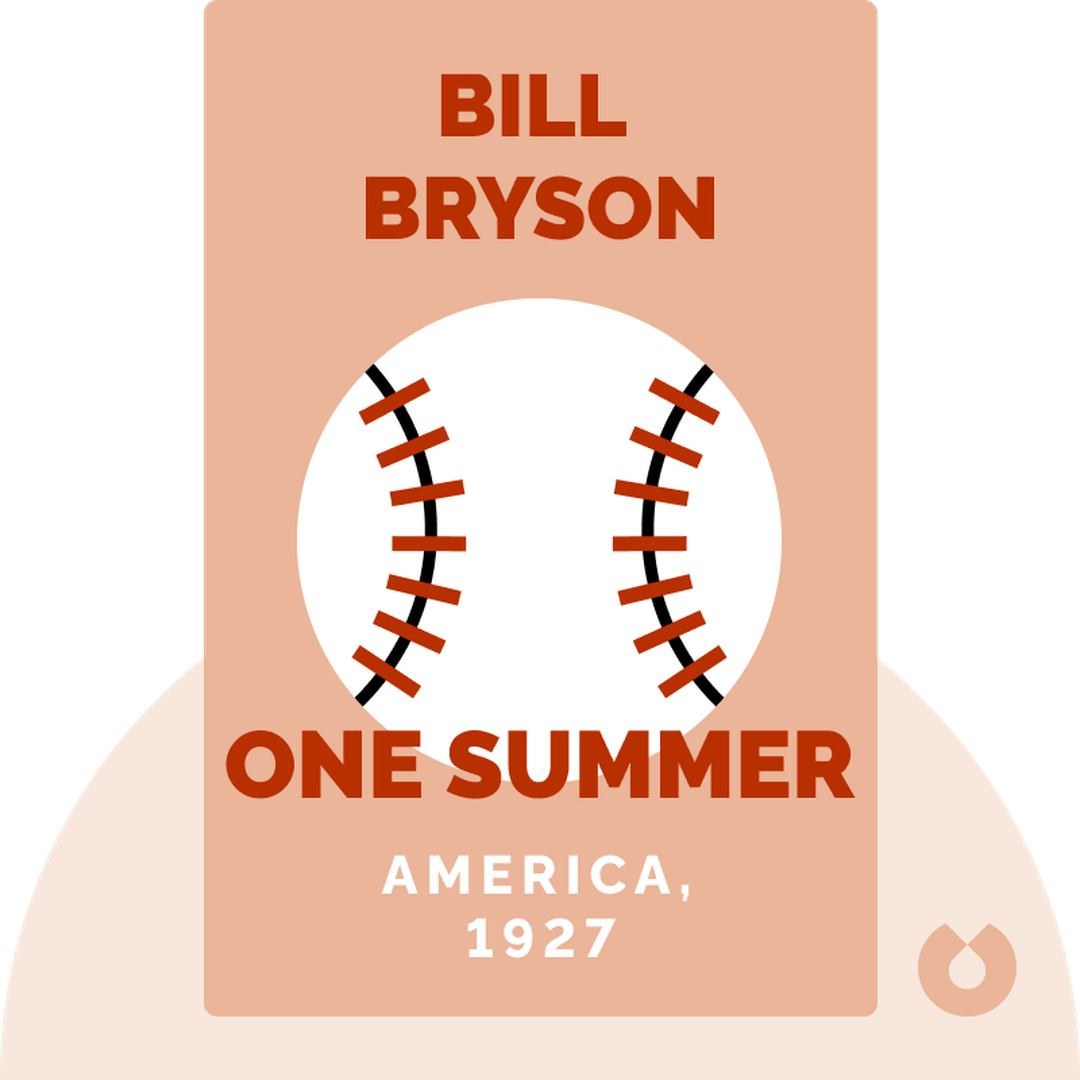
One Summer (2013) tells the story of the summer of 1927, a particularly pivotal three months in American history. The summer of 1927 marked the emergence of the United States as a major power on the international scene and set the stage for the Great Depression of the ‘30s. One Summer takes a closer look at a number of 1927’s important events, such as Charles Lindbergh’s famous flight across the Atlantic Ocean, Babe Ruth’s recording-breaking 60 home runs in a season and the execution of Italian anarchists Sacco and Vanzetti.
Who Should Listen to One Summer?
- Anyone interested in baseball, anarchism or the Great Depression
- Anyone curious about the roots of American hegemony
- Anyone interested in the dark reality behind the glitz of the roaring ‘20s
Books Similar to One Summer
Readers who enjoyed this also liked these titles.