If You're Curious About These Questions...
You should listen to this audiobook
- Did you know that gaining just a one-second lead over your impulses could be the key to mastering focus and eliminating workplace stress?
- Have you ever wondered why your brain feels constantly overwhelmed by multitasking, and what specific mental shift can help you reclaim hours of lost productivity?
- What if you could navigate the most high-pressure professional environments with total clarity and calm by using a simple technique practiced by leaders at the world’s most successful companies?
Listen to One Second Ahead — Free Audiobook
Loading player...
Key Takeaways from One Second Ahead
- Discover how creating a brief mental pause between a stimulus and your response can help you overcome automatic reactions and make conscious, composed decisions.
- Learn how to reduce productivity-killing task-switching by implementing practical mindfulness techniques, such as dedicating specific times for emails and turning off notifications.
- Master the practice of taking regular performance breaks to reset your mind, prevent daily burnout, and return to your work with renewed clarity and focus.
- Understand why managing your attention is essential for creativity, and how establishing guidelines for uninterrupted focus can generate better ideas under pressure.
- Find out how bringing mindfulness to meetings—by staying fully present and listening without judgment—can boost overall productivity and strengthen professional relationships.
Learning Tools
Reinforce what you learned from One Second Ahead
Mind Map
One Second Ahead
Foundations of Mindfulness+
Daily Efficiency+
Creativity & Adaptability+
Communication & Collaboration+
Work-Life Balance+
Presence & Resilience+
Quiz — Test Your Understanding
Question 1 of 7
Why did Rasmus Hougaard decide to adapt mindfulness practices specifically for the corporate environment?
Question 2 of 7
According to the book, what is the foundational principle of mindfulness in the workplace?
Question 3 of 7
How does the book suggest applying mindfulness to manage daily tasks like emails?
Question 4 of 7
What key insight did Mary-Ann's advertising team discover about fostering creativity through mindfulness?
Question 5 of 7
In the context of mindful communication, what was the purpose of the "STOP" and "ACT" cards used by Dominic's team?
Question 6 of 7
What mindfulness strategy is recommended to help maintain a healthy work-life balance and prevent burnout?
Question 7 of 7
How did Thomas use mindfulness to handle the difficult task of laying off 25 percent of his staff?
One Second Ahead — Full Chapter Overview
- 1Recommendation
- 2The basics of mindfulness at work
- 3Managing daily tasks with mindfulness for efficiency
- 4Boosting Creativity and Adaptability
- 5Mindful communication and teamwork
- 6Maintaining work-life balance and personal wellness
- 7Building presence and mental resilience
One Second Ahead Summary & Overview
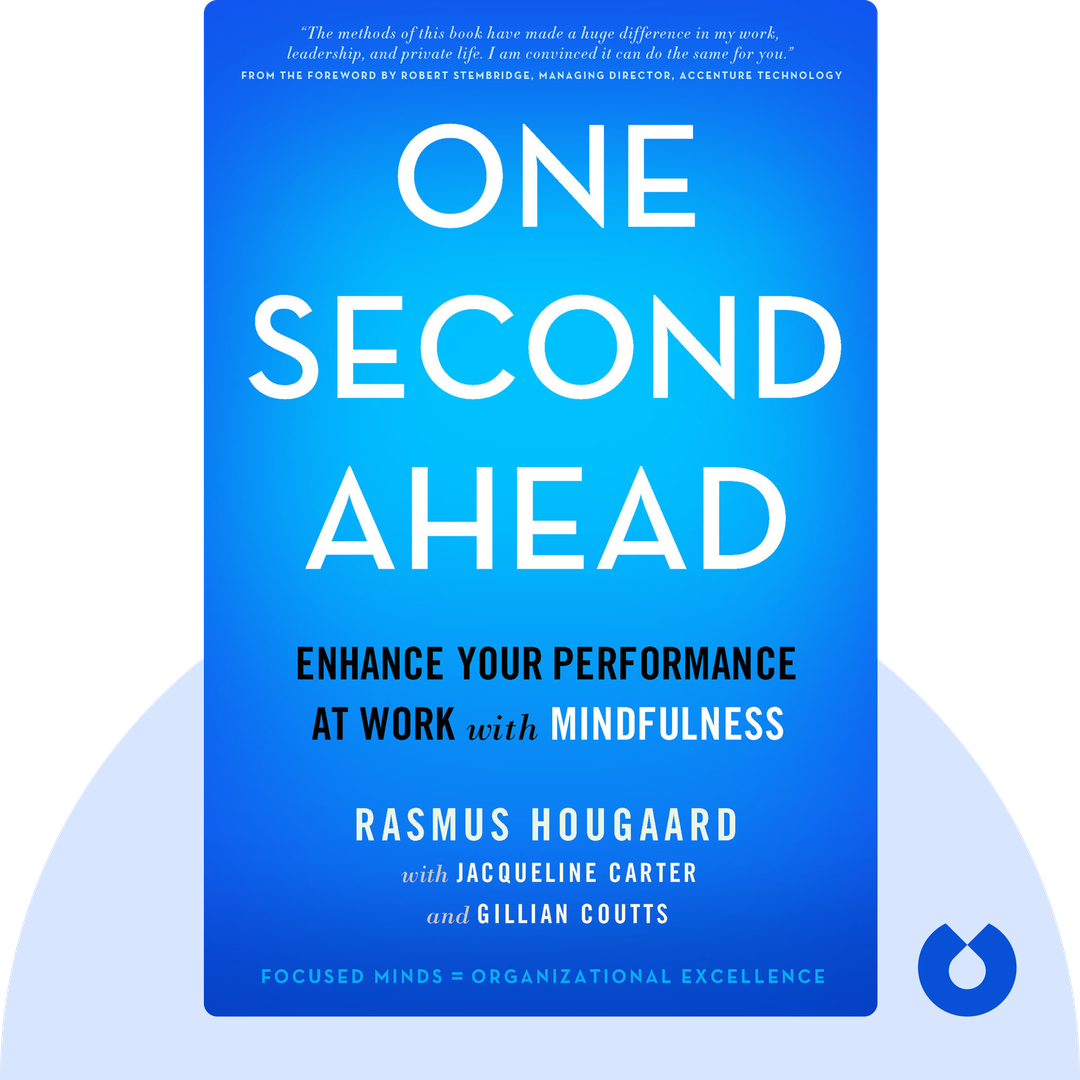
One Second Ahead (2016) explores how mindfulness can enhance productivity, focus, and well-being in the modern workplace. It provides practical tools and techniques for training your brain to manage distractions and pressures more effectively, leading to better time-management, communication, and overall job satisfaction.
Who Should Listen to One Second Ahead?
- Corporate leaders seeking to improve team productivity
- Professionals struggling with stress and multitasking
- Individuals aiming to enhance their work-life balance
Books Similar to One Second Ahead
Readers who enjoyed this also liked these titles.