If You're Curious About These Questions...
You should listen to this audiobook
- Did you know that the world’s most famous neurologist once lived a double life fueled by intense drug addiction and high-speed motorcycle racing?
- Are you curious about the private struggles and long-held secrets that shaped the man who taught us how to see the human side of medicine?
- Have you ever wondered how a turbulent, unsettled youth can be the very catalyst for a life of profound empathy and groundbreaking scientific discovery?
Listen to On the Move — Free Audiobook
Loading player...
Key Takeaways from On the Move
- Discover how Oliver Sacks balanced a prestigious medical career with a dangerous double life of motorcycles, bodybuilding, and severe drug addiction.
- Learn how a deep childhood love for classic literature and storytelling ultimately shaped Sacks' unique ability to seamlessly blend narrative with clinical science.
- Understand the profound psychological impact of family rejection and 1950s societal intolerance on Sacks’ lifelong relationship with his own sexuality.
- Find out why an impressive Oxford resume couldn't prevent Sacks from experiencing deep career uncertainty and internal conflict over his parents' expectations.
- Explore the intense curiosity and rebellious behavior that defined Sacks' early years, proving a teacher's prophetic warning that his drive could easily push him too far.
Learning Tools
Reinforce what you learned from On the Move
Mind Map
On the Move
Early Life & Identity+
Academic & Career Uncertainty+
The California Double Life+
Finding Purpose in New York+
Literary Legacy & Style+
Quiz — Test Your Understanding
Question 1 of 9
How did Oliver Sacks's early interests shape his unique career path?
Question 2 of 9
What event deeply affected Sacks’s relationship with his own sexuality, leading to lifelong guilt and inhibition?
Question 3 of 9
Despite struggling with factual recall exams in medical school, how did Sacks manage to win the prestigious Theodore Williams Scholarship in Human Anatomy?
Question 4 of 9
During his time in California, what triggered Sacks's severe downward spiral into heavy amphetamine addiction?
Question 5 of 9
Why did Sacks's supervisors at the Albert Einstein College of Medicine suggest he transition from research to clinical work?
Question 6 of 9
What profound realization did Sacks have while working at the headache clinic in the Bronx?
Question 7 of 9
How did Sacks's supervisor, Dr. Arnold P. Friedman, react when Sacks wrote a draft of a book about migraines?
Question 8 of 9
What was a major challenge Sacks's editors faced when working with him on his book manuscripts?
Question 9 of 9
What was distinctive about Oliver Sacks’s approach to writing medical case studies compared to his contemporaries?
On the Move — Full Chapter Overview
- 1Recommendation
- 2A Taste of Literature
- 3Painful Words
- 4A Gift for Writing
- 5What Occurred in Amsterdam
- 6California Dreams – An Interlude
- 7Shifting States
- 8Spiraling Down
- 9Revelations
- 10Another Migraine
- 11The Story Continues On
On the Move Summary & Overview
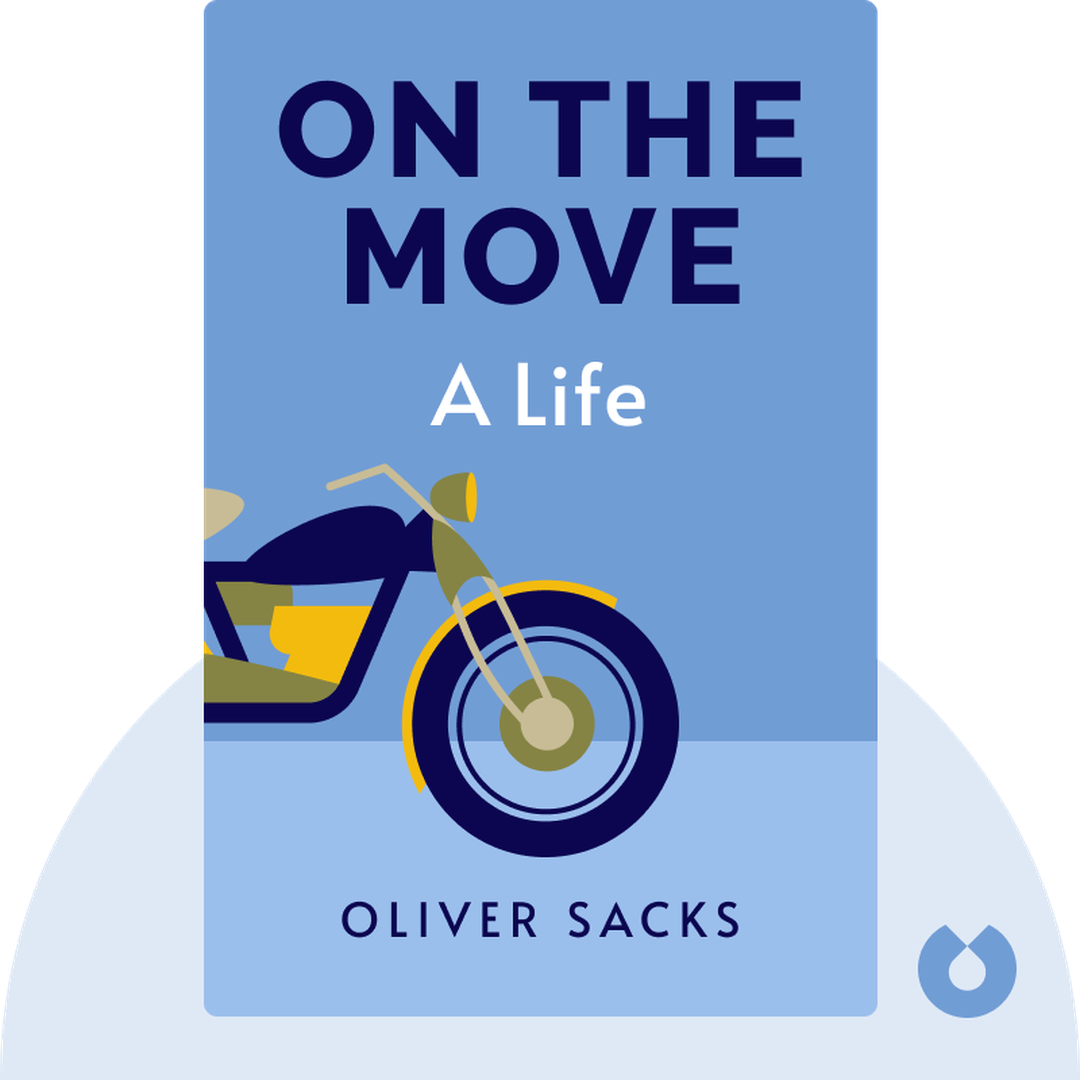
On the Move (2015) is a poignant memoir that tells the story of how Oliver Sacks became an acclaimed writer and neurologist. Published the year of his death, it provides a wistful account of his turbulent young adulthood – detailing his struggle with addiction and addressing his sexuality for the first time in print.
Who Should Listen to On the Move ?
- Fans of Oliver Sacks
- Readers interested in medical writing
- Anyone who likes a good coming-of-age story
Books Similar to On the Move
Readers who enjoyed this also liked these titles.