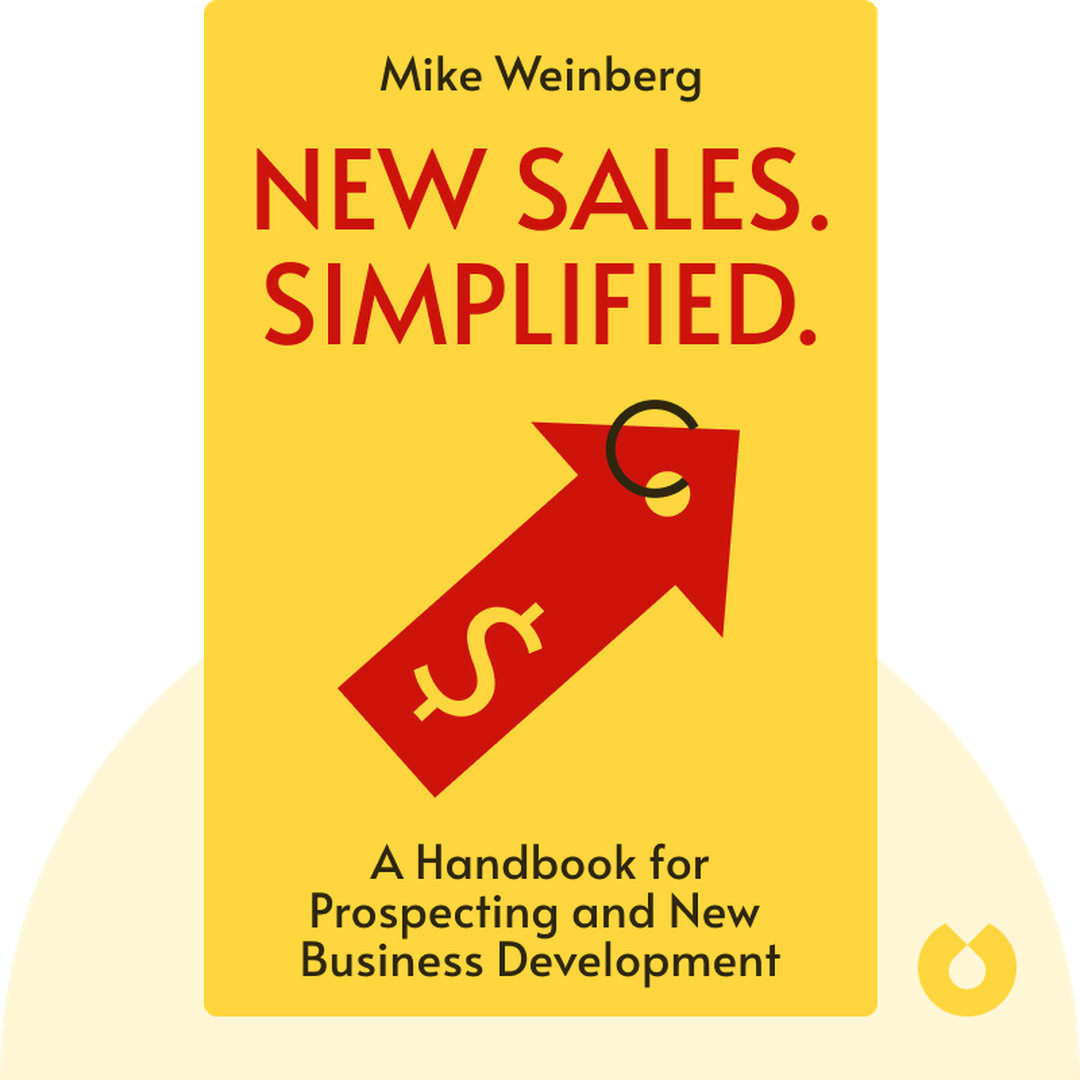
New Sales. Simplified.
Start ListeningDownload Try free on iPhoneScan to start in 5 seconds
Categories:
If You're Curious About These Questions...
You should listen to this audiobook
- Did you know that the way most salespeople tell their company story actually pushes prospects away instead of drawing them in?
- Have you ever wondered why even the most experienced professionals struggle to land new business while others seem to do it effortlessly?
- What's the secret to building a high-performance sales process that consistently turns cold leads into loyal clients?
Listen to New Sales. Simplified. — Cinematic Audio Edition
Loading player...
Key Takeaways from New Sales. Simplified.
- Discover why excellent relationship managers often fail at acquiring new business and how to cultivate the proactive attitude required to succeed.
- Master a proven, three-part sales framework inspired by military strategy: select your targets, deploy your weapons, and execute your attack.
- Learn how to strategically identify prospects by creating a finite, workable one-page list that mirrors your absolute best customers.
- Find out how to segment your target accounts into strategic categories to maximize your focus, while safely reserving space for a few game-changing dream clients.
- Understand why a client-centric sales story is your most important weapon and how to craft a narrative focused on the value you deliver rather than your own company.
Learning Tools
Reinforce what you learned from New Sales. Simplified.
Mind Map
New Sales. Simplified.
Mindset & Common Pitfalls+
The 3-Part Framework+
Phase 1: Selecting Targets+
Phase 2: Deploying Weapons+
Phase 3: The Attack (Calls & Meetings)+
Structuring the Client Visit+
Overcoming Resistance & Presenting+
Time Blocking & Execution+
Gatekeepers & Etiquette+
Quiz — Test Your Understanding
Question 1 of 10
What is the foundational three-part framework for new business development outlined by Mike Weinberg?
Question 2 of 10
How does the author recommend structuring your list of prospective target accounts?
Question 3 of 10
According to the book, what is the most important weapon in a salesperson's armory?
Question 4 of 10
What advice does the author give regarding proactive sales calls (cold calls)?
Question 5 of 10
When conducting an in-person meeting with a prospect, how should you position yourself physically if possible?
Question 6 of 10
What is identified as the most important part of the client visit structure?
Question 7 of 10
What does the author suggest regarding slide presentations during a sales meeting?
Question 8 of 10
What strategy is recommended for ensuring you actually get your prospecting done amidst daily distractions?
Question 9 of 10
How does the author suggest treating receptionists and administrative assistants?
Question 10 of 10
When crafting your sales story or 'power statement,' what should be the primary focus?
New Sales. Simplified. — Full Chapter Overview
- 1Recommendation
- 2Verify your behavior, attitude, and attributes align with those required for new business selling success.
- 3First, choose your targets, then deploy your weapons, and finally attack!
- 4Choosing your targets is crucial to your success.
- 5Your sales story is the single most important weapon you have.
- 6Don’t use a sales voice on the phone, and prepare for a successful meeting.
- 7Follow a clear structure when you visit your customers.
- 8Avoid triggering your clients’ defense shields, and remember to sell, not present.
- 9For a successful attack, block out time for prospecting, and keep your sales pipeline balanced.
New Sales. Simplified. Summary & Overview
New Sales. Simplified. (2012) is a guide for those charged with finding new business. It takes a look at the fundamentals and offers actionable advice and techniques to the aspiring new business salesperson.
Who Should Listen to New Sales. Simplified.?
- New business sales executives
- Sales managers
- Account managers and veteran salespeople looking to refresh their skills
Books Similar to New Sales. Simplified.
Readers who enjoyed this also liked these titles.