If You're Curious About These Questions...
You should listen to this audiobook
- What drove a penniless young man to become a general at 24 and change the course of history?
- Are you curious about the secrets behind Napoleon's military genius and how he revolutionized the French army?
- What if you could uncover the leadership strategies that enabled Napoleon to leave a lasting impact on European and world history?
Listen to Napoleon the Great — Free Audiobook
Loading player...
Key Takeaways from Napoleon the Great
- Discover how Napoleon's humble Corsican origins and the bullying he faced at military school fueled an intense work ethic that made him an officer by age 16.
- Understand why Napoleon aligned himself with the French Revolution and how his meticulous leadership at the battle of Toulon earned him the rank of general at just 24.
- Learn how years of strategic preparation and exploiting enemy communication gaps allowed Napoleon to defeat a vastly superior force of 80,000 during his Italian campaign.
- Find out how Napoleon's bold suppression of a violent Parisian uprising prevented a civil war and secured his command over the Army of Italy.
- Explore why a fearful French leadership sent a wildly popular Napoleon to Egypt, resulting in a brutal campaign that tested his men against unforgiving desert conditions.
Learning Tools
Reinforce what you learned from Napoleon the Great
Mind Map
Napoleon the Great
Early Life & Rise+
Military Campaigns (Early)+
Political Power & Reforms+
The Empire at War+
Downfall+
Return & Final Defeat+
Quiz — Test Your Understanding
Question 1 of 10
How was Napoleon able to attend the prestigious Royal Military School of Brienne-le-Château despite his family's humble origins?
Question 2 of 10
Why did Napoleon support the French revolutionaries, even though his role as a military officer initially required him to stop the uprising?
Question 3 of 10
During his military campaign in Egypt, how did Napoleon demonstrate his commitment to Enlightenment ideas?
Question 4 of 10
What crucial action prevented Napoleon's coup attempt from failing when the Council of the Five Hundred turned against him on November 10, 1799?
Question 5 of 10
How was Napoleon able to secure a decisive victory against the Russian army at the Battle of Austerlitz?
Question 6 of 10
What was the primary goal of Napoleon's 'Continental System'?
Question 7 of 10
What was the primary cause of the massive casualties suffered by Napoleon's army during the 1812 Russian campaign?
Question 8 of 10
Upon escaping his exile on the island of Elba and returning to France, how did Napoleon reclaim his power from King Louis XVIII?
Question 9 of 10
Which of the following tactical errors contributed to Napoleon's final defeat at the Battle of Waterloo?
Question 10 of 10
In addition to his military conquests, how did Napoleon transform French society through his political projects like the Code Napoleon?
Napoleon the Great — Full Chapter Overview
- 1Recommendation
- 2Though born into a lower-class family, Napoleon became one of the French army’s youngest officers.
- 3In the turmoil of the French Revolution, Napoleon proved himself in battle and rose quickly through the ranks.
- 4A successful Italian campaign turned Napoleon into a French hero.
- 5Napoleon’s Egyptian campaign cost him many men.
- 6As his marriage struggled, Napoleon spread Enlightenment ideas through his military campaigns.
- 7Napoleon joined a risky coup against the French government and gained even more power.
- 8Napoleon repelled an Austrian attack and won large parts of Italy for France.
- 9Napoleon secured historic peace deals, though some would not last.
- 10After major victories at Austerlitz and Jena, Napoleon sought to force Britain’s surrender.
- 11A series of brutal battles finally brought Napoleon and Russia to a peace agreement.
- 12Napoleon hoped the Continental System would unite nations, but it only led to another deadly campaign.
- 13Unable to defend Paris from the Coalition Forces, Napoleon was exiled to the Mediterranean.
- 14After escaping Elba, Napoleon made a bold bid to reclaim his throne and save his empire.
- 15Following his crushing defeat at Waterloo, Napoleon was sent to Saint Helena to live out his final days.
- 16Final summary
Napoleon the Great Summary & Overview
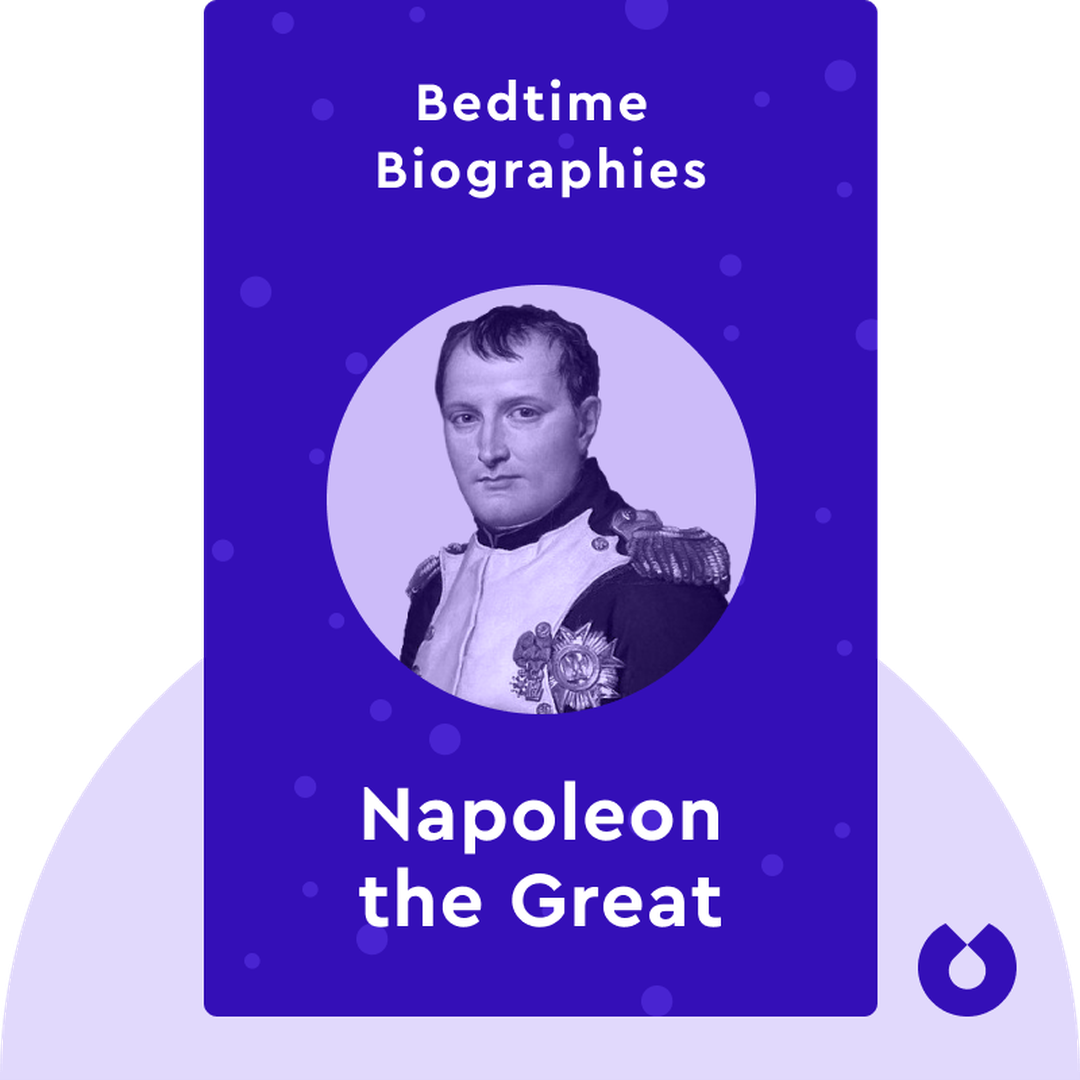
Napoleon the Great (2014) is an in-depth look into the life and times of the infamous French conqueror, Napoleon Bonaparte. These blinks detail how Napoleon, once a penniless young man, became a general at the age of 24 before going on to revolutionize the French military and government, and leaving an indelible mark on European and world history.
Who Should Listen to Napoleon the Great?
- History buffs
- Students of European and military history
- Anyone interested in a truly fascinating life story
Books Similar to Napoleon the Great
Readers who enjoyed this also liked these titles.